
Identity and the Exhaustion of Grand Ideas
A concise reflection on microhistory, identity, and modern intellectual uncertainty

Over the past few decades, intellectual life has been shaped by a growing distrust of ambitious theories that once claimed to explain history and society as a whole. The fading influence of the radical projects associated with the 1968 generation produced a more careful and restrained scholarly atmosphere. Many historians and social theorists became skeptical of large narratives and universal categories, preferring limited scope and methodological caution. In Germany, this shift took a distinctive form through the rise of microhistory, an approach that emphasizes close attention to sources, local contexts, and everyday life. Microhistorians sought to revive the craft of traditional historiography while distancing themselves from older positivist assumptions. Their work often challenges broad concepts such as capitalism, industrialization, and the state, treating them as abstractions that obscure rather than clarify lived experience.
Within this intellectual environment, Lutz Niethammer occupies a singular position. Widely known for his contributions to oral history, he shares certain affinities with historians who emphasize history from below. Yet his work consistently maintains an awareness of theory, even when his goal is to criticize or dismantle it. This tension defines much of his scholarship. His earlier book Posthistoire, published in English in the mid-1990s, offered a concise and rigorous engagement with the “End of History” thesis. Rather than accepting claims about historical closure, Niethammer examined the sense of intellectual exhaustion underlying them. The study established his reputation as a thinker capable of combining empirical sensitivity with conceptual critique.
In his later work, Niethammer turns his attention to the idea of “collective identity,” a term that has become central to modern political and cultural discourse. Unlike concepts grounded in clear theoretical traditions, he argues that collective identity lacks a stable definition. It fluctuates between claims about essence and arguments about construction, between descriptive language and normative aspiration. According to Niethammer, this ambiguity is not accidental but fundamental. The term’s power lies precisely in its vagueness, which allows it to circulate across different contexts without settling into a coherent meaning.
Niethammer traces the concept's history back to the early twentieth century, examining how thinkers from diverse intellectual backgrounds employed the language of identity. Rather than treating these uses as steps in a linear conceptual development, he reads them as symptomatic responses to deeper social and psychological tensions. Figures such as Carl Schmitt, Georg Lukács, Carl Jung, Sigmund Freud, Maurice Halbwachs, and Aldous Huxley appear in his analysis not as contributors to a unified theory but as individuals grappling with the anxieties of modernity. In Niethammer’s interpretation, references to identity often serve to manage inner conflict, social dislocation, and the erosion of stable cultural forms.
This approach leads him to challenge the conventional German narrative about the postwar rise of identity discourse. That narrative typically locates the concept’s spread in the reintroduction of American ego psychology after 1945, particularly through the work of Erik Erikson. According to this view, ideas of personal balance and psychological integration suited the political stability of the Adenauer era and later expanded from individual identity to collective identity. Niethammer disputes this account. He argues instead that the roots of collective identity lie in the crises of the interwar period, where psychological strain and political instability shaped the earliest uses of the term.
Methodologically, Niethammer departs from genealogical approaches that separate origins from later meanings. He insists that a concept’s beginnings reveal something essential about its subsequent career. Even when textual evidence is thin and references are brief, he treats these moments as significant. The scarcity of clear definitions, he argues, confirms rather than undermines his thesis. Identity, in his view, is defined by its resistance to definition.
While this interpretive strategy risks overextension, it supports Niethammer’s broader claim. The continued prominence of collective identity in postwar and post-1960s politics reflects not conceptual clarity but intellectual fatigue. As identity language spread across ideological boundaries, it became a flexible idiom capable of masking contradictions rather than resolving them. Niethammer’s work ultimately presents identity discourse as a sign of modern uncertainty, revealing the limits of democratic imagination in an era increasingly wary of collective transformation.
About the Creator
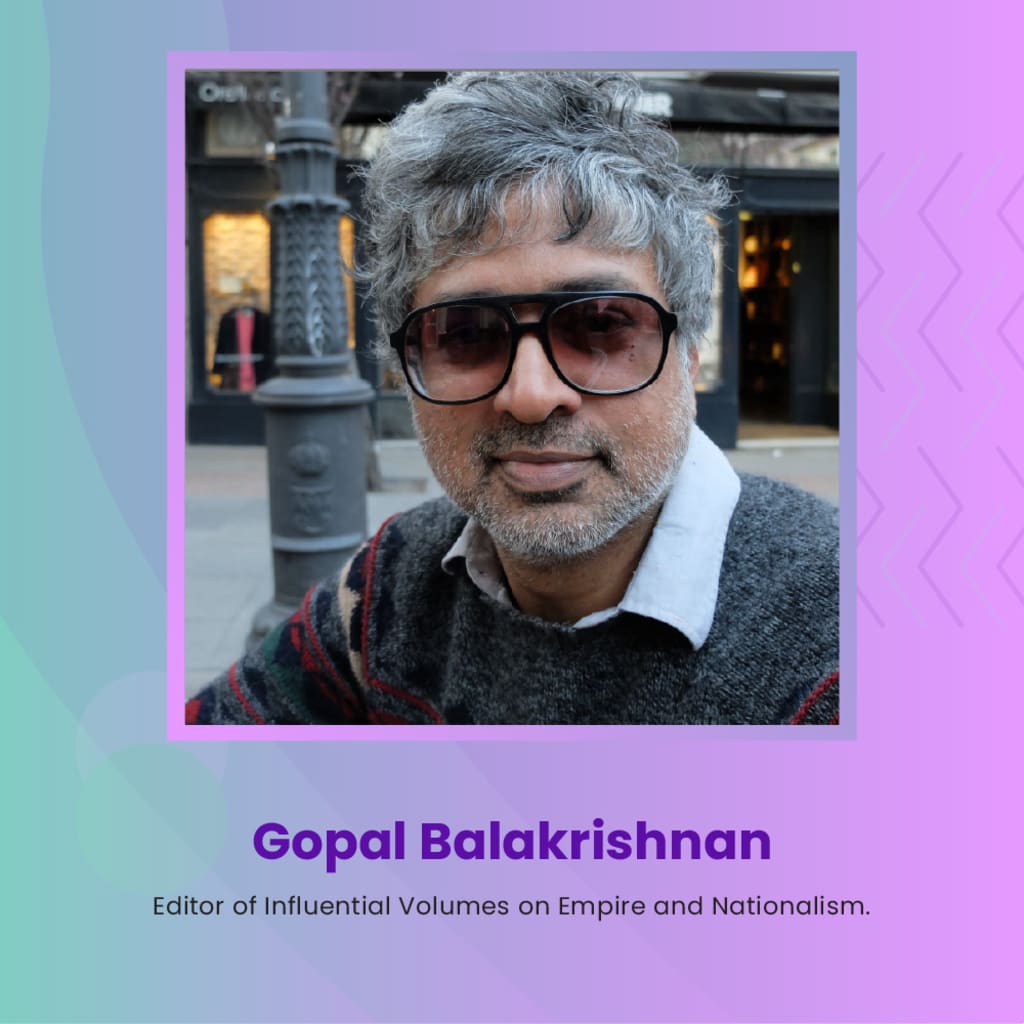
Gopal Balakrishnan
Gopal Balakrishnan is a distinguished scholar focused on European intellectual history, political theory, and the evolution of capitalism. His work critically examines modern political systems and their global implications.
Keep reading
More stories from Gopal Balakrishnan and writers in Fiction and other communities.
A German Revolution?
Even before the defeats of the revolutions of 1848, they recognized that the mutually advantageous arrangements between the middle class and an old regime which it sought to reform to its specifications, would make a bourgeois revolution in Germany dependent upon wider political upheavals across Europe- more specifically another revolutionary breakthrough in France bringing a European and perhaps world war in tow. This would be a recapitulation of the sequence that unfolded from 1789 to 1814, but on a far more developed world market basis, one which would put a nascent international proletariat into contention.
By Gopal Balakrishnan6 months ago in Education
The Last Message
It was a rainy Thursday when Mia stumbled upon the old, leather-bound journal in her grandmother’s attic. She had always thought the attic was just a dusty storage room, filled with forgotten furniture, broken toys, and cardboard boxes of old clothes. But this journal looked different—its cover worn, edges frayed, and the pages yellowed, as if it had survived decades of secrets.
By Waleed khan4 days ago in Fiction




Comments
There are no comments for this story
Be the first to respond and start the conversation.