
Howls under the Moonlight
Werewolves .. The Legend

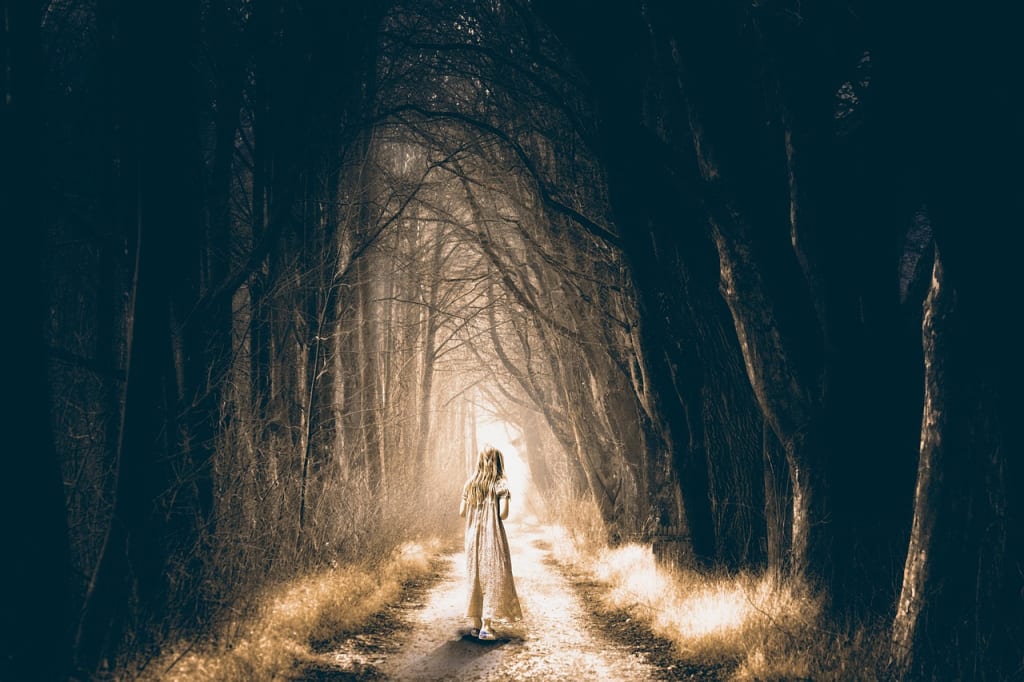
The Moon's Reflection
Sarah adjusted her rearview mirror, watching the city lights blur into streaks of gold and crimson behind her. The traffic had lightened up a lot, a sharp contrast to the usual weekday chaos that she maneuvered through with practiced ease. But tonight? It felt different. There was a weight on her chest, a subtle unease that her luxury sedan's hum just couldn't shake off.
Tonight marked the full moon, her monthly routine of visiting her mother’s grave . For the last five years, like clockwork, Sarah had made this trip to the old cemetery on the outskirts of town each month.
As she got closer to the cemetery, the feeling of being watched intensified. It prickled at her skin, making the hair on the back of her neck stand up. She glanced in her mirrors, catching the glint of headlights far behind her. Just other cars, she reassured herself, but the unease lingered.
Turning onto the lonely road leading to the cemetery gates, she spotted him. A figure hunched beneath the bare branches of an old oak, cloaked in shadows. He was tall, his form obscured by dark, shapeless clothing and a deep hood that hid his face. Sarah's breath caught in her throat. He was just standing there, immobile, watching her.
Sarah stood at the edge of the cemetery which seemed to be abandoned except for the feeling of countless unseen eyes watching her. Her breath visible in the cold night air. The full moon hung low, casting a silver glow over the rows of headstones. She adjusted her coat, her fingers trembling slightly.
She knelt by the grave, her hand brushing the cold stone. “I miss you,” she whispered. Her voice cracked.
A low, mournful howl sliced through the silence. Then another, wilder this time. Sarah shivered, not from the cold, but from a strange anticipation, a dark thrill bubbling up inside her.
Suddenly, with a metallic clang that echoed through the quiet graveyard, the iron gate of the cemetery was flung wide. The figure in the shadows emerged from behind a mausoleum. He was now closer, his face still hidden by the hood. Sarah wanted to run, to flee, but her legs felt heavy, rooted to the ground.
He shuffled closer, his steps tentative. Now she could see the details of his outfit—threadbare patches on his dark coat, grime on his gloved hands. He didn’t seem menacing. He just looked... dishveeled. Alone.
Another howl rang out across the night, this one different. It wasn’t mournful; it was hungry.
Suddenly, Sarah felt a jolt, a violent tremor starting deep within her bones. Her vision blurred, muscles tightening, stretching, contorting. The premium Italian leather of her shoes strained and tore as her feet elongated, sharp claws pushing into the ground. Her manicured nails thickened into lethal talons.
A guttural growl escaped her throat, a sound so foreign to her usual composed self that it startled even her transforming mind. The fear that had gripped her moments before vanished, replaced by a primal instinct and an urgent need.
The homeless man, startled by the noise, turned towards her, his eyes widening in confusion. Just a man, old and frail, merely seeking some pennies to get some grub to quell the gnawing emptiness in his stomach.
Without thinking, Sarah lunged. The scream that ripped from his throat was abruptly silenced. The moonlight, once softly illuminating, now reflected the crimson stain spreading across the gravel. The fierce howls now seemed to celebrate, echoing her savage victory.
The next morning, Sarah strolled into the gleaming lobby of her company, her designer heels clicking sharply against the polished marble floor. Her tailored suit fit just right, her makeup flawless. She offered the receptionist a warm smile, her usual cheerful demeanor radiating professionalism.
Her colleagues greeted her with nods and smiles, blissfully unaware of the darkness lingering inside her. She discussed quarterly projections, strategized marketing campaigns, and navigated board meetings with ease. The only reminder of the previous night’s events was a faint scratch on her left hand, easily brushed off as a minor incident.
Seated at her large mahogany desk, with the moon’s reflection, so beautiful and serene, streaming through the panoramic window, Sarah glanced at the calendar. Another successful month had passed. Another full moon had come and gone. And the cycle, she knew, would inevitably start again.
The Ancient Howls
Picture a time when the wilderness stretched vast and untamed, brimming with real dangers. Wolves were the top predators, genuinely threatening livestock and even human villages. It's no wonder that fear of these creatures, combined with humanity's urge to explain the unexplainable, sparked the legend of the werewolf.
The earliest stories of humans turning into wolves trace back to ancient Greece and Rome. In Greek mythology, the tale of Lycaon—a king who angered Zeus and was transformed into a wolf as punishment—stands as a foundational narrative. Roman authors like Pliny the Elder and Virgil also wrote about werewolves, often linking them to witchcraft and dark sorcery. These early accounts reveal a significant aspect of the werewolf myth: transformation is seen as a curse or punishment for wrongdoings, influenced by supernatural forces.
Whispers of Change
As time went on, the werewolf legend morphed, gathering details and variations as it spread across Europe and beyond. During the medieval era, a surge in beliefs about werewolves arose, driven by religious fears and superstitions. The full moon became a key trigger for transformation, its silver light thought to stir the beast within. This connection likely arose from the moon's mysterious and cyclical nature, echoing the unpredictable metamorphosis of the werewolf.
Legends about how one becomes a werewolf varied widely. Some believed it was a hereditary curse passed through family lines; others mentioned magical potions, enchanted belts, or dark magic that could force the change. The portrayal of the werewolf took shape as a creature endowed with sharp senses, immense strength, and a ravenous thirst for blood. Often depicted with human-like eyes brimming with animalistic rage, the werewolf became a chilling symbol of the wildness lurking inside human nature.
The suspense tied to the werewolf legend is tangible. It’s not just about the terrifying creature; there's also the unsettling fear of who among us might be the werewolf in disguise. Imagine living in a close-knit village, knowing that a neighbor, friend, or family member could be the monstrous beast stalking the woods at night. This element of concealed identities and potential betrayal adds a layer of psychological horror to the already frightening physical threat.
Also, to add more complicated suspensful layers to the legend, we have to mention that while folklore painted vivid pictures of cursed individuals transforming physically, there's also a psychological condition linked to the term "lycanthropy." Imagine believing, deep down, that you are actually an animal. People experiencing this might act like the animal they believe themselves to be, even howling or trying to bite.
Around the World in Howls
The werewolf isn't limited to Europe. While the term "werewolf" hails from European roots, similar shapeshifting beings exist in various cultures' folklore. These variations often reflect the local environment, animals, and beliefs.
Africa: In parts of Africa, tales of werehyenas dominate. Hyenas, often linked to scavenging and nighttime, take the role of wolves in these stories.
Asia: In Japan, the kitsune (fox spirit) is known for its shapeshifting abilities, but their transformations often lean more toward the mischievous than the monstrous. In India, there are stories of rakshasas capable of taking animal forms, wolves included.
South America: Legends of the lobizón are prevalent in countries like Argentina, Paraguay, and Uruguay. The lobizón is described as a seventh son cursed to become a monstrous, dog-like creature.
North America: Indigenous cultures have their own shapeshifting legends, typically involving animals like coyotes or bears, often laden with spiritual significance and moral lessons about respecting nature.
These diverse examples show how the concept of human-animal transformation adapts to different cultural fears and contexts. However, the underlying theme remains: a mingling of the human and animal realms, the civilized and the wild.
From Fangs to Film
The werewolf has not vanished into the forgotten pages of lore. On the contrary, this legendary creature has deeply embedded itself in our contemporary pop culture, appearing in countless books, movies, TV shows, and video games.
Early horror films like "The Wolf Man" (1941) helped cement the classic image of the werewolf, often portraying them as tragic figures cursed beyond their control. Films like "An American Werewolf in London" (1981) introduced humor alongside genuine horror to the genre. Teen dramas such as "Teen Wolf" explored the werewolf as a metaphor for adolescence and inner struggles, resonating with a younger audience. Even popular fantasy series like "Harry Potter" feature werewolves, ensuring their continued presence in our collective imagination.
The lingered charm of werewolves in pop culture stems from their multifaceted nature. They can be terrifying monsters, but they can also be sympathetic characters grappling with dual identities. The werewolf narrative often delves into themes of duality—the clash between our civilized selves and primal instincts, and the fear of losing control. This complexity makes them a powerful and relatable archetype, even in a world far removed from the perils of ancient forests.
The Enduring Howl
The whispers in the woods might just be the wind, yet the legend of the werewolf keeps howling in our shared consciousness. From its ancient roots steeped in fear and the unknown to its rich cultural interpretations and influential presence in modern entertainment, the werewolf remains a fascinating figure. It serves as a reminder of the lasting power of folklore, the stories we create to better understand our world, and the primal fears that continue to linger in the shadows of our imagination. So, the next time you catch a distant howl on a moonlit night, remember the intricate history behind that sound. It could very well be just a dog... or maybe, something a bit more... wolfish.
About the Creator
Ashraf Almamlouk
A passionate writer, graphic designer&animator. I have a deep love for storytelling and a talent for creating engaging content from children’s fairy tales to explorations of the world’s mysteries, My works aim to entertain, and inspire.
Keep reading
More stories from Ashraf Almamlouk and writers in Fiction and other communities.
The Wispers in the Walls
The Whispers in the Walls The air in the valley felt thick and heavy, filled with the scent of damp earth and an unpleasant, acrid odor. The villagers of Oakhaven huddled inside their homes, wooden shutters bolted shut, but it did little to comfort them against the constant scratching and scurrying sounds echoing from within the walls. What had begun as a few fleeting shadows darting across the floor had turned into an overwhelming tide, a dark river of movement filling their houses. Rats.
By Ashraf Almamloukabout a year ago in Fiction
Rage
Content Warning: Domestic Violence, Assault Rage D. A. Ratliff “Who did this?” My voice echoed through the house. All I wanted was a cup of tea, but one of the twins, running through the house like maniacs, knocked it over. My nerves tingled, and every muscle in my body felt coiled like a spring. Survival seemed out of reach.
By D. A. Ratliff5 days ago in Fiction




Comments
There are no comments for this story
Be the first to respond and start the conversation.