
How the Israeli-Palestinian Conflict Began | History
Part one of Isreal-Palestinian conflict
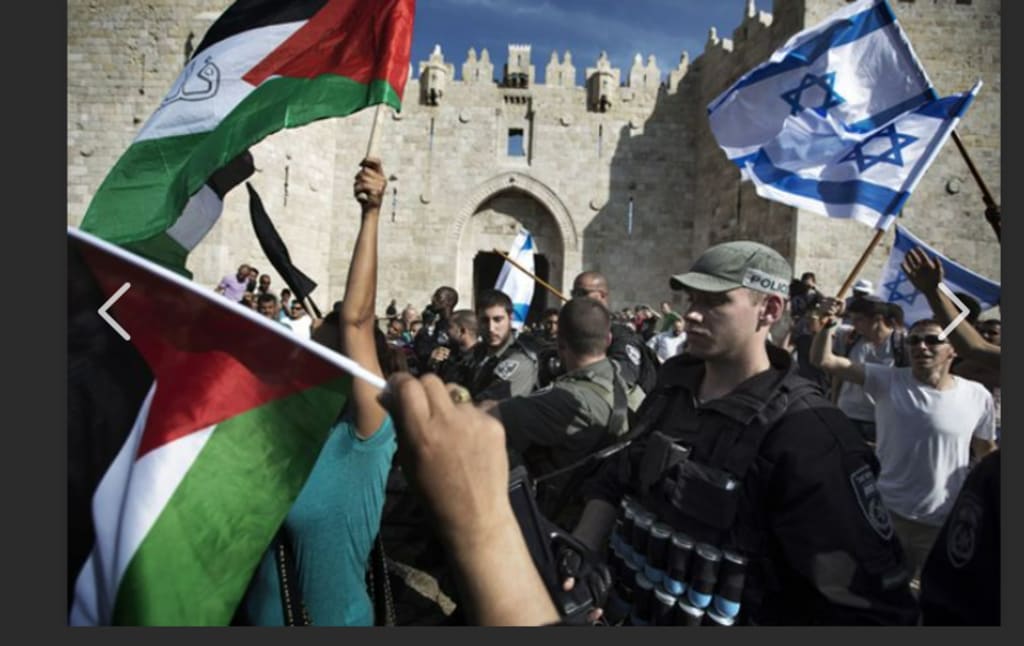
Jewish people faced oppression and persecution. They started emigrating to Palestine in the 1880s. By 1914, over 75,000 Jews lived there. After WWI, Britain took control of the area. In 1922, the League of Nations approved a British declaration for a Jewish homeland. However, it took over two decades to fulfill this promise. WWII erupted in 1939, resulting in the Holocaust and displacement of millions of Jews. In 1947, the UN decided to divide Palestine into two states, Israel and Palestine. Arab residents saw this partition as unfair and violence erupted. On May 14th, 1948, Israel was established, but the Arab League rejected it and attacked. Israel fought back and occupied the designated Arab state. This victory caused 720,000 Arabs to flee or be expelled from their homes. Tension between Jews and Arab Muslims persisted for decades. Fighting continued between Israel and its Arab neighbors for the next 60 years. In 1987, the First Intifada began with Palestinian militias leading a violent uprising.
The Oslo Accords were created by Israel and the PLO after the First Intifada, establishing a peace timetable. However, subsequent peace talks in 2000 failed due to disputes over Jerusalem, refugee rights, and Jewish settlements in Palestinian lands. Ariel Sharon's visit to the Al-Aqsa Mosque led to violent protests and bombings, marking the start of the Second Intifada and the collapse of the Oslo Accords' peace. The violence ended in 2005 with Israel's withdrawal from Gaza. In 2006, Hamas, known for its terrorist methods and anti-Israel stance, won the Palestinian elections. Hamas and Israel have continued to clash. Hamas proposed a Palestinian state based on 1967 borders in 2017, but without recognizing Israel as a state. The West Bank settlements and international calls for a two-state solution complicate the conflict further. Despite ongoing efforts, a peaceful resolution remains elusive in this region of great cultural and religious significance.
After World War I, Great Britain took control of modern day Israel, Palestine, and Jordan from the Ottomans. In 1922 the League of Nations approved a British declaration that promised a national home for the Jewish people in Palestine, but it would be more than two decades before that promise was fulfilled. In 1939 World War II broke out. More than 6 million Jews were murdered in the Holocaust with millions more displaced. In 1947 after the war was over, the United Nations decided to partition Palestine into two countries, the Jewish state of Israel and the Arab state of Palestine. Israel agreed to the partition and borders were drawn for two states, but many Arab residents thought the partition unfairly favored the Jewish population. Violence soon broke out. On May 14th, 1948 the state of Israel was established With David Ben-Gurion as it's prime minister. Almost immediately the Arab League, a group of surrounding Arab countries, rejected the partition and attacked. Israel fought back and after more than nine months of conflict, it's armed forces occupied much of the land designated to become the Arab state of Palestine. Egypt took control of the Gaza Strip. Jordan, then called Transjordan, took control of the West Bank. The original plan for a Palestinian state was scrapped. This historic event was a victory for many Jewish people, but approximately 720,000 Arabs fled or were expelled from their homes, many taking refuge in the Gaza Strip and the West Bank. This war would be remembered in Hebrew as the War of Independence and in Arabic as The Catastrophe. Tension between Jews and Arab Muslims in the region would continue for decades. Fighting between Israel and its Arab neighbors continued on and off for the next 60 years. In 1964 the Palestine Liberation Organization formed to consolidate the power of many small Palestinian groups. In the 1967 six-day war Israel defeated the armies of Egypt, Syria, and Jordan, and gained control of significant territory. In 1987 following an incident with the Israeli defense forces that left four Palestinian refugees dead, Palestinian militia led a violent uprising known as the First Intifada that resulted in hundreds of deaths. You can send in a tip for me to continue writing this stories for you and giving you latest news
About the Creator
Choose Your Own Adventure: St Helena Station
*****Preface***** I have been obsessed with Choose Your Own Adventure stories since I was a kid. I credit them with my love of reading and writing. I've been struggling to get my own kids to embrace words the same way I have but they love video games and our occasional Dungeon's and Dragon's game... which gave me an idea. I'll write an interactive story. So far its working; my middle son loves it and can't wait for the next section to come out.
By Sandor Szabo2 days ago in Fiction
A quiet reminder
It started with an advert in the back of the Tibley Chapter, the abundantly disappointing local newspaper for the small communities of Tibley, Wrenton and Barkley St Bennett’s. At the time nobody really paid a great deal of attention to it. It was small (at a cost of 25p per word there was a need for economy of communication) and unsurprising but ultimately it was so forgettable everybody did. For the reader’s benefit it is included here:
By Simon Curtis7 days ago in Fiction



Comments (1)
its quality writing and informative approach. 😪😪😪