
History by the Victors
When we were younger we would play hide and seek beside the golden gate, beyond which there was the nothingness from where all the adults had come from.
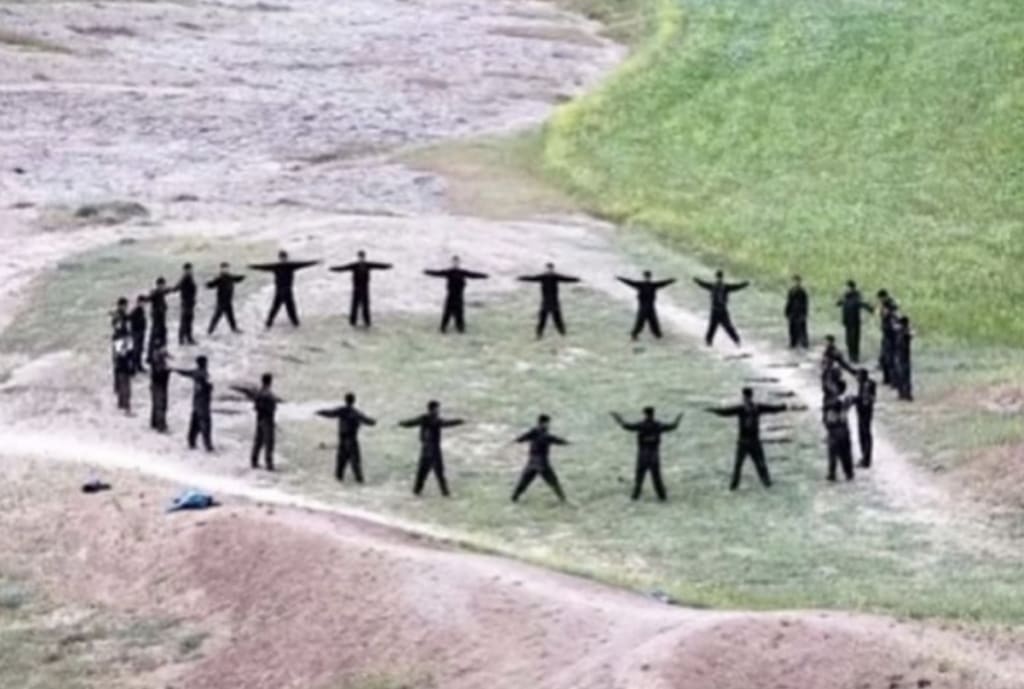
When we were younger we would play hide and seek beside the golden gate, beyond which there was the nothingness from where all the adults had come from. After school, the kids in our neighborhood all gathered around the gate that was secluded behind a layer of willow trees and shrubbery. The willows were the perfect place to hide—their feathers for hands drooping lonely, longing to the ground where we’d stand draped in tree flesh, almost fully obscured from view. It was a world we built off the old children’s game which, we were told, held much darker meaning outside the golden gate.
The gate itself stood taller than all the other trees around it. A shinning pinnacle amongst the greenery. When the sunset it would hit the head of the golden structure, refracting long arms of light that fell like petals around our houses. In fact, the gate was the tallest thing in our world. Everything else stood moderately dwarfed when compared to the grand structure on the West side of our village.
For breakfast that morning, I remember, mother made morning cakes before dusting powdered gold onto the fluffy body of the dough. It was a treat to eat her morning cakes—more often we would have our usual porridge. Its pulpy texture always looked like throw-up to me before the gold was tossed on.
Mother told me stories then, of the world outside the gate—a time when gold was the most precious thing on earth. How mass groups of people fought over it, hoarded it, hid it, killed for it. They wrecked the world, she said—scorched the earth, dried all the water. They had depleted everything, leaving those left with a fraction of what their gluttonous ancestors had.
“And that’s why we eat gold now!” She’d say, sprinkling the yellow-bronze flakes over our cakes.
Mother walked me to school most mornings before she and father left to go to work. She worked in the elder center, caring for the older members of our town. They were the last people to have seen what the world was like outside of the gates in conscious age. Mother said they were especially temperamental. “It’s what being out there does to you. We can’t blame them.” They were hard to care for. Most of them had found their way to us having lost their own children, their own friends, and family in the Great War.
I was 14 years old then. Next year I would begin training to join mother at the elder center. We were all given a choice in our 15th year, to follow our mother or father’s path. Father worked at the creation center where he made tables, chairs, glass windows, beds—anything we could ever need, whenever there was a demand for it. Everyone who worked there was especially nimble with their fingers. And when the objects were made, they were given to any who needed them. When father finished his pieces, he liked to deliver his creation to the neighbor who requested it. That was his favorite part of the job, he said. But I wanted to talk to the elders who had come from the outside.
That day in school we had our weekly video lessons where we watched films and clips from the outside. Usually, they showed the wreckage of old wars. Hungry people, children with arms as thin as tree sprouts. But on that particular day, we watched clips of a lavish party. A child was turning 16 and, as customary in the old world, they celebrated with over-indulgence. We watched the child, in a dress adorned with crystals, slice open a cake that was much too large. Her gifts were draped in satin ribbons. A sleek automobile was gifted to her at the end of the celebration. Our teacher shut off the video sullenly.
“The Great War happened because people chose not to curb their greed. They fed it to their children instead. They are why we have chosen to give up all our valuables.”
We were sent home with no assignments that day. Mother came back early too and asked me to help clean her room as she began dinner. While folding her clothes into her dresser I noticed a golden chain snagged at the corner of the wooden structure. When the light hit, it winked at me alluringly. I reached in, giving it a tug before freeing the dainty metallic thread. It was gold like our breakfasts. But more solid. The chain dangled around my fingers weighted by a heart-shaped pendant at the front. My mind immediately filed back to what we had been taught since lower school—to report to our teachers if we discovered any material valuables in our houses. “It will only lead to worse things.” Our teachers would tell us. I choked these thoughts back and slipped the chain into my pocket.
Our dinner-time conversations were quite routine. All members of the family were asked to talk about their day before beginning the meal. We had an unusually small family—usually, families consisted of two children—so sharing was kept short. As we began to eat in silence, I pulled out the golden chain, it’s heart-shaped charm clanging warmly as it hit the table’s edge.
Mother looked up first, and softly put her fork down. Father followed.
“Shouldn’t this have been destroyed along with all the other possessions?” I asked earnestly, hoping for a response that would absolve them of guilt, and me of responsibility.
Mother was quiet for a moment. “There was a revolution, at least that’s what my mother called it. Years after the Great War. Different communities came out of it. Ours was the most peaceful because we are all committed to never repeating the sins of the people who destroyed everything outside.” Her arms motioned toward the window, understandingly at the gate.
“When we came here, we had to give up all the pretty things we owned. Jewelry, art. Gold was turned into dust. Every object we assigned value to was considered corrupt and had to be destroyed to be devalued. It’s how we’ll manage to avoid the mistakes of the old world. We are the strongest community to have come out of the revolution.” There was a look of pride in her eyes, that quickly grew overcast by a shadow of sadness.
“In the early days, before we closed the gate, we let some of the elders, who had seen the outside, make a decision to stay or find another community. They weren’t so old then. Most chose to stay. Why wouldn’t they? We provide everything anyone could ever need here. But a few chose to leave. My mother and father did. They left thinking they could come back. I was so little then. But the gate shut soon after they left. They left this with me and told me to keep it until I can see them again.” Mother’s eyes pleaded with me now.
“It’s not a material possession…please don’t tell your teachers. It’s the last thing I have from my old family.”
“What would they do to you?” I asked.
She looked at father who turns to me. “I’m not sure what they would do to mother and me—perhaps push us out the gate…No one really knows what is outside. We keep it closed for many reasons. It’s complex outside the gate. We’d rather keep our lives simpler in here.” He hesitated. “When children turn 18, they are given one chance to leave the community. But I’m sure you’ve noticed. No one has left. Only three people have ever decided to leave, long before your time. One of them has come back months later. It was merciful for them to let him back in. I guess they took pity on him. He’s quite delusional now…lives at the elder center even though he’s only in his 40’s.” He trails off.
My next move was as rational as it was spurred by curiosity. And it solidified the rest of my fate. I asked to meet the man at the elder center who had returned to our community. Mother must have known him from working there for years. She reluctantly agreed, perhaps sensing a mild shift in our power dynamic at play, and the next day we walked over to the center where she took me to a backroom with glass windows from ceiling to floor. She lingered by the doorway before shutting the door behind her, leaving me and the man alone.
He was young looking—much too young to be in the elder center. I introduced myself and asked for his name before he looked up to meet my eye. His fingers motioned for me to come closer as he opened his mouth. He looked down again at his hands, which have pencil and paper in them. On the paper he wrote, Emilio.
I spent the day with him, then, and kept all the papers from our conversation. He wrote of a towns farther away which were much crueler than ours. Worlds where people still starved. Where people hoarded treasures still. Communities that fought over things we considered useless here. But then, there were rumors of other worlds even further away, where all were welcome. Everyone wanted to find their way there…it was some type of promised land. No one closed their doors, or fought over land there. It was by word of mouth that he heard of the place. In his quest to find that community, he had gotten lost and attacked by animals in the forests who ripped out his voice, rendering him speechless forever. By some miracle he had wandered, half delusional by then, back to our community, and was let in under the guise of sympathy. Now, however, he suspects it was more so to use him as an example of what the outside was.
He gripped my arm before I had left that day and scrawled on the paper. Don’t listen to them. There is beauty outside the gate. I just haven’t found it yet.
Mother had finished attending to her work by the time I left Emilio’s room. She rushed over to me and gathered me in her arms guiding me toward the leaving door. When we got home she brought me to our eating table where the golden chain sat, this time with its heart-shaped charm opened in half. Inside was a photograph of a young pair.
“Your grandparents.” She said. “It’s yours now. If you’d like to turn it in, you can do so. Say you found it on the perimeters of our community. It will be destroyed…but perhaps that is for the better.”
She left met with the chain then, and headed to her room. I stared at it silently before slipping it into my pocket, and then under my pillow.
It stayed there for four years. Today I wear it around my neck as the community opens the gates for me. Mother and Father stand closely behind, mother weeping gently as I step outside the golden doorway. Others in the town have gathered, shaking their heads, covering their children’s eyes. Turning back, I whisper mother a promise that I will return the chain to her one day, when the gate is open again.
About the Creator
The Echo of Water: Washing Away the Scent of Fear
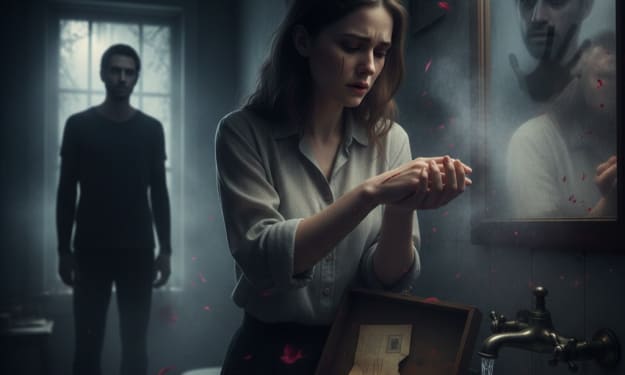
1. A Haunting Nocturnal Ritual For John, his marriage to Mia was supposed to be a sanctuary of peace after years of solitude. Mia was like a figurine of fine crystal; delicate in her movements, soft-spoken, and always trailing a faint scent of hibiscus and vanilla. Yet, beneath this serene surface lay a disturbing nocturnal ritual: twice every night, before retiring to bed, Mia would bathe. It was a rigorous, almost sacred routine that never faltered, regardless of the circumstances. John, a designer with a keen eye for detail, would watch her slip into bed with her back turned to him, whispering a faint "Goodnight" before sinking into a sleep that resembled an escape. He initially dismissed it as a fastidious obsession with cleanliness, never realizing that the water wasn’t for hygiene—it was a desperate attempt to wash away a "memory" that refused to die.
By Mayar Younesabout 20 hours ago in Fiction


Comments
There are no comments for this story
Be the first to respond and start the conversation.