
Harder Before It Can Get Better
Drabble Drop : Inflate


The societal struggle with cost of living is a finely tuned conundrum. The economy is struggling, the people are struggling and the solution to make it better, will only make it harder.
We feel the government should be offering further handouts to those in need, but unfortunately these handouts would only inflate the economy, causing the inflation rate to rise and therefore, the cost of living to increase immeasurably.
It’s certainly a damned if you do, damned if you don’t scenario that all of society is grappling with.
It’s time we all considered bringing back the ‘Help Thy Neighbour’ mentality.

I was challenged to write a drabble of the word ‘inflate'.
Wikipedia defines a drabble as follows :
A drabble is a short work of fiction of precisely one hundred words in length. The purpose of the drabble is brevity, testing the author's ability to express interesting and meaningful ideas in a confined space.

Please click the link below my name to read more of my work. I would also like to thank you for taking the time to read this today and for all your support.
If you enjoy this piece, you may enjoy this one too.
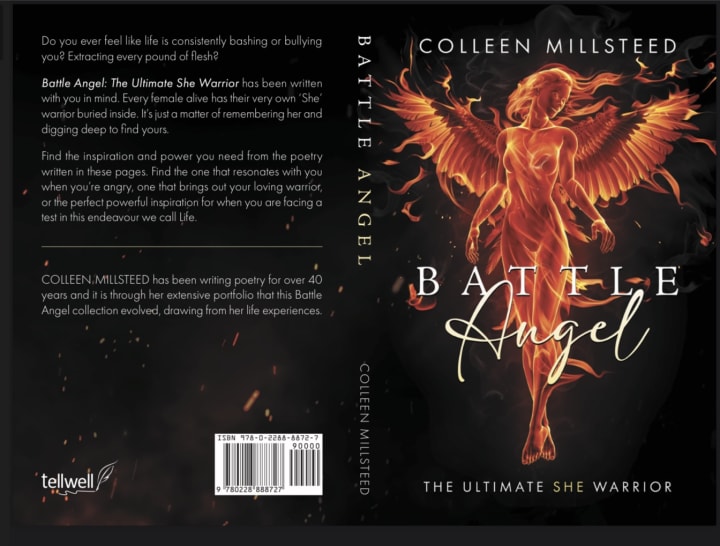
Please visit my website if you'd like more information on my newly published book, Battle Angel : The Ultimate She Warrior.
Originally published on Medium
About the Creator
Colleen Millsteed
My first love is poetry — it’s like a desperate need to write, to free up space in my mind, to escape the constant noise in my head. Most of the time the poems write themselves — I’m just the conduit holding the metaphorical pen.
Keep reading
More stories from Colleen Millsteed and writers in Fiction and other communities.
A little Over Dramatic
Tony was dead to the world, enjoying a rather raunchy dream, when he was ripped from his sleep by an unearthly scream. He flew from his bed and frantically looked around his room but the scream came from the kitchen. He headed that way in a panic.
By Colleen Millsteed 2 years ago in Fiction
Bomb Scare
It was 2027, and the world never thought it would happen. A missle hit the United States, but it wasn't where they had anticipated. A little town in the northeast was hit by a missile strike, they didn't know why, and they didn't know exactly where it hit, but they did know it was a coastal community, somewhere between Maine and Delaware.
By Gregory Payton4 days ago in Fiction
The Iron Watch: The Silence That Chilled the North Sea
The North Sea does not forgive, and it certainly does not forget. In December of 1984, the storm was a beast. It howled like a wounded wolf, clawing at the glass of the lighthouse on the island known as 'The Iron Watch.' When the relief boat, the Aurora, finally managed to dock after five days of impossible waves, the crew expected to be greeted by the weary faces of the three keepers: Elias, the veteran; Silas, the quiet family man; and Bram, the youngest, who had only joined the service six months prior. Instead, they were met by a silence so thick it felt like a physical weight. Captain Miller and two others stepped onto the slippery stone quay. The iron door of the lighthouse was locked from the inside. After minutes of frantic hammering, they forced it open. Inside, the air was warm, smelling of burnt oil and old tobacco. A kettle sat cold on the stove. A chair lay overturned in the kitchen, but otherwise, everything was in its place. Except for the men. Miller climbed the winding spiral stairs to the lantern room. On the desk lay the official logbook. He opened it, his hands trembling. The final entry, dated December 15th, was written in Elias’s usually steady hand, but the ink was blotchy, the letters frantic: "11:00 PM: The storm is unlike anything I have ever seen. Silas has been praying for hours. Bram refuses to speak; he just stares at the waves. The glass is cracking. Something is knocking on the door. Not the wind. Not the sea. Something is knocking. May God have mercy on us all." The logbook ended there. There was no mention of an evacuation, no signs of a struggle. Just that final, chilling sentence. Elias had been a keeper for thirty years. He wasn't a man given to flights of fancy or religious hysteria. Silas was a practical engineer, and Bram was a cheerful lad with everything to live for. What could have reduced them to such a state of terror? As Miller looked out the reinforced glass of the lantern room, he noticed something strange. The iron railings, twenty feet above the highest recorded wave, were twisted like pieces of wet straw. A giant supply crate, weighing over five hundred pounds, had been moved fifty yards from its original spot and smashed into fragments. The search lasted for weeks. Divers went down into the freezing depths; helicopters scanned the jagged coastline of the surrounding isles. Not a boot, not a lifejacket, not a single trace was ever found. The theories began almost immediately. Some said the men had turned on each other, driven mad by the isolation and the relentless roar of the wind. Others whispered about a "Rogue Wave," a wall of water so massive it had swept them off the rocks in a split second. But the locals in the nearby coastal towns had a different story. They spoke of The Iron Watch as a place where the veil between worlds was thin. They whispered about the "Lament of the Deep," a sound that only lighthouse keepers can hear when the pressure of the sea becomes too much for the human mind to bear. In Silas’s room, Miller found a half-finished letter to his wife. "The sea is talking again, Mary," it read. "It sounds like the voices we lost. Bram thinks he sees lights under the water. I just want to come home." The mystery of The Iron Watch remains one of the greatest maritime enigmas of the 20th century. To this day, sailors passing the island claim they can see three faint lights flickering on the gallery—not the powerful beam of the lighthouse, but the small, rhythmic glow of three handheld lanterns, moving in perfect unison, waiting for a relief boat that will never arrive.
By Baseer Shaheen 2 days ago in Fiction
Writing To Succeed
If you want to find something that will help readers find your writing, possibly expand your audience, and maybe even get you noticed for other things, then you’re not alone. But how can you get it done in a world full of want-to-be writers? Look less at what you’re writing now, and more at what other writers have used to boost their views and reads.
By Jason Ray Morton 2 days ago in Writers



Comments (2)
If definitely a damned if you do and damned if you don't situation. Loved your drabble!
Exquisitively expressed!!! Loved it!!!