
Guardians of the Galapagos:
Protecting Paradise on a Volcanic Island Chain

A blanket of stars twinkled above Isabela Island, the largest in the Galapagos archipelago. Maria, a young marine biologist fresh out of university, adjusted the strap of her backpack and knelt beside a sleeping giant tortoise. These magnificent creatures, some living over a century, roamed freely in the park, a testament to the island's unique ecosystem. Maria wasn't here as a tourist. She was part of a research team studying the impact of climate change on the Galapagos' delicate balance. Rising sea temperatures threatened the marine life, while invasive species like rats posed a danger to the native tortoises and iguanas.
The next morning, Maria joined her team on a boat, heading towards a designated dive site. Strapping on her scuba gear, a thrill of anticipation shot through her. The underwater world of the Galapagos was a kaleidoscope of color and life. Schools of brightly colored fish flitted amongst coral reefs, weaving through swaying sea fans and delicate anemones. Playful sea lions danced in the kelp forests, their barks echoing through the water. But amidst the beauty, Maria noticed a cause for concern. Bleached coral, once vibrant and teeming with life, stood stark white, a chilling reminder of the warming waters. She meticulously documented her observations with an underwater camera, recording data that would be crucial for conservation efforts.
Back on land, Maria helped prepare food for the giant tortoises. These gentle giants, some weighing hundreds of pounds, lumbered towards the feeding station, their wrinkled necks craning for a bite of the prickly pear cactus. Maria marveled at their prehistoric appearance, a living link to the distant past. However, their future was uncertain. Invasive rats, introduced by humans centuries ago, were a constant threat. These rodents preyed on tortoise hatchlings, jeopardizing the population's future. Maria participated in a trapping program, setting humane traps to control the rat numbers. It wasn't glamorous work, but it was essential for the survival of these iconic creatures.
One day, while on patrol, Maria stumbled upon a group of tourists feeding tortoises. While their intentions were good, their actions could have unintended consequences. She explained that human food could disrupt the tortoises' digestive system and alter their natural diet. The tourists, grateful for the information, readily agreed to follow the park regulations. Maria realized that education was a vital part of conservation. If visitors understood the delicate balance of the ecosystem, they could become responsible stewards of this irreplaceable environment.
Maria's days were filled with a variety of tasks. She helped tag iguanas, using tiny trackers to monitor their movements and health. This data would help scientists understand the iguanas' habitat needs and how they were adapting to a changing environment. She collected water samples to test for pollution levels, ensuring the continued health of the marine life. She even spent time educating local schoolchildren about the importance of conservation. Their bright eyes and inquisitive minds fueled her hope for the future. They were the next generation of guardians, and their understanding of the Galapagos' unique creatures was critical for their long-term survival.
One evening, as Maria sat on the beach watching the sunset paint the sky in fiery hues, a sense of deep connection washed over her. She wasn't just a researcher; she was a guardian, a protector of this irreplaceable paradise. The vastness of the ocean, the volcanic peaks piercing the clouds, the symphony of life on land and sea – it all filled her with a profound sense of responsibility. The challenges were immense – climate change, invasive species, and the ever-present threat of human impact. But the spirit of the Galapagos, its tenacious wildlife, and the dedication of the conservationists, gave her a reason to believe. She carried a piece of the islands within her, a reminder of the extraordinary adventure, the scientific discovery, and the unwavering commitment to safeguard this irreplaceable gem on Earth. As she departed on the boat, she knew her work was far from over. But the experiences on the island had ignited a passion within her, a fire to be a voice for the voiceless creatures of the Galapagos.
About the Creator
Keep reading
More stories from Hasan Sadiq and writers in Fiction and other communities.
Masters of the Mountain:
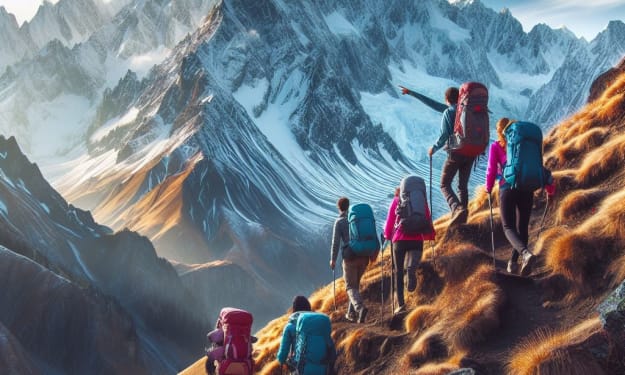
A biting wind whipped around Kai, stinging his cheeks and carrying the faint scent of pine. He adjusted his goggles, the icy lenses offering a distorted view of the snow-capped peak that towered above him. Even here, at base camp, the mountain's majesty was undeniable. Its slopes, a canvas of pristine white, seemed to pierce the endless blue sky. This was Aoraki, the mighty Southern Alps peak, and Kai was determined to conquer it.
By Hasan Sadiq2 years ago in Fiction



Comments
There are no comments for this story
Be the first to respond and start the conversation.