

“This proclamation comes directly from the Holy One himself, God’s Chosen, the Prophet of Ages. God speaks to him, and we humbly listen - amen. We pray to make a fair and ordered society, but human nature binds us to the ways of the earth. We are forgiving of errors because we understand their source. We understand that covetry and greed are human instincts, instincts we share with lowly animals. We understand that these instincts come from our bodies, at the cost of our souls. We understand because we are like you. However, a mild sin propagated for too long turns into a dangerous vice. We take small steps to aid the body in adjusting to the humble heavenly order we’ve established on earth. Therefore, today, by official proclamation and God's command, we forbid the coveting of Aquinian lockets. We know some among our great town possess Aquinian lockets. There are only a small number of these lockets left on earth. Their beauty lures us, and demands we hold them private and dear. But this is a sin. A desire of the body. Like all desires of the body, we must suppress it and supplicate ourselves. We, with the power invested in us by the Holy One, request that any and all Aquinian lockets be brought to the Great Temple by Noon.”
The five men of the council stood on a raised pulpit in the town square. After the proclamation was read, the council got down on their knees and turned closed eyes to the sky in prayer.
A crowd surrounded the pulpit. Some of the crowd followed the council’s lead and humbled themselves to God in prayer. Some looked around anxiously, waiting for some disaster to befall them. Some seemed broken, unable to react to what they had heard.
A few looked down one of the side streets that led away from the town square. Everyone knew that there was only one person in town who possessed an Aquinian locket. She lived down that street.
These few whispered to the few they trusted, and those few whispered to a few more. Whispers carried the council’s proclamation down the street towards the woman’s house.
All the houses on the street were alike - square hovels stacked next to each other. A careful investigation would reveal one that stood out. The flowers in its front yard bloomed just a little fuller and thicker. A small gold piece of metal wrapped around the handle of its front door. This was the woman’s house. She was the town’s goldsmith.
The whispers reached her neighbors. Not one of them approached her house to tell her about the proclamation. They ducked in and out of the cover of curtains and windows, taking nervous glances at her house. They didn’t want to be seen looking in her direction. They wanted to be able to pretend like they hadn’t heard the whispers.
They all knew about the goldsmith’s Aquinian locket. It was her only personal piece of jewelry - an heirloom passed down in her family to accompany the passed down wisdom of her craft. They all knew she cared for the locket, and no one wanted to be the one to tell her about the council’s proclamation. No one wanted to see her lose it, but they all knew it was right. It was God’s command.
One young man heard the whispers and couldn’t pretend otherwise. He decided to approach the goldsmith’s house.
He knocked three steady times, head bowed, heart down in his stomach. The goldsmith opened the door, already smiling. Her smiling face was the most beautiful sight the young man had ever seen. Her eyes were alive with an unknown energy. When she saw his face, her smile vanished.
“What’s wrong? You look afraid.”
The young man spoke quietly, “There was a proclamation given in the town square. The council is requesting that Aquinian lockets be brought to the Great Temple by Noon.”
The goldsmith’s face tightened, and she clutched at the golden, heart-shaped locket that hung around her neck. She squeezed her locket and focused her attention inward, on her own soul. She felt about her locket, and she thought about her life and what it meant. After several long seconds, she said, “I won’t give it up. I won’t bring it to the temple.”
The young man tensed. He felt a fear that forbade thought.
The goldsmith said, “I know. Just go home.”
He sputtered out, “But you can’t! You can’t!”
“I am.”
“But why? Just do as God commands. I beg of you.”
“I love my locket.”
“But, but -”
The goldsmith interrupted him, “Go home.” She gave him a caring nod and shut the door. She still clutched her locket.
Whispers had trickled the proclamation down the street, but a wave of murmuring sent the goldsmith’s decision back up. The murmuring reached the town square and made its way to the council’s ears. They were shocked, saddened, and offended by what they heard.
They conferred with each other and decided to send one of their members into the Great Temple to seek the Holy One’s advice. They didn’t want to make the choice they knew they had to make.
One councilman returned from the Great Temple, chin to his chest, with the Holy One’s message. Written on a small piece of paper were stark words: ‘You know what you must do.’ They had upset the Holy One by asking. He had seen through their hesitance and had glimpsed their sin.
The council sent two officers to the goldsmith’s house. The two officers walked through the square with straight backs and implacable eyes. The council said, “Let us pray for her soul,” and again got down on their knees in prayer. This time, everyone in the square got down on their knees and prayed also.
The neighborhood was still and quiet when the officers arrived. Some neighbors realized their mistake after seeing the officers. If they were too quiet, they’d be able to hear. They didn’t want to hear, but it was too late to stir up noise.
The goldsmith opened the door as the officers approached. Her face held the beauty of an angel, and the sternness of a saint.
One officer said, “You have disobeyed God’s command. You are to come with us to the Great Temple.”
“No. I’ll stand here.”
Her face told the officers that she was never moving from her house. One officer pursed his lips; the only sign of sadness he was willing to show. Both officers moved towards the door, and the goldsmith closed it in their faces. One officer threw his shoulder into it, and the door slammed back against the floor.
No neighbors were watching when the officers entered the house, but they couldn’t shut their ears. There was a flurry of banging, breaking, and shattering. A ferocious struggle took place within the walls of the goldsmith’s house. After several minutes, a livid scream of helplessness and rebellion pierced through the souls of the neighborhood. It was cut off abruptly, and the absence of sound that followed was terrifying.
The young man had been listening, and he knew what had happened in the house. The officers had beat the goldsmith to death. He knew it as clearly as he now knew that he had loved her. He had never loved anything but God. It had taken him this moment and these events to admit to loving something else. He could no longer tolerate himself, his emotion, and this world. In the privacy of his home, for his honor and in remembrance of her, he committed the greatest sin - he took his own life.
The officers left the goldsmith’s house carrying a bloody Aquinian locket. Both felt a passive sadness. Deeper than that, both felt a profound peace at having carried out God’s command. They walked back up the street with weightless spirits, knowing beyond all doubt that they had done the right thing.
Once in the square, they passed off the Aquinian locket to the council. One grabbed it with near revulsion. It was the object that had caused the goldsmith’s death. Another councilman said, “Take it to our prophet. Get it away from here before it poisons the rest of us.” There was nothing left for them to do but get down on their knees and pray.
In the back of the Great Temple sat the Holy One’s chambers - a humble room with wooden furniture and a select few holy artifacts. There was a meek knock on the door, and the Holy One snapped, “Come in!”
A councilman entered with head bowed. “I’ve brought you the Aquinian locket, your Holy One.”
The Holy One, the Prophet, the man who received God’s commands, sat in the wooden chair. Dry, wrinkled flesh covered a misshapen body. Withered eyes aimed without zeal at the floor. “Bring it to me and return to your duties.”
The councilman’s quivering hand passed off the locket, and he quickly exited the chamber.
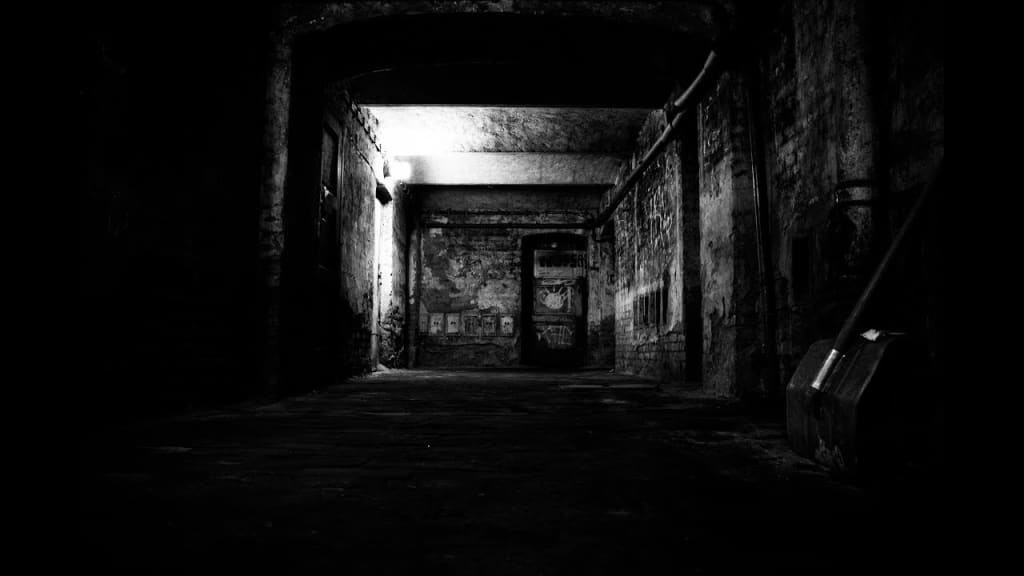
The Holy One studied the locket with thinly veiled hatred. He left his chamber and moved slowly down into the Great Temple’s cellar. The cellar was dark and damp. He lit a dim torch, and it illuminated unadorned walls with old boxes stacked on each side.
He shuffled over to one of the boxes and pulled it away from the wall. Inside was a pile of Aquinian lockets. With a hideous smile, he dropped the goldsmith’s locket into the box with the others. He extinguished the light and left the dark cellar.
There the Aquinian lockets sat, underground and in the dark, never to be seen, valued, or held dear by any soul ever again.
About the Creator
Keep reading
More stories from writers in Fiction and other communities.




Comments
There are no comments for this story
Be the first to respond and start the conversation.