
George R. R. Martin, "Game of Thrones"
About genre fiction

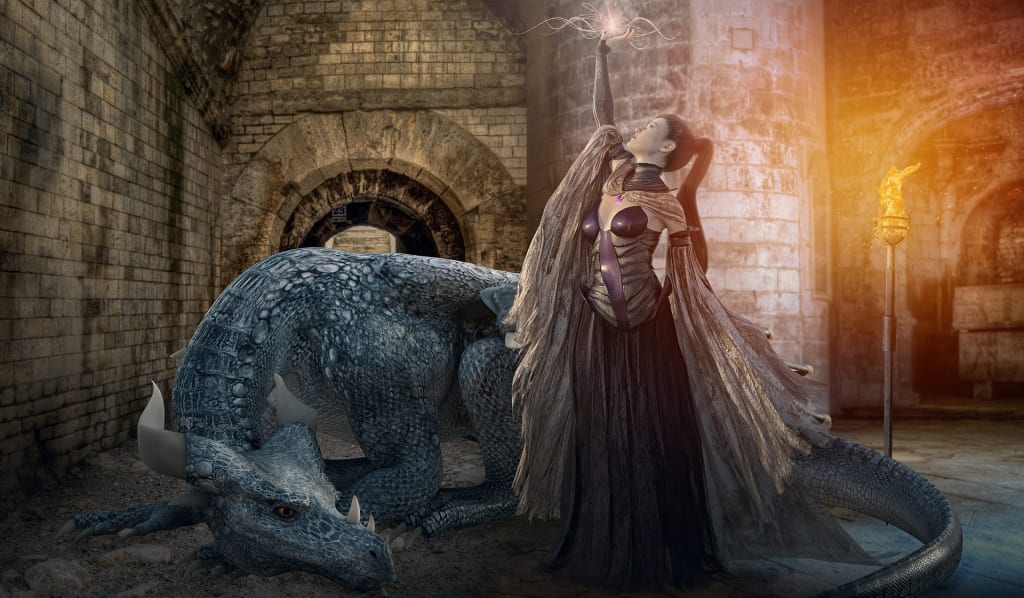
“When you play the game of Thrones, either you win or you die.”
Can a tasty soup be born from a heated soup? The answer is yes, in the case of Game of Thrones, the fantasy novel by George R.R. Martin.
If already in the author’s initials we hear the echo of the name of the greatest exponent of the genre, in other words Tolkien, we can say that the whole novel is the saga of the already seen. Never as in this case, every image, every description, every environment, every battle fought and weapon brandished, is connected to something already heard and observed, something that is part of the cultural background of anyone familiar with the imagination and with the imaginary. All kinds of associations come to mind, seen and heard not only on books, but on television, in the cinema, everywhere.
The tournaments, the armour, the chain mails are reminiscent of Sir Lancillotto in films such as John Boorman’s Excalibur (1981), but also Jerry Zucker’s First knight (1995). The young Sansa looks so much like Meg who goes to the “vanity fair” in Little Women by Louisa May Alcott. The half giant Hodor is similar, also in the name, to Hagrid of Harry Potter (which is from 1997 and is therefore not much later). The various families fighting for the throne are close to the inhabitants of the planet Cottman IV in the Darkover Cycle, or to the historic War of the Two Roses. The bloody, erotic and barbaric atmospheres of the streak dedicated to Daenerys and her husband Drogo remind us of television dramas inspired by the figure of Attila and Genghis Khan.
In short, it’s all a succession of déjà vu. So one might think that the genre has nothing more to offer, that Martin’s novel is only for aficionados influenced by the success of the television series of the same name. Instead it is not so, instead it has been a long time since I immersed myself in a reading of eight hundred pages with the feeling of having really fallen into a fantastic secondary world, attentive to the smallest details and coherent. Those who write gender fiction, in fact, know that, whatever the topic covered, they must never lose the reader’s trust with gross errors. To understand, an eye cannot be glassy, nor the will made of iron, in a universe where glass and iron have not yet been invented. And it has been a long time since I have seen Tolkien’s subcreation in place with such force that I immediately rushed to the bookstore to buy the second of the series and then the third and so on. Within elements already known and attributable to a wealth of common knowledge, Martin must be recognized for his ability to have developed some figures and some situations in a very personal way.
Among the characters, the two girls with the opposite character stand out, the meek Sansa and the tomboy Arya — really attributable to the archetypes Meg and Jo — and Tyrion, an obvious and at the same time ingenious reworking of the fantasy dwarf. Tyrion is in fact a true human dwarf, an unwelcome son of a warlord, with all the psychological consequences that his deformity entails. We are also struck by little Bran, who remains paralyzed by an enemy hand and bravely faces his misfortune, or Jon Stark, the bastard son who would die just to be loved by his father as much as the other children. The characters are described all round, they have a past, a present and a future, they have families and deep psychological motivations, such as Jon’s mysterious illegitimate birth, or the unhappy relationship with the father of the obese, cowardly and clumsy Sam (on closer inspection many of the characters have conflicting relationships with their parents). The author knows all his creatures, knows what they would say in all circumstances, knows how they act, what place they occupy in space and what their movements are.
Beyond the characters, there are also some elements that characterize the saga. One is made up of direwolves — the non-extinct canis dirus — each of which accompanies the scions of the Stark house. We perceive them, large and powerful, agile and ruthless but faithful and affectionate with the owners. The other image that remains engraved in our mind is that of the Wall, the immense wall of ice that for centuries has divided the lands of men from the wild and desolate lands of the north, a hiding place of mysterious things, ready to grasp in the dark and kill. It seems to see it, the immense translucent wall, with its walkways sprinkled with gravel that creaks under the soles of the Guardians, with cracks and melting rivulets, in a world where the seasons are not those we know, but alternate large glaciations with long springs.
Compared to the other fantasy chronicles, great space is given to sexuality, a matter which is usually removed and sublimated. Here intercourses and rapes are frequent and explicit, the universe is wild and bloody, to the point that the television series based on the novel was considered “miseducational” for young people. There is no turning back even in the face of incest or pedophilia. Jaime and Cersei are twins, as Cathy and Heathcliff (without having their dark power) they complete each other and the sexual act for them is a sort of meeting with the lost half. Daenerys marries her warrior prince at just thirteen. Sansa and Arya are girls but already arouse desires in adult males.
Religion also finds a place, forgotten in the atheist Middle Earth and in other fantastic universes. The cult of the septoms and septas, which is replacing that of the ancient gods, recalls the conflict between Christianity and Druidism, so well represented not only by Merlin and Morgana in Excalibur (which, let’s not forget, is based on Malory’s Mort d’Arthur) but also in Bradley’s novels and, in particular, in The Mists of Avalon and in its prequel, The Forest House, built on the story told in Vincenzo Bellini’s Norma.
The narrative techniques applied in the text are the most common and proven of the kind. The characters follow the POV, that is the circumscribed point of view alternating in chapters, a practice refined by Tolkien — who hardly ever loses his hobbit focus — and then pursued by Terry Brooks in the Shannara Cycle. The narrative ability is expressed with what we can call the “circular gaze”. While telling, the author never loses sight of the general scene, has an eye capable of grasping the surrounding details, wonders what the other characters around do, who is moving in the environment, and makes each figure act and express according to its peculiarities.
To conclude, we can say that Martin, within a known and exploited genre, has been able to find a personal interpretation, capable of making sense of what he writes, so that it is not useless, superfluous or, worse, ridiculous.
About the Creator
Patrizia Poli
Patrizia Poli was born in Livorno in 1961. Writer of fiction and blogger, she published seven novels.
Keep reading
More stories from Patrizia Poli and writers in Fiction and other communities.
Life of a Midwife
I remember my mother’s braid touching the road, and her eyes. Her father made bricks in Amritsar, the city of the Golden Temple, he was a Muslim but did not have the Koran in his heart. He was called Mohammed and married Ruttie. On the first night after the wedding, five twins were conceived. My grandmother gave birth to them, one after the other, but all the males were born dead. Only two girls survived, my mother and my aunt.
By Patrizia Poli3 years ago in Fiction
Bomb Scare
It was 2027, and the world never thought it would happen. A missle hit the United States, but it wasn't where they had anticipated. A little town in the northeast was hit by a missile strike, they didn't know why, and they didn't know exactly where it hit, but they did know it was a coastal community, somewhere between Maine and Delaware.
By Gregory Payton7 days ago in Fiction
Out of the loop
I couldn't let my nerves win, This big opportunity just landed out my front door and I would not let it pass without a solid effort. I held onto my portfolio and stepped into the small dilapidated building that had "Tattoo Artist Wanted" crudely written across its windows in decorative holiday paint.
By Mollie Harrison6 days ago in Fiction
Worth the Wait: Puerto Viejo, Costa Rica
Beach bumming in a small Caribbean beach town sounded like a perfect way to end our 6-month trip through Mexico and Central America. Or so we thought. The foul, fishy stench of rotten seaweed hit our nostrils as we stepped from the cramped bus and looked out at a rather depressing, empty, and underwhelming black sand beach. It was pouring with rain, and we had to quickly fish out our ponchos. We thought, this couldn’t be it, could it?
By Sh*t Happens - Lost Girl Travel6 days ago in Wander



Comments
There are no comments for this story
Be the first to respond and start the conversation.