
From a Distance, We Were Perfect
the photo was the last of its kind, because the family in it doesn’t exist anymore

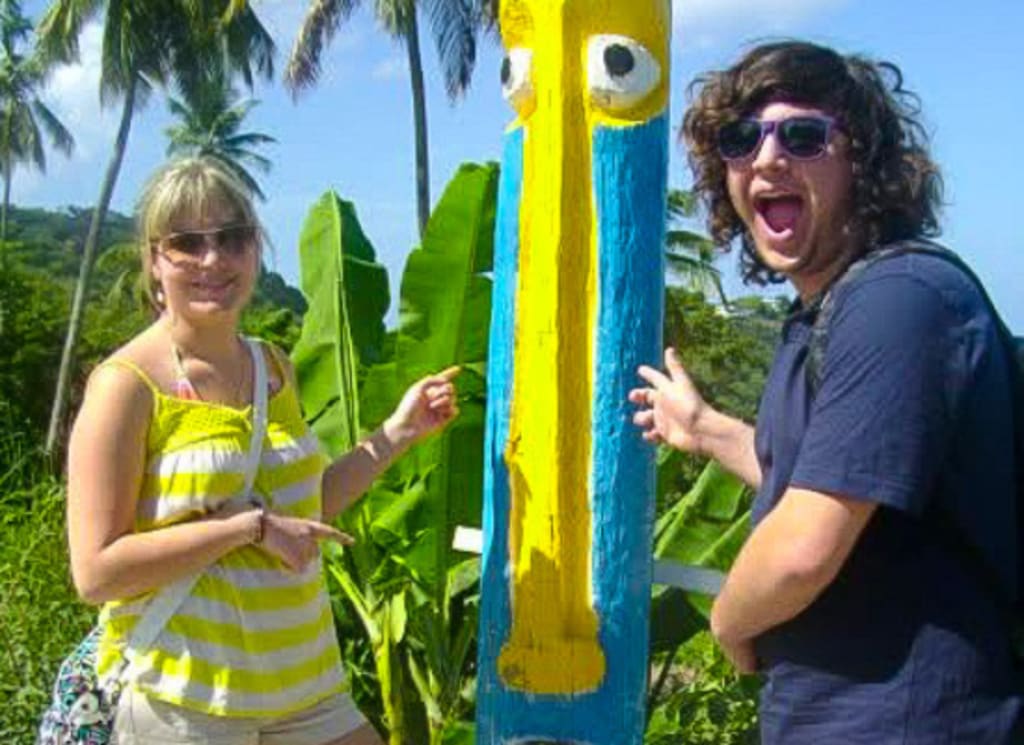
The ocean sprayed salty water across my face, sloshing over the front of the tender boat as we cruised forward, crashing over waves and leaving the massive cruise ship in our wake. My parents had a day of excursions planned. It was hot. I had forgotten an elastic, and my blond hair blew in every direction, curling in the salt air. My makeup was flawless, and my bikini fit perfectly on my size-four body, covered by a crocheted, yellow-striped top I adored.
I was hungover.
The night before, I’d snuck out and met some college guys who were 21. They bought me Long Island iced teas and told me about their accomplishments in their southern drawls. One, a blond-haired, blue-eyed rugby player in a Duke University sweater, took a special interest in me.
I was Canadian, studying at Dalhousie University in Halifax. To them, I was foreign; to me, so were they. I told them excitedly I was going to be an architect. The truth was, it wasn’t exactly what I wanted, but it was close. I loved to sketch, loved the way history clung to old things, loved stories and bringing something new to life. I had my sketchbook with me in my backpack. My teacher had told me I wasn’t seeing. I needed to find my art and provoke emotion. But it was March Break — “Spring Break,” as the Americans insisted on calling it — and I shouldn’t have been thinking about my portfolio. This was a family vacation, after all. I was supposed to behave, smile for the photos, and keep everyone safe and happy.
A responsibility I had already failed at.
The Duke boy had leaned in too close, and I had to call my brother from one of the boat phones outside the nightclub and admit I’d drunk too much and didn’t feel safe walking back alone. We were sharing a suite while our parents stayed in a larger one — close enough to include us when they felt like it, far enough to preserve their privacy. My brother grudgingly came and pulled me away from the baffled rugby player, who insisted he could walk me back to my cabin. Later, he held my hair as I puked all night. He even covered for me the next morning when my father burst in shouting, “Dolphins! Look off your balcony, it’s a pod of dolphins!”
I was still lying on the bathroom floor where I had slept. I leapt up, cranked the shower to steaming hot, and called out, “Sweet! Be out in a minute!” I shaved in such a rush that I gashed my leg badly, then dashed to the balcony dripping wet, squealing about the dolphins.
Afterwards, I pulled on the sundress my mother had bought me, braided my hair, and plastered on a smile for our formal breakfast. I downed orange juice and coffee while I pushed the chef’s plated meal around my plate.
Now, on the tender boat, the cut on my leg throbbed as I looked back at the shrinking ship. Ahead, a catamaran waited to take us swimming before heading into Nassau. A cute deckhand steadied me as I climbed aboard. He had no idea how grateful I was — his hand on mine made me look more flirtatious than unsteady. I gave him a smile; he winked. The stewardess toured us through the boat and offered drinks. The captain and crew encouraged us to try the rum punch. My brother and father were more than happy to oblige.
We were supposed to swim off the back of the catamaran, try the water toys, then head into Nassau for shopping. My parents loved lavish vacations and could afford them several times a year. Once a year, my brother and I were brought along for the “family vacation.” At 16 and 18, we would have preferred being left at home. When they went away, our lives naturally fell into place: my boyfriend moved in, there was always weed, friends dropped by whenever. We made sure my mother’s meticulous house was spotless before they returned, even taking photos of every room as a reference.
I watched my dad stumble and cringed. He always drank too much, and then the tipping began. Everyone. E-V-E-R-Y-O-N-E. He’d start handing out bills to anyone nearby, making requests, waving like a celebrity. “Mr. Tom!” had become our greeting at restaurants and on the pool deck. Without ordering, food and drinks arrived. Our rooms were immaculate, towel animals perched on our beds, chocolates on our pillows. Now my brother had joined him — arms slung around each other, glass after glass of rum punch, belting out songs with the staff.
My stomach turned. Instead of joining them, I yanked off my top, checked who was watching, and cannonballed off the side of the boat. The cool water closed around me, relief from the sizzling air. I floated starfish-style, trying to feel happy. It was a postcard day. I should have sketched it — the blue sky, turquoise sea, island in the distance. Instead, I dove under again, ruining my hair and makeup.
When I surfaced, I heard yelling.
“Have you seen my shoe?” my mother called, holding up her brace. “They’re specially made, they cost a fortune, and I only have one!”
The crew scrambled to search. I scanned the water, bracing for her reaction. She could lash out at staff, blame us, or just decide it wasn’t worth a scene. It was always a toss-up.
She hated those shoes. I wouldn’t have put it past her to lose them on purpose. Ugly and expensive didn’t fit her carefully curated look. My mother was fashionable, stunning — hair, nails, outfits always on point. Doctors had told her she might need a knee replacement without the brace. “Stop running, wear the brace, forget the heels,” they’d said. But she was stubborn. She was a runner, and so was I. Our family didn’t do things halfway. If we ran, we ran marathons. We had to be the best.
“It’s okay,” she said smoothly now, holding up the surviving shoe. “I’ll buy another pair in Nassau. Perhaps we should head in?”
I climbed out of the water. The same deckhand handed me a towel. I wrapped it around me, grateful. Lunch was served while we waited to dock. I changed into my American Eagle jeans, thong peeking over the waistband, crochet top with no bra. My mother scowled but said nothing in front of the crew. I put on my Juicy Couture sunglasses to block the sun from my pounding head. Her disapproval burned at me, but I knew she’d save it for later. “Why be nice?” she once told me when I asked. “It’s their job. We pay well. They should know when something isn’t right.”
At the dock, the deckhand who had steadied me earlier was now helping my drunk father and brother wobble off the boat. My mother wore borrowed shoes from the stewardess leading us into town. Her job was to steer us into the “right” stores, keeping other customers out. First stop: shoes. My mother bought three pairs, declaring her love for each one, kissing my father’s cheek as he beamed. Then jewelry. She tried on necklaces, earrings, bracelets. My father grinned, sipping another drink, while my brother downed his. She bought a diamond necklace, chandelier earrings, and a studded gold bangle. I was handed an emerald tennis bracelet with matching studs.
I trailed along with my little bag, bored and disappointed. I’d wanted to explore the island on my own, maybe join the southern boys on ATVs like they’d invited me the night before. Instead, I was here, watching my mother play queen.
Then Dad remembered his tradition — the muscle shirt. He had to have one from every trip, a tacky tank top stamped with the location’s name. His collection was huge. He and my mother dashed off to find one, leaving me to shepherd my brother. He was staggering, sick from heat and booze. I grabbed his arm and guided him toward the ship.
At the gangway, the staff asked for passports. My stomach dropped. We hadn’t left with the other passengers; we’d gone with the crew, and they didn’t recognize us. I had mine. My brother had nothing.
The doors were closing. My parents were gone. Staff eyed us like stowaways. My brother groaned that he needed a washroom, swearing under his breath, ready to snap. Sweat rolled down his face.
I pressed my hand against his back, steadying him, and gave them our cabin number. That changed everything. They checked, saw we were in a high-end suite, and their attitude flipped. Smiles, apologies, promises of soda water and snacks sent to our room. Wealth smoothed it over again.
Back in our cabin, Raleigh and I collapsed. I read while he played Game Boy. The phone rang hours later. My mother: they’d “barely” made it back, but tonight we had a five-course dinner with the captain. Formal wear. Photos at eight.
We dressed carefully. My brother zipped my green gown, fastened the bracelet at my wrist, buckled my heels. I told him he looked handsome. We stepped into the hallway, where a server greeted us with cocktails. We were underage. No one cared. Mr. Tom was tipping.
We found our parents posing inside a giant shell, my mother directing the photographer as she sipped champagne. My father grinned beside her. My brother looked horrified when she suggested we climb in, too. I shook my head. She frowned, then swept us to another backdrop.
The photographer arranged us: father and brother in the back, mother and me in the front. “Hands on hips, chin up, weight forward,” the assistant coached. We obeyed. Smiling, all of us. Click.
Years later, I still look at that picture. I love the green dress, the way my hair shines, the wide grins on our faces. My mother showed it to everyone, right alongside the photo of her and my dad in the shell. We looked beautiful, tanned, toned. The perfect family.
It’s funny how I can love the photo — because I like how I look in it — while remembering the trip as a constant battle of wills, walking on eggshells, cringing at drunk parents, and wishing I could run away with a boy from Duke who may have very well drugged my drinks.
About the Creator
A Lady with a Pen
Caroline Robertson's, books are beloved by both adults and children alike for their illustrations and engaging stories. She takes readers on an adventure, giving them the opportunity to explore different cultures, settings, and characters.
Keep reading
More stories from A Lady with a Pen and writers in Fiction and other communities.
This Is What I Do When People Throw Rocks At Me
Rocks have been thrown at me for a greater part of my life. Some have been small and missed hitting me. When people don't get a reaction from me, they throw bigger rocks with a better aim. Many have been hurled at me with precision over the years. For a long time, I thought my only options were to dodge them or be crushed by them.
By Margaret Minnicks4 days ago in Confessions


Comments
There are no comments for this story
Be the first to respond and start the conversation.