
Forget Duolingo! Google Translate’s New AI Feature is the Future of Language Learning
With context-aware translations, real-time conversations, and pronunciation coaching, Google Translate’s AI is transforming how we learn languages—making traditional apps look outdated.
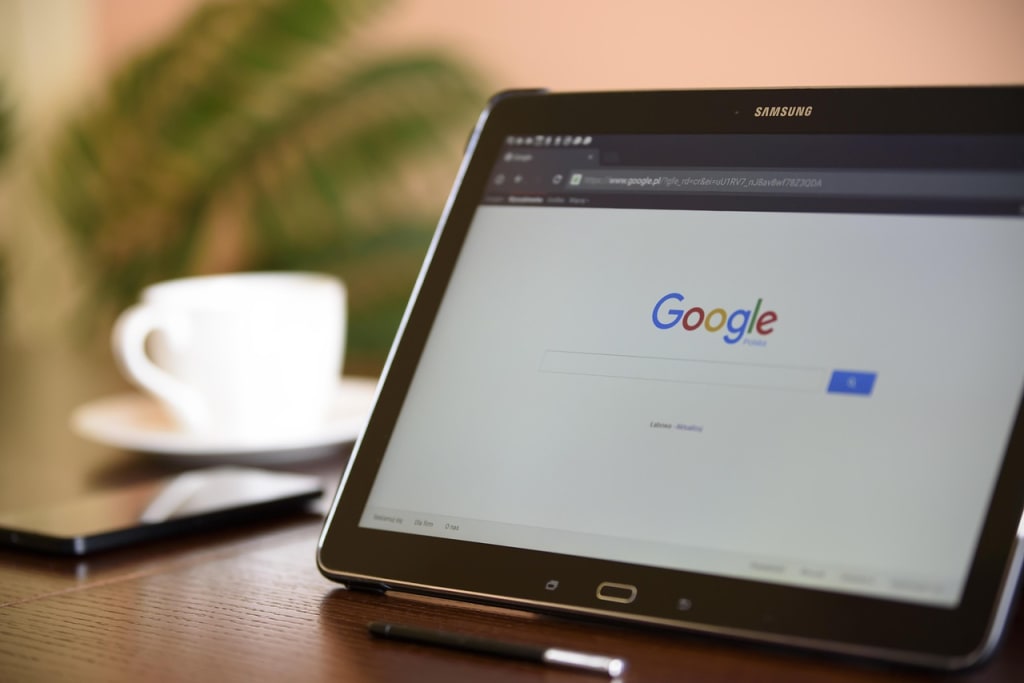
For over a decade, language learning apps like Duolingo, Babbel, and Rosetta Stone have dominated the market, helping millions of users learn new languages with gamified lessons and structured curricula. But a seismic shift is occurring in the world of digital linguistics. With the recent rollout of Google Translate’s new AI-powered feature, the paradigm of language learning is about to change forever.
Google has introduced an advanced AI capability into its Translate platform that does far more than just direct translations. It now offers context-aware translations, real-time conversation interpretation, and even spoken language coaching—all backed by generative AI. In short, it doesn’t just translate anymore; it teaches.
A Leap Beyond Traditional Apps
Duolingo and similar apps have thrived by making language learning accessible and engaging. But they also come with limitations. They focus heavily on vocabulary drills, fixed sentence structures, and repetitive exercises that often fall short of real-world applicability. Many users struggle when faced with natural speech or complex sentence patterns that don’t conform to textbook rules.
Google’s new AI feature addresses this gap directly. Instead of only giving a one-to-one word translation or fixed phrase, the AI now considers tone, cultural context, idioms, and even conversational intent. For instance, if you input the English sentence “I’m feeling under the weather,” instead of offering a literal translation, Google Translate now interprets and renders it into the most natural equivalent in your target language. This helps users learn how people actually speak.
Real-Time Conversational Training
Perhaps the most revolutionary aspect of Google’s AI feature is its conversational mode. By simulating real-world dialogues in real time, it allows users to engage in voice-based conversations where the AI responds naturally, like a fluent native speaker.
These conversations adapt to the user’s skill level. Beginners might receive slower, clearer responses with more literal phrasing, while advanced learners get rapid, nuanced exchanges complete with slang and cultural references. This is a monumental leap beyond flashcards and multiple-choice questions. It’s akin to having a personal language tutor on call 24/7.
Personalized Learning Through Context
What sets this AI apart is its contextual intelligence. If you're learning French for a business trip, it adapts lessons and translations to focus on business-related vocabulary and etiquette. If you're preparing for a vacation in Spain, it shifts to travel lingo and local expressions. This personalization mirrors how humans actually acquire language—through purpose and context—not just memorization.
Moreover, Google’s AI learns from your interactions. If you continually translate restaurant menus or ask for directions, it tailors future suggestions accordingly. This dynamic feedback loop helps users build functional fluency faster than rigid, one-size-fits-all language apps.

Speaking Like a Native
Pronunciation is one of the biggest challenges for language learners. Google’s new AI offers real-time pronunciation feedback. You speak into your device, and the AI not only tells you if you’re right or wrong, but explains where your tongue should be, how to shape your mouth, and even how to emulate the cadence of native speakers. It’s like having a speech coach in your pocket.
Compare this to Duolingo, where pronunciation exercises are often binary—pass or fail—without nuance or corrective advice. With Google’s AI, learners get a breakdown of their pronunciation errors and a clear path to improvement.
Democratizing Language Mastery
Perhaps the most exciting aspect of Google’s innovation is accessibility. Unlike some premium language apps that place essential features behind paywalls, Google Translate remains free and globally available. Its new AI features are being integrated gradually and will eventually support a wide range of major world languages.
This opens the door for millions—students, immigrants, travelers, and professionals—to access advanced language training without cost barriers. The potential for global communication, inclusion, and opportunity is staggering.

The Future Is Now
Language is more than vocabulary and grammar; it’s culture, tone, rhythm, and emotion. Google’s new AI-powered Translate recognizes this. It’s not just helping users learn words—it’s helping them connect.
While Duolingo and its counterparts still have value, especially for structured learning and early-stage vocabulary building, Google Translate’s AI is redefining what language learning can be: immersive, intuitive, and indistinguishable from real-world interaction.
In a few years, we might look back at the gamified language apps of today the same way we view CD-ROM language programs from the early 2000s—useful in their time, but no match for the real-time, intelligent, global classroom that AI is now building.
Would you like a version formatted for a blog or newsletter?
About the Creator
Keep reading
More stories from Nazifa Bushra and writers in Fiction and other communities.
"Apple’s iPhone 17 Secrets Revealed: The Future of iPhones Looks Wild!"
Apple’s iPhone 16 series hasn’t even hit the shelves yet, but leaks about the iPhone 17 are already making waves. A new video from a reliable source has revealed what could be Apple’s biggest design shake-up in years. The most recent information about the iPhone 17 lineup and its most significant changes can be found here.
By Nazifa Bushra9 months ago in 01
So You Decided To Become a Nurse Practitioner:
So you decided to become an "Advanced Practice" nurse. Congratulations!... is what I would say if this was a good idea. Grad school? In this economy? What were you thinking? Likely it was something along the lines of either 1) “I've seen these other chucklefucks do it— Why can't I?” or even 2) “I've got a nice career, I should shake it up. I miss feeling like I have no clue what I'm doing.”
By Sandor Szabo4 days ago in Fiction
Mirror on the Wall
GillVille Drive was a quiet neighbourhood with recently paved roads, manicured lawns, a playground and soccer field, and houses much too large and extravagant for the average person to afford. Some houses had two garages, third floor balconies, backyard ponds, and one even had solar lights in the shape of owls and pinecones lining the walkway to its massive oak front door. This such house was the left half of a duplex. The other half was unoccupied, but balloons of yellow, white, and blue brushed against each other softly in the wind. On each balloon was written the words “open house” with too many exclamation marks. The balloons looked cheap and informal. They stood out for that reason. Two of the yellow ones had already popped. They dangled limply on their string.
By Gillian Corsiatto3 days ago in Fiction


Comments
There are no comments for this story
Be the first to respond and start the conversation.