
For the Crows
Whispers of Vengeance in a Sky Painted Black
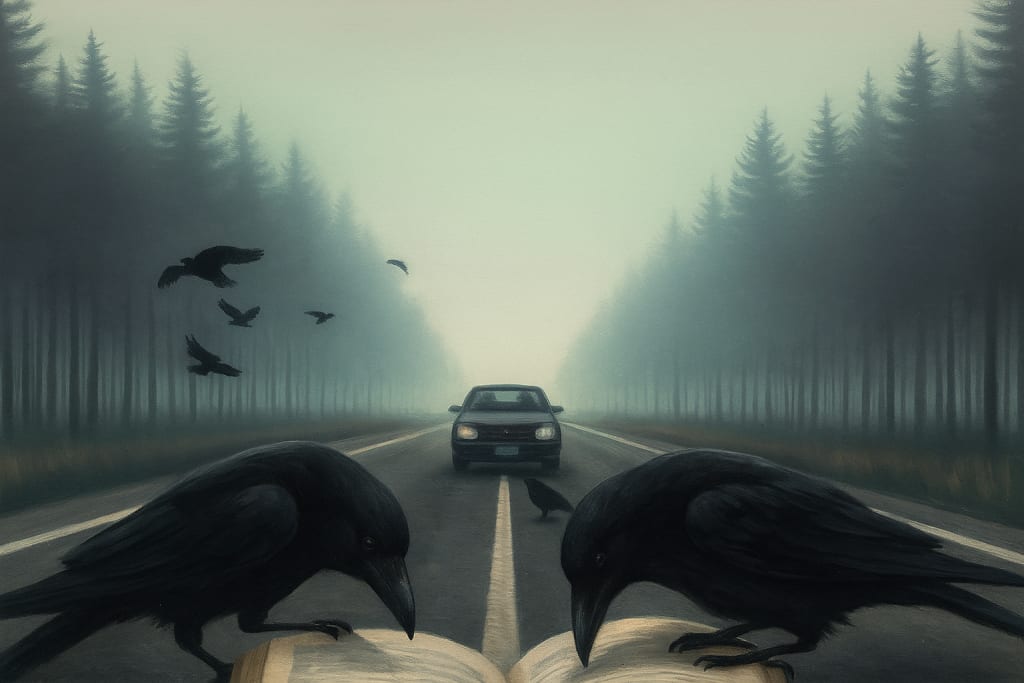
The day the crows stopped circling over the barren wheat fields of Dry Hollow, people stopped pretending that the past was buried. In the West, silence is rarely peaceful—it’s a warning.
The American West is a land of long shadows—cast not only by the setting sun but by the deeds of those who came before us. “For the Crows” is not just a story about birds picking at bones; it’s about reckoning, justice, and the dark inheritance we try to ignore until it shows up clawing at our doors.
Dry Hollow, Montana, population 317, hadn’t made national news since a cattle rustler went missing in the ‘70s and was found thirty years later under a cottonwood, all bones and belt buckle. Folks whispered about justice in quiet tones then. But now, the whispers are back—only this time, they’re about the crows.
They started acting strange. Not strange like flying into windows or dropping dead—no, stranger. They vanished. One morning, they were just gone. For a town used to watching the crows wheel overhead like smoke signals, their absence was louder than a gunshot.
That’s when things started happening.
A local rancher, Walter Griggs, went missing first. A tough old cowboy with a mean streak and a history of “disciplining” his hired hands with the back of his hand. No one mourned. The sheriff said maybe he’d wandered drunk into the hills. But everyone knew Walter had secrets, the kind the wind doesn’t forget.
Then came the fire at the abandoned chapel. The townsfolk liked to joke that the only thing that place worshipped was rot and rust. But the night it burned, there were no firetrucks. Just the orange glow against the hills—and the sudden, eerie return of a single crow perched on the steeple as it collapsed.
People say the West is a ghost these days, replaced by fast food and faster Wi-Fi. But the truth is, the West never left—it’s just waiting in the silence between stories. It’s in the way an old man tips his hat when he sees something he doesn’t like. In the way a bar quiets when a stranger orders whiskey without ice. In the way we still try to explain away justice when it doesn’t come in a badge or a courtroom.
In “For the Crows,” the justice doesn’t come from the law. It doesn’t even come from the living. It comes from the past—and the past isn’t done with Dry Hollow.
There’s a particular Western flavor to vengeance. It's not loud or flashy—it’s patient, slow like molasses, bitter like coffee gone cold. And it almost always involves silence before the storm. The story draws inspiration from the old American folktales—creepy and moralistic, where the land itself has a memory and nature isn’t indifferent but judgmental.
And the crows? They’re not just birds. In Western folklore, they’re messengers. Omen-bringers. Spirit-guides. Their departure was the first warning, and their return—well, that’s when people started listening.
You see, the West has always been about space—vast, open, unforgiving space. But what fills that space? History. Ghosts. Regret. And sometimes, just sometimes, justice finds its way back through a crack in the earth.
As the bodies started surfacing—one under the old railway bridge, another in a dry well near the saloon—it became clear: someone, or something, was balancing the scales. All the folks who’d buried their sins in the red dirt of Dry Hollow were now paying the price.
What makes this tale more than just another spooky Western revenge story is its reflection on how tightly we try to control our narratives. We write history books, bury bones, pave over pain. But in the end, stories—like the crows—return. Especially the ones we hoped had flown away.
“For the Crows” isn’t just fiction. It’s a mirror held up to the forgotten towns across the Midwest and Mountain West, places where justice hasn’t always come knocking, and silence has often been the price of survival. But justice, like a flock of black wings, can wait.
And when it comes, it doesn’t knock. It circles. It watches. And then it lands.
So if you ever find yourself in a small town where the crows are gone, take a moment. Look around. Ask yourself what’s buried—and who might still be waiting for the wind to blow the truth back through the valley.
Because out here in the West, we don’t bury the past. We just leave it for the crows.
About the Creator
Bomb Scare
It was 2027, and the world never thought it would happen. A missle hit the United States, but it wasn't where they had anticipated. A little town in the northeast was hit by a missile strike, they didn't know why, and they didn't know exactly where it hit, but they did know it was a coastal community, somewhere between Maine and Delaware.
By Gregory Payton4 days ago in Fiction
The BAFTA Awards
By now, in a stunning departure from recent years, most of the world is aware of what happened at the BAFTA film awards. Social Media Headlines will tell you the bare bones: that John Davidson, a Tourette's Syndrome advocate, shouted a racial slur at two Actors of Colour, Michael B Jordan and Delroy Lindo.
By Natasja Rose6 days ago in Psyche


Comments
There are no comments for this story
Be the first to respond and start the conversation.