


I don’t remember the first time I was standing in this place, but I remember the second. The sun had set, and we had just eaten dinner as a family in the ornate dining room of the grand, white-stone villa in the leafy borough of Annely that I used to – and, sometimes, accidentally, still – call home. I was late to dinner that night. I couldn’t bring myself to leave the balcony that was in my bedroom. Couldn’t bring myself to leave the sight of the city sprawling before me, with its endless valley of white-bricked houses and buildings, its year-round lush green grass and palm trees, the lavender-scented balmy evening breeze, and its cloudless blue sky, shattered by the molten gold of the setting sun and hues of pink. It was heaven, a moment so perfect and serene that it seems only logical that the moments to follow it would be so exceedingly hellish, if only to even the scorecard.
The night came quickly after that. We were hurried to the Reckoning, cutlery barely set on plates, goblets of wine only half drunk. As we stood in the rapidly cooling evening, as the square quickly closed in with friends and neighbours around us, the food in my stomach turned leaden. I’m sure it would’ve this time, too, if there had been enough in it to. I remember the buildings around us no longer having the gilded edges of sunset and instead found them to look washed out and pale, sickly, even, from the blinding floodlights surrounding the Square.
The crowd gathered was silent, as it is now. Then, though, there was an air of uneasy anticipation, an uneasy fear caused by the first Reckoning in fifteen years. Now, there’s a hunger in the air, a thirst for blood to be spilled.
The last time, I was holding the hand of my five-year-old brother. I held him close when the noise began, half in an effort to comfort him and half in an effort to muffle his hearing. The last thing any kid needs to hear is a live gunshot, although many round these parts would disagree with that. I made sure not to explicitly comfort him, for the crowd assembled would not take kindly to a child being coddled, especially not at a Reckoning. For these were acts of Moral Justice, the spirit of which the Republic of Kaidan, our cherished home, was founded on, and from nothing so piously perfect as Moral Justice should our eyes be averted. To do so would be to insult the Commander Kaidan himself. So we stood there and watched with forced, fixated stares as a man dropped to the floor with a hole in his head. As the people gathered, mannerly and well-behaved as ever, did not cry out with triumph, but silently offer up a prayer of thanks to the Commander for his ingenuity that had saved them all. Not that there was religion in the Republic of Kaidan. There was no place for it, but if there was anything that was worshipped with the same reverence and ferocity, it was morality. And wasn’t the Commander, and his subsequent Republic, the very epitome of moral.
The Republic of Kaidan was founded upon three tenets: morality, purity, truth. Its founder, the First Commander in Chief, Bartholomew Weiss Kaidan, was an honoured hero throughout the country. Commander Kaidan’s personal quest to make the world a moral place stemmed from his extensive mistreatment in the state that existed before his Republic. A corrupt place, driven by money and power and greed, fuelled by immorality. Crime was rife, injustice even worse, and ultimately it was the incessant greed of men never satisfied that would bring that civilisation to its knees. Growing up in that kind of environment drove the Commander to study harmony within society, within oneself, within one’s home. His research resulted in him finding links between morality and harmony – the more moral a person, the more harmonious their life. He turned that research into a thorough experiment: studying the biological implications of morality and discovering a distinct pattern within human DNA which allowed the measurement of morality. After decades of testing and finalising, the Commander developed the Kaidan Measure of Morality – a scientifically proven measurement of a person’s morality, ranging from One to Ten – One being morally pure and Ten being completely and utterly immoral, beyond any redemption.
Shortly after implementing the Measure locally, Kaidan’s home was plunged into conflict as they stood on the precipice of another World War. They hadn’t the means to fight in it and they would never survive it, let alone have any chance of winning. Kaidan quickly came to power with an agenda of neutrality. With international treaties signed, the rest of the world occupied with killing each other, the Republic was founded. Despite a war starting and ending, the Republic’s crime reduced rapidly and harmony within society was largely achieved. Decades upon decades of a peaceful society followed and proved the Commander’s research correct. It cemented a system that was true to the Measure and Kaidan’s teachings, mandating yearly Measuring in order to ascertain citizens’ morality with the Morally Pure safe, thriving and in charge of safeguarding the Republic from the Immoral. A caste system evolved from the Measures, resulting in boroughs like Annely being exclusively for Ones and Twos, the wearing of gold strictly only for Ones. Reckonings served as a reminder that immorality beyond redemption, to Measure as a Ten, would not be tolerated.
It’s funny the detail in which we remember useless things. Like the story of Kaidan and the Republic, I could’ve once told you it in such detail you’d think me a time-traveller. The tiny specifics, the information omitted from public record but instead recorded in memoirs and letters and photographs of the time.
Nowadays not so much. I remember the basics, the summary. Beyond that I don’t have the energy or desire to know. In fact, I don’t remember much about anything now. I could piece events of my life together like a generic timeline of something’s history, but I can’t really recall the memories. I spent twenty whole years living a life that I can now only talk about for half a minute, could barely write one hundred words on.
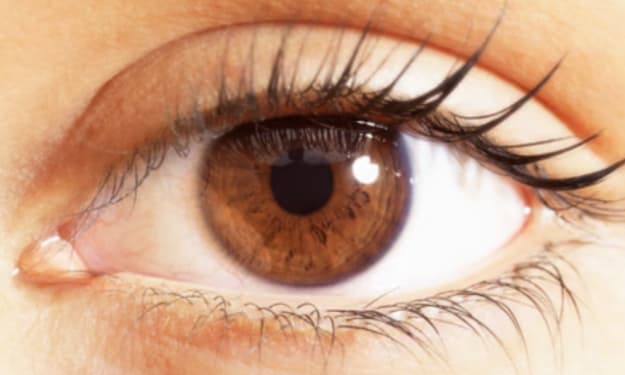
I remember the time with him, though. In the days after I was outcast. Every single detail of him. The onyx black hair like the wing of a raven. It grew peculiarly quickly and not long after I’d cut it would it be brushing his brows again. Framing eyes of jade. The first time I met him, I couldn’t make their colour out in the dim light. I remember having a weird, inexplicable hope that they were blue or green, and when I realised they weren’t just green, but a curious, almost cloudy jade colour, I was unfathomably delighted. He had a freckle on his left cheek, close to the side of his nose and just beneath his eye. He had the beginnings of frown lines, tiny, featherlight lines that were etched into his forehead. His laugh was the very essence of my soul. I’d know his laugh in a room of a thousand people. His smell, too. I tried to describe it to him once but failed miserably. Nothing could properly capture his spirit. His face was entirely more beautiful and interesting than any painting or photograph could detail, and no symphony in the world could measure up to his laugh or the timbre of his voice. An endless sonnet, devoted entirely to him, could still never convey the depths of how I saw him. It’d all fall woefully short.
He gave me a gold, heart-shaped locket that belonged to his mother and I clutch it now. The bloodlust of the crowd grows almost tangible. Their eyes pin me down, wild with excitement, fury, vengeance. Someone points at me holding the gold and sneers but thankfully no-one notices. There’s a lot of things I could handle them taking, but this isn’t one of them. To think I grew up with a golden spoon in my mouth and now they grudge me this. I think of all the moments leading up to now. The glittering life before but the truly golden times with him. Twenty years a One and however long has passed as a Nine. And now a Ten. Fleetingly, I wonder if I’m a better person now. I know, after everything’s said and done, that the answer is yes.
The marksman takes aim, the bag is put over my head.
If only they could see that too.
About the Creator
Seannine Henderson
I write things.
Keep reading
More stories from writers in Fiction and other communities.
Echoes in Her Eyes
I was staring at my aunt’s photograph again, the one I always kept on my desk, the one where her eyes seemed to hold both fire and sadness, when a strange pressure filled the room as if the air itself was listening to my thoughts. The light from the window bent strangely across her face, catching in her eyes like trapped sparks, and the room felt tight, as though the walls had inched closer. Dust floated slowly in the air, frozen in place, as if it were afraid to move. I whispered her name, wondering what she felt on the day she chose to stand up for herself and for all Iranian women. The world around me shattered into silence. The silence rang in my ears, loud and absolute, swallowing every sound I had ever known.
By Audrey Sabetfarda day ago in Fiction



Comments
There are no comments for this story
Be the first to respond and start the conversation.