
She had probably been hanging there all night when they found her. She had been young and lithe from what they could tell, her previously sharp ebony skin now turning a sickly gray. They agreed that she must have once radiated real beauty. A beauty that had probably gone unnoticed in the small town they were in. They hoped it had anyway. The alternative was likely worse.
Night had fallen when they found her in the barn, searching for somewhere to bivouac for the night and escape the swelling rain and storm. Her silhouette was dangling lightly from the upper beams. A white-yellow glow from the rusted oil lamps they carried was shining onto the crown of her head. Ethereal and angelic, even in death.
Her feet were dangling a good 15 feet off the ground, out of reach of even the tallest among them. It must have been a calculated effort for them to hang her from up there, they’d brought considerable dry rope. Her long black hair was sleek, shimmering with the refractions of the burning lamps, and fell stark against her starch linen dress. The hems of the dress were muddied and there were ruffles and muddy handprints around the groin. Her head hung low, but if you looked carefully, you could see her frightened eyes, squeezed of all life. Rich and deep, chocolate brown irises reduced to desperate fear.
Her bare feet – dusty with ashen earth, the same Southern earth the regiment scorched when they left Atlanta and marched to the sea – snapped the men back to reality, no longer pondering how this young muse had been so needlessly murdered. If anything, it was this detail that disturbed the men, that made them wonder if it was their coming that had prompted this last act of cruelty from the townspeople, before they fled. This detail, like lots of other details in a soldier's life, was not voiced by any of them. But it was there, adding to the bile that welled deep in their souls and gnawed away at them, day by day.
Someone shone his lamp across the rafter she hung from. Carved into the wood in crude lettering, they’d left an epitaph: “All negroes free - to die.” The lamp paused on it and those who could read absorbed its tragedy and murmured it to those next to them who couldn’t. They didn’t need to, they all knew why she’d been killed. A reminder of the old ways, a reminder that for all the Confederate soldiers and all the Georgian crops General Sherman ordered they kill and burn, that their efforts weren’t liberating anyone. Not really.
It was this that stirred the men to cut her down. Ungracefully hoisting up the lightest among them by way of the side of the barn, they got young Mclean onto the rafter, knife gripped between his teeth. He crawled across the suspended beam, over to where her body swung.
“Shucks, gimme mo’ light.”
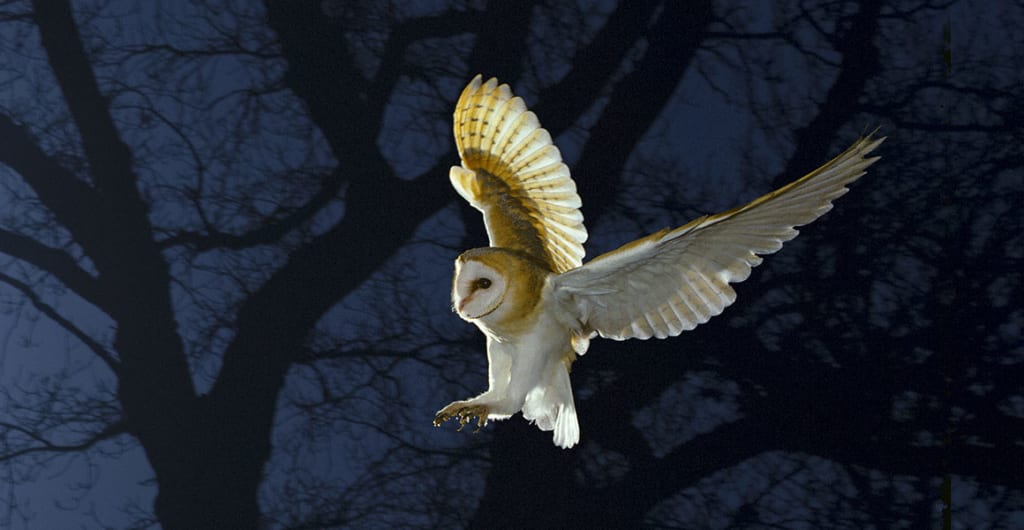
Someone re-lit a lamp and passed it precariously up toward him by way of his bayonet. Mclean balanced it atop the beam, noticing rafters full of hay at the other end of the plank. Between two bales was a white barn owl, her alert and lively brown eyes searing straight into Mclean’s. The feathers on her wings were delicate and nimble, but she fanned them out aggressively. Underneath them were two pure white snowballs, her freshly born owlets, cozy in their nest, untouched.
***
The storm unraveled and the men decided against burying her in slush and mud, so they had a sheltered night to get to know her, for they were waiting rather than fighting. It was near the start of May, 1965. The South was falling, General Lee had surrendered to Ulysses Grant at Appomattox. The Union Army was happily expecting victory. Most of the men were too. But the war had been grueling and hard.
It was Captain Franklin who decided to name her Eugenia, as he directed two of the men to place her gently behind two bales in the corner, and to close her eyelids. He’d studied at Princeton and knew old Greek names and places and the owl Mclean had found unlocked something from an old lecture hall, a time buried by four years of musket balls and grime and warring. The owl was the goddess Athena’s sacred animal, the source of her judgment and wisdom. Like her, it had exceptional vision, the ability to see what others could not. Of course, in this barn something had happened that neither god nor bird should ever bear witness to.
Nevertheless, Franklin thought of the perfectly formed face, the high, proud, aquiline cheekbones and saw someone who, in some distant place, could have been of a higher station. Royalty, or some divine icon, or a high priestess. Not a disposable slave. So he called her Eugenia, meaning nobility.
Eugenia offered something different to each of them that night. For Dorsey, she recalled a young Negro girl he used to know back home in Pennsylvania. She labored in the orchards as a picker during the long, lazy summers of his youth and he would tell her jokes whilst he whittled or gleamed his hunting rifle. She would occasionally tell him jokes back, which he enjoyed. She was the first woman who never asked anything of him, not to shine his shoes or to leave the room. He was free to leave whenever he wanted or whenever he feared his friends would come looking for him and question his present company.
For Mackenzie, Eugenia, to his concealed shame, had reignited old lusts. Not for her specifically, as she lay, but just a general hunger of youth. The relentless war had dulled his senses. The same war, the same guns, the same cigarettes, food, clothes. It rendered him listless when some of the men took to pleasure houses, or worse, during the long raids in the South in 1864. She reminded him of a time in his life that had been taken from him, when he should have been free and smiling and smitten with girls his own age. He felt a hot spiky guilt flush through him that the sight of Eugenia had provoked such a feeling, and he hid himself in his dirty jacket, feigning sleep.
The mother owl’s hoots kept some of the men up and awake, the specter of the fallen angel in the corner haunting their thoughts. Conway-Smith, when he first saw her as they came into the barn, thought that she was the purest thing he had seen since he slaughtered a young lamb on the farm. Small and fragile, but needed for meat and bone. The colors were still vivid in his mind, the pale fluffy thing trotting along the fresh green dew of the field, the red hot blood that spilled when he eventually took it and bore down the knife he’d been gripping tightly for over an hour. The scream was piercing, the silence after worse. Even after four years of war, of shooting at faceless men, not knowing where he was aiming or what he was hitting, that was the thing he still felt most guilty about.
Normally undisturbed nights like these would be valuable moments of companionship for the men, to be prized and used to smoke and drink and light fires. They didn’t need a fire tonight, summer was already heavy in the humid air and mosquitos were homing in on their lamps. When they’d been fighting, the nights were so long that they sat around the fire for hours, dreaming up the anecdotes they would share with the girls they hoped were waiting for them back home. Stories full of heroism and guts. Men from the same towns would bicker over who would get to the best ones, who would play the starring role. Because the reality was that none of them wanted to tell a truthful account. It would only disappoint. And anyway, the alternative, telling stories about home, always eluded them. When they tried, they only got so far. Details, like names and faces, were often fragmented. Most couldn't quite get their mouths around their memories.
***
In the depth of the night, when most of the men had fallen asleep, the mother owl flew out from a crack in the roof to go on her evening hunt. Her wings stretched and suspended her in the dense warm breeze, the last breaths of the storm. She glided over a stretch of prairie, looking for field mice. She flew out of the moonlight, arching down into the crops, the translucent glow camouflaging her white coat. She felt familiar and untouchable as she successfully went about her routine, quickly returning to her chicks with little fuss.
***
Adamson barely ever slept. He hadn't really slept the entire campaign. So he was awake as the dawn crept in, and he decided to go check on Eugenia while the others snoozed. It was because of this that he really saw her first. Hanging from the rafters, in the soft glow of the lamps the night before, Eugenia had looked hauntingly beautiful. But as he inspected her more closely, he saw some differences. Parts of her eye and cheek had been pecked at. Her tongue peeked out of her blue lips, swollen and rigid. Violent purple bruises flared up on her face, even though her skin was naturally very dark. There was a tear on the strap of her dress, revealing an oozing bloody cut that was making a drippy, slow trail down towards her breasts. Flies and mosquitos buzzed and whined. As uncharacteristic as it may have seemed, she smelled bad, a rotten, putrid eau de parfum that was simultaneously sick and sour and somehow unfamiliar, though he’d seen plenty of dead men.
As he knelt down over her, his knees buckled slightly. He fired up half a cigarette, his last, and made sure to blow the smoke away from her. He aimed it at the bugs that tormented her, trying to suffocate the bastards. He looked back at her limp body. A thought flashed through his mind which he tried to quash. She was ugly now.
He reflected for a moment. There wasn’t much he could do for her. So he decided to bury her now, alone, and that would at least spare her the indignity of the last people to ever look upon her seeing a fly-eaten corpse. It was a fucked-up thought, Adamson recognised, but lots of fucked-up things had happened. He heaved her over his shoulder and walked through the barn door clumsily, into the light morning. He carried her 100 yards, into a deserted field with a peach tree at its end. He left her body for a moment, hurrying back to the farm to find something to dig with. He returned with a sharp broken piece of flat timber. It would have to do.
He dug unevenly for an hour or so. It was barely a grave, just a shallow hole really. The mosquitos and flies still attempted to feast on her body as he worked, and he would from time to time attempt to flap them away. He sometimes spoke a few words to her, some apologetic for his poor efforts, others trying to pick out the notable aspects of her final resting place, like the pink, ripe peaches he noticed on the tree. It was all meaningless bullshit really, just like the words engraved over her dead body. He wondered if the men who did it felt any remorse, and if one day he and the men would have a chance to kill them.
He rolled her body into the grave and filled it in. When he was done, he chucked the makeshift shovel to the side and stood over her, head bowed. Then he couldn’t help but laugh, a small chuckle escaping from his lips. He wasn't sure what to do. So he just began talking, reaching for anything. He found a prayer: “Hail Mary full of grace. The Lord is with thee. Blessed art thou among women and blessed is the fruit of thy womb…pray for us sinners now and at the hour of our death. Amen.” He said it once more and then turned away, back towards the barn. He felt a little sad, but the only thing he noticed was that he was slightly out of breath and his palms were moist.
He creeped back inside, almost forgetting that an entire company was in there with him. A few who were awake asked him where he’d been, and where was Eugenia’s body? He told them he’d seen to it. When they left the barn later that morning they set it aflame, as they had done to every Southern farmhouse they passed through on their march to victory and, now, on their march back home. Adamson looked back at it as they walked down the road leading out of the deserted town, lit like a votive candle at church, crackling and burning for their sins. He suddenly remembered the owls that Mclean had found and prayed they were safe.
About the Creator
Keep reading
More stories from Louis Allen and writers in Fiction and other communities.
The Last Jam of Fat Foggy Waters & The Streetcar Band
It was a huge club, well over one hundred foot square. The air was humid, real heavy delta air. Cigarette smoke greyed and dulled the crimson lights. There was tremendous noise and chatter, booming voices calling out to old friends and locals across the room. The walls were wooden and disrepaired, like an old dying plantation house, slowly eaten away by the lethargy of the tropics. Perspiration was slick on everyone’s faces, the crowd rippled with white handkerchiefs mopping up brow sweat. I raised myself on the edge of the bar, peering over the throng to try and locate him. I could see the band setting up on stage, clarinet, guitar, drums, double-bass: Joe Miami, The Flannel, Triple Dixon, Cole Stanley. A few couples had got up to dance already and Joe Miami pulled a harmonica out of his pocket to oblige them with a few notes.
By Louis Allen4 years ago in Horror
Miss Persephone's Manual to a Seemingly Ordinary Life
Miss Persephone was found at the dining table, her blue eyes swollen, her tears arriving and retreating like the tides of the ocean. Earlier that day, her family had visited her in the retirement home where she had lived for eight years. It was her eightieth birthday.
By Imola Tóthabout 22 hours ago in Fiction


Comments
There are no comments for this story
Be the first to respond and start the conversation.