
Emotions vs Technology: Why Humans Have Been Running from Emotions but Want Emotion in AI
The Importance of Emotions in Creating More Human-Like Artificial Intelligence
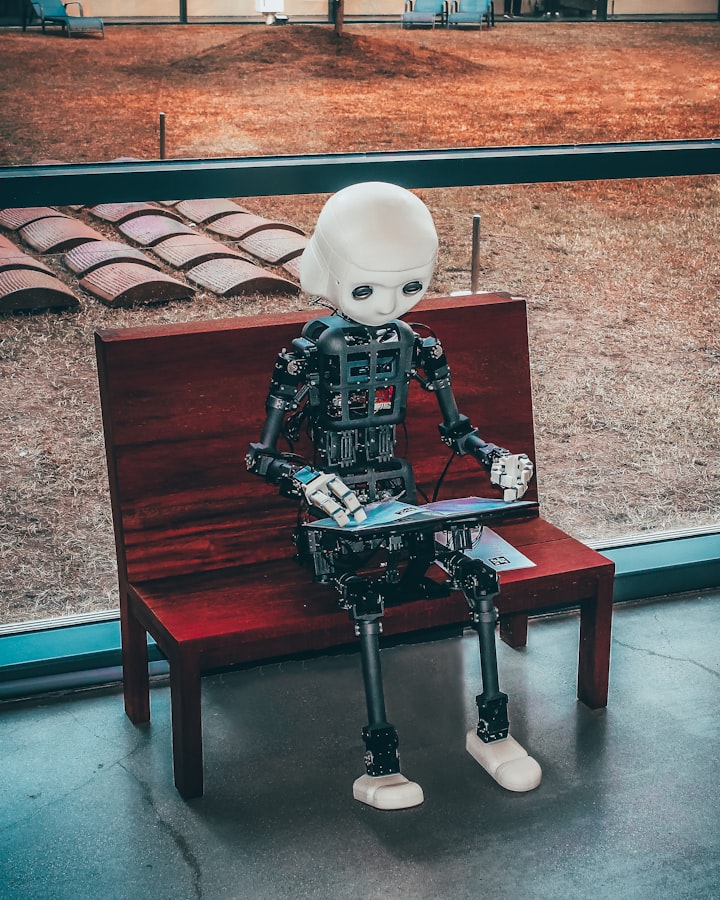
Humans have been trying to control their emotions for centuries, as emotions can be seen as unpredictable and often lead to irrational decisions. However, recent advancements in technology have shown that emotions may be the key to creating more human-like artificial intelligence (AI). In this article, we will explore why humans have been running from emotions but want emotion in AI.
The Evolution of Emotions
Emotions are a fundamental aspect of human behavior and play a critical role in how we communicate and interact with the world. Emotions are also evolutionary adaptations that helped our ancestors to survive and thrive. They can motivate us to take action, help us to understand other people's perspectives, and provide us with a sense of connection and belonging.
However, emotions can also be overwhelming and cause us to make poor decisions. Many people view emotions as a weakness, and society has taught us to suppress our emotions in favor of rational thinking.
The Rise of AI
Artificial intelligence is a rapidly growing field that has the potential to revolutionize the way we live and work. AI is designed to mimic human behavior and thought processes, and many researchers believe that it has the potential to surpass human intelligence in the near future.
However, current AI technology lacks the ability to understand emotions, making it difficult for AI to interact with humans in a meaningful way. Emotions are a critical part of human communication, and without them, AI may struggle to understand the nuances of human behavior.
Why Humans Want Emotion in AI
Despite the negative connotations associated with emotions, humans want AI to be more emotionally intelligent. The reason for this is that emotions are essential for building trust and creating meaningful connections with other people.
For example, imagine speaking to a customer service representative who is entirely rational and does not respond to your emotional needs. You are likely to feel frustrated and disconnected from the conversation. However, if the representative acknowledges your emotions and responds with empathy and understanding, you are more likely to feel satisfied with the conversation and the outcome.
The same principle applies to AI. If AI is to become a useful tool for humans, it needs to be able to understand and respond to our emotional needs.
The Role of Empathy in AI
Empathy is the ability to understand and share the feelings of others. It is a critical component of emotional intelligence and is essential for building trust and creating meaningful connections with other people.
Empathy is also becoming a crucial component of AI. By programming AI to understand human emotions and respond with empathy, we can create more human-like AI that can interact with humans in a meaningful way.
For example, researchers are working on developing AI that can understand and respond to the emotions of people with autism. By using AI to help people with autism understand and express their emotions, we can improve their quality of life and help them to build more meaningful connections with others.
Conclusion
Emotions have been a critical part of human behavior and evolution, but they have also been viewed as a weakness by many people. However, recent advancements in technology have shown that emotions may be the key to creating more human-like artificial intelligence.
By understanding and programming AI to respond to human emotions, we can create more empathetic and meaningful interactions between humans and AI. This has the potential to revolutionize the way we live and work, and create a more connected and empathetic society.
About the Creator
Keep reading
More stories from Sallabh Kumar and writers in Fiction and other communities.
From Galileo Galilei to Elon Musk: The Evolution of Human Curiosity and Innovation
Since the dawn of civilization, humans have been driven by curiosity to explore the world around us. From the earliest recorded history, individuals have pushed the limits of what we know and understand, driving innovation in fields such as astronomy, physics, and technology. From Galileo Galilei to Elon Musk, these pioneers of science and technology have shaped the world we live in today.
By Sallabh Kumar3 years ago in Fiction
How to Succeed at the Benson Directory®
Congratulations and welcome to the Benson Directory® employee #22391! As our newest call handler, you will have the privilege of speaking with dozens of unique and interesting people on a daily basis as well as the opportunity to earn bonuses for high performance. Contained within this handbook you will find a set of ease to follow instructions designed to help you settle in to your new role and begin paving the way to success.
By S. A. Crawforda day ago in Fiction




Comments
There are no comments for this story
Be the first to respond and start the conversation.