
Echoes Auternus
Echoes of a Drum Long Silent

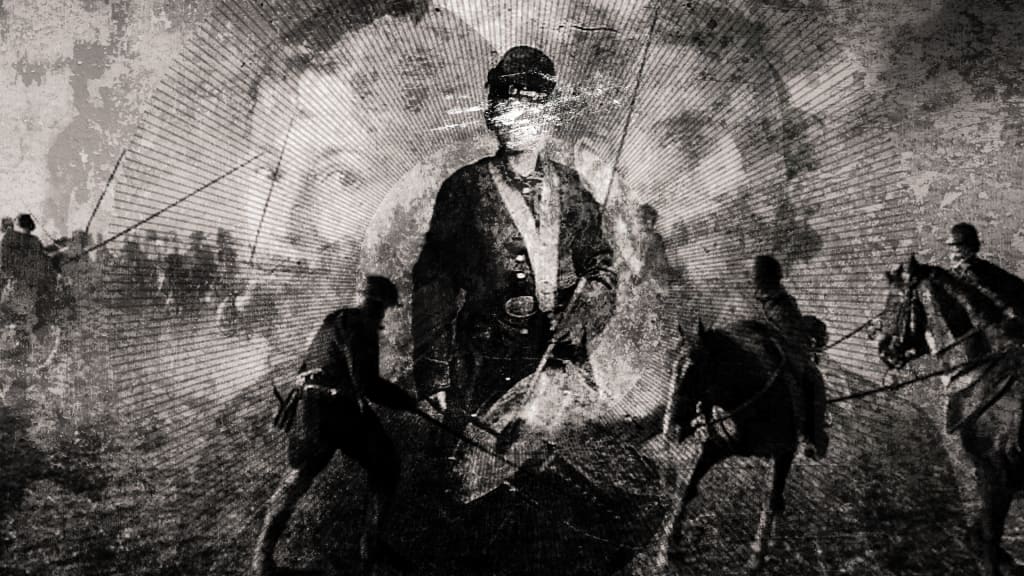
In the shadowy aftermath of the First Civil War, amidst the haunting fields of Flanders, a tale echoed—one that even the crows seemed to carry in their silence. It was the story of a boy, a drummer in the 42nd battalion—young, loyal, and long forgotten by name. But each Halloween night, his spirit stirred, and a mournful beat rose through the fog, steady as sorrow: dum... dum... dum.
They said he died a hero—cut down in a surprise attack, drum in hand, alerting the camp with his final breath. But that was the tale written in the reports. The truth, darker and buried beneath the mud and medals, told a different story.
One moonless night, the boy stumbled upon something unspeakable—a nurse, cornered in the shadows of the medical tent. She was pleading, shaking, as a decorated officer forced himself on her. The boy gasped. The officer turned. The boy ran.
Clutching his drum like armor, he fled into the night, boots slipping in the muck, heart hammering louder than his rhythm ever could. But he was only a boy. The officer, seasoned in pursuit, caught him near a crumbled trench.
No witnesses. No trial. Just a clean blade to the ribs and a shattered drum beside him. The body was dragged into no-man’s land, positioned like a casualty of an enemy raid.
Command bought the lie. A few scribbles in a logbook, a folded flag sent to no family. After all, who’d question the word of a hero?
But the earth remembers.
Each All Hallows’ Eve, the boy rises—not with a call to arms, but a lament. His drum beats low and hollow, like the final heartbeats of a child silenced by betrayal. Those stationed near the fields have heard it: dum... dum... dum... growing louder as night deepens.
Some claim to have seen him—mud-caked, face pale and streaked with blood, eyes storm-dark and unblinking. He does not wail, nor whisper. He only plays.
And those who hear him often don’t sleep afterward. A few have vanished. One was found babbling nonsense about the beat being inside his head. Another tore his uniform apart, screaming he “saw the truth behind the lie.”
The ghost seeks no vengeance. He doesn’t point fingers. He simply plays—so the fields remember, so the living never forget. His rhythm is testimony, pulsing through the soil and bone, louder than history’s erasures.
Not every ghost is born from hatred. Some rise from truth denied.
And when that final beat echoes across the frost-hushed ground, those who hear it know:
He wasn’t killed by the enemy.
He was silenced by his own.
About the Creator
The Crash Test Facility
We explore the raw, unfiltered energy of local music scenes from an observer’s standpoint. Our articles dive into the sounds and stories of artists who push boundaries, capturing the essence of music thriving beyond the mainstream radar.
Keep reading
More stories from The Crash Test Facility and writers in Fiction and other communities.
The Maestros
In the opulent courts of 18th-century Portugal, Lords Jean Michel De Quiroz and Ray Markus Aguila were revered as paragons of art, intellect, and elegance—known simply as The Maestros. Celebrated for their patronage and dazzling minds, they were the very image of nobility. Their salons, fragrant with roses and filled with music, were the heart of Lisbon's cultural elite. Poets wrote of them. Scholars admired them. Women flocked to them.
By The Crash Test Facility11 months ago in Fiction




Comments
There are no comments for this story
Be the first to respond and start the conversation.