
Dreams of Paris
In the dark, she waited in hunger

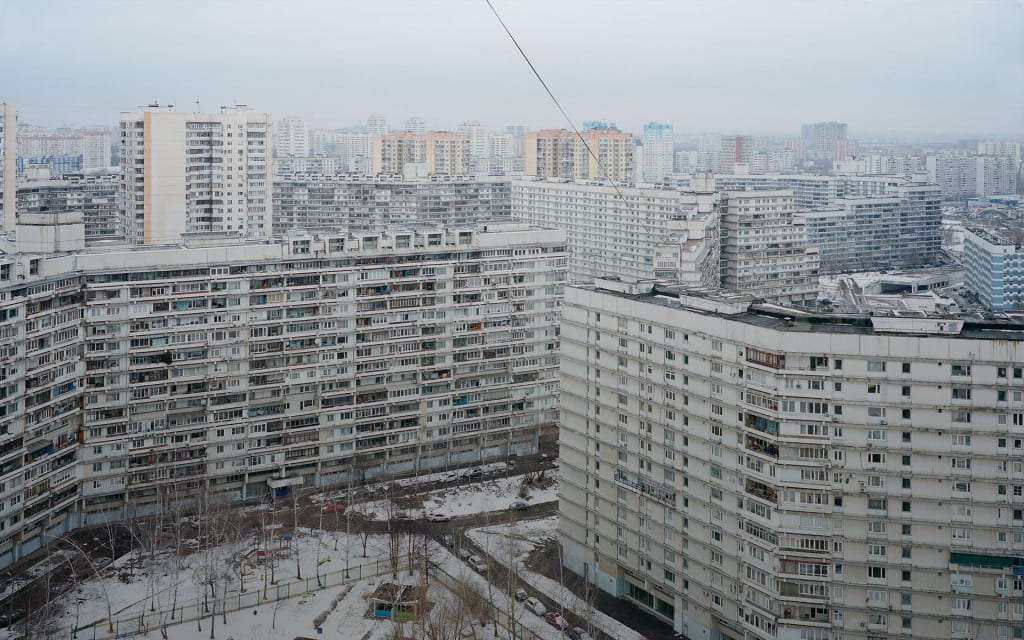
Acid rain beat against the apartment block and down onto the dead Earth, which grew more incapable of sustaining life by the day. Inside, a woman waited in the dark.
Before the collapse she had never known true darkness, not like this. It was if the air itself had been replaced by coal, leaving a total, impenetrable blackness that swallowed the entire world; if her eyes had been gouged out, she wouldn’t have noticed the difference. It was a primal, baleful, vindictive absence of light, the sort of dark monsters hide in, and it occupied fourteen hours of every day.
Before the collapse nobody had known darkness like this, there had always been something lighting the way: streetlights, cars, a little red standby light, the glare of a phone. If you were in the countryside you might’ve even seen stars. Tiny bulbs of illumination in a canvass of nothingness .
Memories. Nothing more.
None of those things existed in this new world. The government had postponed implementing environmental measures until years after the last chance deadline; it was only when New York went the way of Atlantis and California became a 600 mile Hellmouth, burning end-to-end with millions dead (lucky bastards) and more left to die, that the ‘powers that be' began to panic. Electricity was shut off in mass blackouts for eight hours a day, quickly extending to twelve, then fifteen. By the time the grid went under, along with the government itself, the change to a zero-electricity state was hardly noticeable.
Not even the sky survived man's environmental assault. A single cloud blocked out sun and stars: an solid, imperturbable mass of endless grey ambivalence, monument to man's greed and hate. Days were murky, nights were an abyss, and if you were lucky enough to have a battery-less torch then chances are you’d be killed for it before finding your way home.
"Well, it could be worse," Susie said to herself. "At least I'm not French."
A click in the black. A stab of pain in her abdomen, a burst of saliva in her mouth. A few minutes, not much more. Don't get excited.
She'd bought a locket from France once. A little heart shaped thing, bronze, opening when you tickled the clasp just right. They’d got it from an old hook-nosed man on the market. He’d snatched the euros from her hand as if they’d evaporate if exposed to the air. Susie had thanked the sneering crook anyway; it was only polite.
What was after the market? The café? Yes, that was it. Her and Clare went to Petite Joi, sitting at the bottom of a building not unlike the Flatiron in Times Square, where they bought overpriced coffee and soup from another man who clearly hated them.
A door creaked. Seven feet away, two strangers, neither speaking, entered the room. Susie listened, quieter than the floorboards beneath her, as the figures closed in on where she hid. One heavier than the other, likely a man, breathing slowly, deliberately.
“We might find him tomorrow,” the voice said (definitely a man, gruff and full of pain). His mouth clacked open as if to speak again, then nothing. The other figure, probably a woman (by the sound of her breathing), began to quietly weep. The man moved to her at the bottom of the bed, Susie tracking him like a tarantula through the trail of his footsteps, vibrations in the floor.
“Shhh shhh, it’ll be okay,” he choked, then joined the female’s chorus. Susie went back to her thoughts.
Say what you like about France, the food is sublime. The smell of soup filled her, its scent an invisible mist absorbed into her pores, warming her blood. She breathed in deeply, welcoming the odour into her body, the strange herbal scent wrapping itself around her in a lover’s embrace. To this day she had no idea what was in that soup, which in appearance was almost clear, yet the simple dish had a purifying nature to it. She thought back on the taste, how it felt running down her throat, entering her stomach. A full stomach. Pain tried to bring her back to the moment and she pushed it down, suffocated it behind the memory of Paris, of the building that wasn’t quite the Flatiron.
“I can’t do this,” Clare had whispered.
“Pardon?” Susie said, thinking god-dammit Clare, can’t I enjoy one moment? Can’t I have one moment without your stupid, pointless complaining?
“Us, I can’t do it anymore.”
Susie took a mouthful of soup, a plump dumpling coming with it, raised from the almost-crystal surface of the soup into her eager don’t think of the food
“Oh,” she’d said, eyes on her bowl.
“I just don’t love you anymore, this trip has shown me that. It isn’t fair on either of us to keep pretending. When we get home I’ll pack my things, maybe stay with mom for a while. “
Well the bitch was dead now, so who cares?
The couple (presumably they were a couple; most people had coupled off for safety, though it didn’t mean the relationships were any less miserable than those before the Collapse) were directly above her now, on the bed, wriggling themselves comfortable. Susie had an awful image of him trying to enter the woman, of grunts and thrusts, pumping into the weeping shell of a woman. Men were like that. She grit her teeth and tightened her hands around the handle of her knife.
Filth had littered Paris. That’s what she noticed after the café. Dog muck, discarded bottles, general dirt - it covered pavements roads and buildings all. Locals that had seemed eccentric and quaint became rude and malicious. Strangers glared at them as if they were vermin, perhaps because they were gay, more likely because they were American, or maybe simple because they weren’t French. When they got on the plane to go home two days later, Susie would have happily tossed a match out the window and watched the entire city burn to ash. Unfortunately, she’d been two years early in catching that particular show.
Fifteen minutes of silence passed before Susie began to slide herself from under the bed. Inch by inch she snaked to the side, feet, elbows and brachium dragging her six stone mass spectrally across the bare wood. Occasionally she heard one of their breathing patterns change and paused, waited, continued when it sounded safe.
Soon the darkness changed, its density lifted, and a gentle arm wave confirmed she was out from under the bed. Slowly, as if from the grave, she began to rise.
Real adaptation hadn’t occurred in humans, nor would it -extinction would beat it by a few thousand years - yet ancient genes allowed people to sense movement in the dark, a protective measure to ensure cavemen never woke to a nasty surprise. Susie had learned this the hard way. Eagerness had cost her a meal and gained her a jagged red scar across her face, a wound that could have been much worse if her opponent was a little faster in their panicked swipe. A flicker of the wrist, a fall, a jerk, and her prey would be on her or out the door before she could reach her feet.
Despite her blindness, Susie closed her eyes, listened, blade clasped against her chest with both hands as if in prayer. Distance, position, resistance, she thought, concentrating. The sound of their breath, the air pressure from their bodies. Susie created an image of their position in her mind, and carefully shut down any part of herself that might get in the way.
Fast. Susie thrust her knee onto the bed, raising her blade in the air. She felt the man begin to turn. Arm down. Blade hit bone, the man’s jaw, and he cried out in pain. Shit. A thick hand smashed into her stomach, strong enough to throw her across the room if she hadn’t braced herself, if he hadn’t been so exhausted. Another hand was about to rise and meet her chin, she knew, so she swerved sideways, felt the air pass her face, and she struck down left. This time she found her target, the softer flesh of his neck, and twisted the knife to open the wound.
The woman was out of bed, panting, shouting.
“Billy? Billy is that you? Where are you, are you back?”
Susie grimaced. The effort of forcing her knife through the man’s neck was significant, and the blow to her stomach had left her winded and bent. Now she had seconds before this stranger figured out what was happening and ran, raising the alarm for a whole apartment block of strangers. They’d storm the corridor, fill the stairs, ready to tear her apart.
God-damned dogs, her mind snarled as she lurched from the bed. I have a right to live. Defending their territory like animals. I have a right!
“Billy, Billy is that-“
The knife punched into her throat, slicing the woman’s words into gacks and gargles. The violence of the strike tore the blade from Susie’s grasp and sent the woman crashing to the ground, her skull cracking as it bounced against the floor. The death knell reverberated through the room for a few moments, then slowly faded, leaving Susie alone in the stillness. She became aware of her own ragged, animalistic breathing, and the thunderous blood rushing through her ears; the reality of her actions threatened to break into her consciousness.
Before she had time to think, before the adrenaline died down, Susie lunged. Her teeth, filed to jagged points, plunged into the unknown woman’s face, and with a grunt and a shake a chunk was ripped from her cheek. Susie looked up and silently screaming, mouth full of meat. Chew, swallow and back down, blood pouring over her chin, her body howling in exciting to be fed.
Acid rain beat against the apartment block and down onto Earth, which grew more incapable of sustaining life by the day. Inside, a woman who once had never known darkness, ate, and those around her dreamed of Paris.
About the Creator
Keep reading
More stories from Charles Oldfield and writers in Fiction and other communities.



Comments
There are no comments for this story
Be the first to respond and start the conversation.