
Digital Detox: How Unplugging Rewired My Life
The 30-Day Journey That Broke My Addiction and Brought Back My Sanity
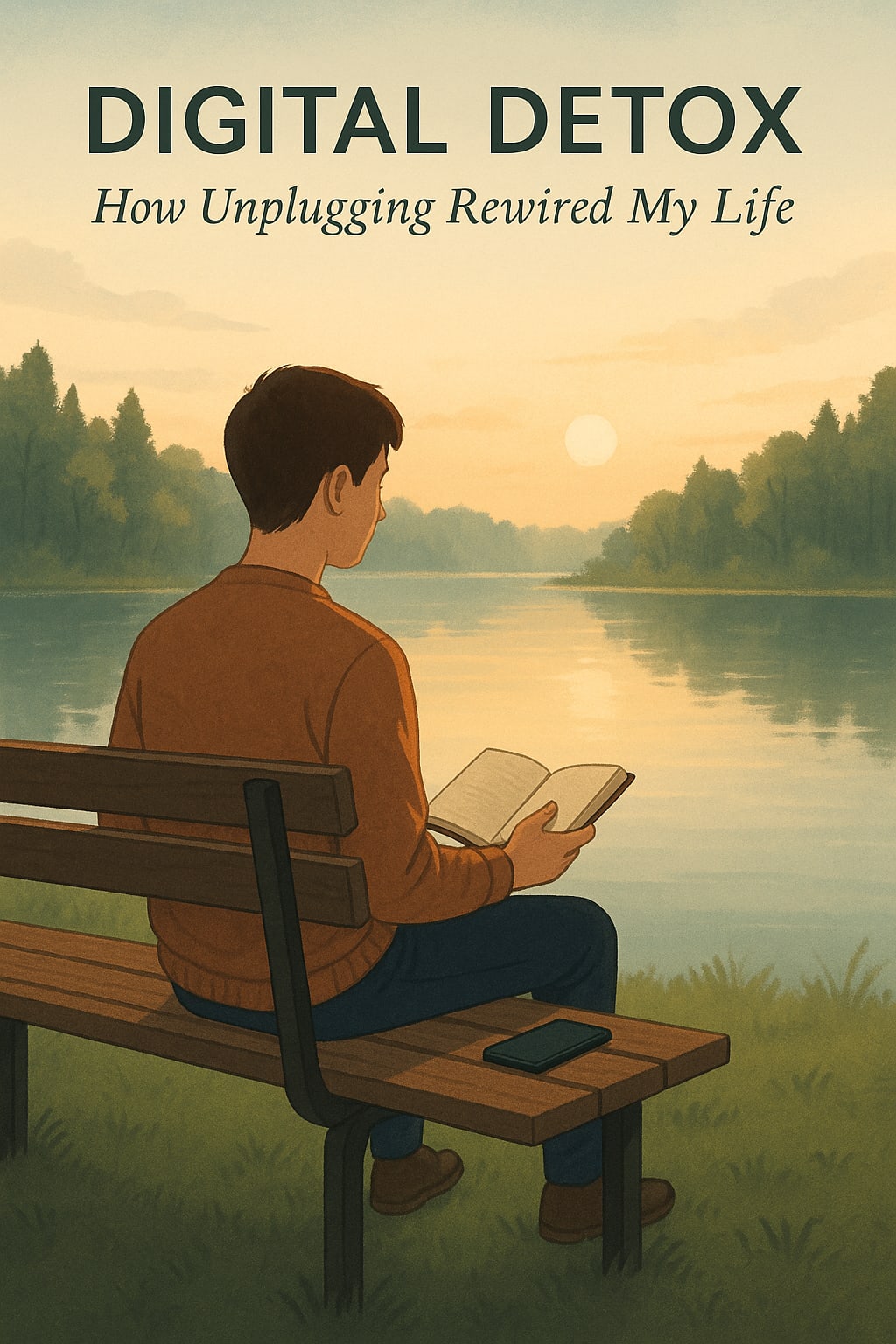
I didn’t know I had a problem until I tried to let go.
It all started when I checked my screen time report on a random Sunday morning. I had just woken up and, like every other day, reached for my phone before I even got out of bed. My fingers tapped through muscle memory—Instagram, WhatsApp, Twitter, TikTok. Then I paused on the notification: “Your screen time this week was 9 hours and 43 minutes per day.”
Nine. Hours. A day.
That meant I was spending almost 70 hours a week staring at my phone. That’s more time than I spent sleeping, eating, or speaking with actual human beings. My chest tightened. I suddenly felt exposed—as if someone had held a mirror to a version of myself I didn’t want to see.
That moment was my wake-up call.
Week 1: The Withdrawal
I decided, impulsively, to do a 30-day digital detox. That meant no social media, no entertainment apps, no unnecessary screen time. I’d keep basic communication tools—calls, SMS, email—for work and emergencies, but everything else would go.
I posted a short note on my socials:
“Taking 30 days off. If it’s urgent, text me. If not, I’ll see you on the other side.”
Then, I deleted the apps.
The first three days were brutal. My thumbs still moved in familiar patterns, reaching for apps that weren’t there. My mind kept screaming for dopamine. Every idle moment felt like torture: in line at the grocery store, waiting for food, even bathroom breaks—I didn’t know what to do without a screen.
I felt restless, irritated, and surprisingly… lonely.
But underneath the discomfort, I noticed something else: silence. Space. A kind of mental quiet that I hadn’t felt in years. It was terrifying—but also strangely peaceful.
Week 2: Rediscovery
By day 7, the cravings began to ease.
I filled the void with things I used to love. I went for morning walks without headphones, listening to the sound of birds and passing conversations. I picked up a novel I had abandoned months ago. I started journaling—not digitally, but with an actual pen and paper.
In that silence, I started to hear myself again.
I realized how often I had used my phone to avoid my own thoughts. Scrolling had been my way of numbing—numbing boredom, stress, anxiety, even dreams I had pushed aside.
Without distraction, my mind became more alert. I started noticing my surroundings: the way sunlight hit the leaves outside my window at 4 p.m., the way my cat stretched after every nap, the subtle shift in my emotions throughout the day.
Week 3: The Reconnection
The third week was transformational.
I began reconnecting—not just with myself, but with people.
I had long, uninterrupted conversations with my parents over tea. I called old friends and truly listened instead of half-hearing them while watching YouTube. I met up with a friend at the park, and for the first time in years, neither of us had our phones out. We laughed more. We talked deeper.
There was a human warmth that screens could never replicate.
I also reconnected with my goals. I had been meaning to launch a side project, build a fitness habit, and learn to cook something beyond noodles. With the extra time I had reclaimed, I did all three. It felt surreal. I wasn’t more talented or disciplined—I was just finally undistracted.
Week 4: The Clarity
In the final week, something inside me shifted.
I no longer missed social media. I didn’t care about what strangers were eating, wearing, or doing. I didn’t need to prove anything or get validation through likes and comments.
Instead, I felt… free.
Free from comparison. Free from overstimulation. Free from the algorithm’s grip on my attention.
I started sleeping better, thinking clearer, and feeling more emotionally present. My creativity, which had been dulled by endless scrolling, returned with full force. I wrote poems. I outlined new ideas. I even started sketching again.
Day 30: The Return (Or Not?)
On the 30th day, I sat down and asked myself, “Now what?”
I had done what felt impossible: lived 30 days without the digital noise I once thought essential. And I didn’t just survive—I thrived.
I didn’t want to go back to the old version of myself, the one who couldn't go five minutes without a dopamine hit from a screen.
So I made a new rule:
I wouldn’t return to social media the same way. I would use it with intention—not addiction.
I reinstalled Instagram but kept it hidden in a folder called “Mindful”. I set a 15-minute daily limit and stuck to it. I unfollowed pages that made me feel inadequate and followed ones that inspired growth. I turned off notifications. I stopped posting unless I had something meaningful to share.
And I kept one day a week totally offline—my new “Digital Sabbath.”
What I Learned
This 30-day journey taught me more about life than any book or podcast ever could. Here’s what I took away:
Silence is powerful. It’s in silence that you remember who you really are.
Your attention is your most valuable currency. Spend it wisely.
Social media isn’t evil—but it’s designed to consume you. You have to fight for your own mind.
Boredom is not a problem. It’s the birthplace of creativity.
Real connection beats digital validation—every single time.
Most importantly, I learned that freedom isn’t just about deleting apps. It’s about reclaiming your inner life.
A Final Word
If you're reading this and feeling the same way I did—burned out, distracted, disconnected—I invite you to try your own version of a digital detox. Maybe not 30 days. Maybe just a weekend. A day. Even a few hours of intentional unplugging can do wonders.
You don’t need to go live in a cabin or become a monk. Just step back. Reconnect. Breathe.
Your mind, your body, your soul—they all remember what life feels like without constant distraction.
And when you return, you’ll do so with clarity.
Trust me: the real world is still here—and it’s more beautiful than any screen.
About the Creator
Keep reading
More stories from Muhammad Shayan Khan and writers in Fiction and other communities.
Elevate Your Life
The Turning Point: A Journey to a Better Self" Arman Ahmed was a 27-year-old graphic designer working in a mid-level advertising firm in Lahore. From the outside, his life seemed decent: a stable job, a small circle of friends, and an apartment in a peaceful neighborhood. But inside, Arman felt a quiet storm brewing. He often woke up tired, struggled with motivation, and spent hours scrolling through social media, comparing his life to others’. Deep down, he knew something was missing. He wasn’t unhappy—but he wasn’t fulfilled either.
By Muhammad Shayan Khan9 months ago in Fiction
Affection and Healing for Yourself
During the night of the last quarter moon, I gathered my ritual supplies. I carefully handled the chunk of black tourmaline that would protect me from your overall negative and narcissistic energy. I carefully walked the house with my stick of selenite in hand, asking the universe to cleanse our working space.
By Alisha Wilkins ✒️🦋🖋️2 days ago in Fiction


Comments
There are no comments for this story
Be the first to respond and start the conversation.