

The light was blinding and terrible. English McKay thought of the pain in terms of light rather than jolts of electricity being forced intentionally into his brain. It took several sessions of the electroshock therapy for him to realize the incredibly loud noises he was hearing beyond those of the actual machine were his own screams.
When he had first arrived at Hartley State Insane Asylum, English didn’t speak a word. He simply sat and stared at whatever happened to be in front of him. The doctors at St. Maria’s Hospital couldn’t find anything truly wrong with him, outside of the fact that he had endured great mental strain from the accident, so they did what they felt was the right thing to do at the time for a semi catatonic seventeen-year-old boy with no family: they sent him to the asylum. At Hartley the rule was to take whatever action was necessary to bring about the quickest and least-
expensive results. Unfortunately for English, that meant putting what looked like stereo headphones on his temples and sending jolts of electricity through his brain for longer and longer periods of time as the sessions went on.
English looked around from the chair he was strapped in. He could see that fifty-three years of experimental therapy had turned what was once a sterile and clinical environment into the hell that he and so many others were forced to call home.
Hartley State Insane Asylum was once a source of pride for the state of New York. When it was constructed in 1922, it was a massive organization connected to Saint Mathias Hospital upstate on the Saint Lawrence River. They employed over two hundred people in the beginning, mostly New Yorkers but also several Canadians since they were just a quick trip across the river to the border. The original caretaker was Dr. Harold Monroe, a compassionate man in his mid fifties who thought that, with the right amount of care, most mental illnesses could be cured or at least managed.
In the year 1975—the year English was admitted there—Hartley State Insane Asylum had become the stuff of nightmares.
English would count down the last several seconds before the orderlies—or guards, as he thought of them—turned the machine on again. Six, five, four, three, two…“Aarrrgggghhhh!” He had been in the session longer than usual today, as David Sanders was in a particularly bad mood and seemed to desire to exert his foulness on others—or at least on English. The pain was unbearable at this point. Typically the first shock, with its buildup of anticipation, was the worst. Today, however, he had moved to a new level.
After the first two or three shocks, English would become somewhat numb to the procedure itself; the pain was still present and overwhelming, but he would start to remove himself from the moment. He would, to the extent he could, think about his parents and his sister and how much he missed them. He would picture himself on his sixteenth birthday, hiking with his father in the Pisgah National Forest in North Carolina. Sometimes he would think only in blurs as consciousness came and went, and he would see shapes and colors the way he might if his eyes were closed tightly and he looked toward the sun.
As the next shock came on—the ninth or the tenth in a row—any hope of continued numbness or mental evacuation vanished. English was jerked back to his sad reality the moment the pain returned with its blinding light. It was simply too much to handle this time. He heard the wooden rod they had jammed in his mouth to control his biting down during the procedure actually break just before he passed out.
English knew he was dreaming, but he embraced it. It was darker, but he could still clearly make out his sister sitting to his left. Natalie McKay was two years younger than English and had curly blonde hair and a disposition typical of most teenagers: she was melancholic and had a flair for the dramatic. At home, she would spend most of her time locked in her room listening to Pink Floyd records and smoking grass. If English or anyone other than her overly patriotic boyfriend, Richard, tried to come into her room, Natalie would answer in the standard way: “Can’t I even get a minute of privacy in this house? God!”
Tonight, however, English couldn’t be happier to see his sister again as she sat next to him in the backseat of their parents’ Oldsmobile sedan, staring aimlessly out the window into the darkness. In the front of the car, English’s parents were having what they would likely refer to as an argument. Most spousal fights follow certain standards or unspoken guidelines that create a focal point of discussion or possibly several, regardless of how valid any of them might be. There are typically two opposing viewpoints, and there’s a certain amount of escalation that may or may not result in screaming at the climax. This was not what Cindy and Jim McKay did.
Tonight, acting like anyone else in the McKay household usually did, Jim and Cindy were bickering about what radio station should be on. Since it was so close to the holiday season and they had just finished their skiing trip, Cindy was adamant that they should locate a station playing Christmas songs. Jim, on the other hand, had been driving for some time on icy roads at night in the Adirondack Mountains and insisted he needed something very upbeat to keep him awake and alert at the wheel.
English watched his father at the wheel and admired him. Jim McKay was a handsome man with short, dark-brown hair and a perfect smile. He had a medium build but obviously stayed in shape. Cindy described him as “the type of man who looked exceptional in slacks and a T-shirt but would turn all the heads in a room when wearing a suit.” English was the spitting image of his father and shared his knack for remaining calm under pressure.
Cindy had given up the radio debate and was now looking at her crossword puzzle while Jim smiled and bobbed his head to Otis Redding singing “These Arms of Mine.” Cindy McKay was the perfect match for Jim: she was beautiful and soft-spoken but also intelligent and highly observant. She turned toward the back of the car and asked if English or Natalie knew a six-letter word for “a public research university in Philadelphia that starts with T.”
It was Natalie who noticed the black ice on the road. She had been staring out the window for some time and was quick to observe the glassy reflections that came off the road. English saw it all happening again in slow motion: the crossword puzzle flying through the air as the car started to move in circles, Jim holding onto the steering wheel with an iron grip as the car moved toward the side rail of the bridge, and the first shower of sparks that came when the car collided with metal. Natalie held English’s arm when the car went over; he felt pain as she squeezed her fingernails into his forearm.
The impact was surreal. Ice and water shot into the car so much faster than English would have imagined possible. Both Cindy and Natalie had been knocked unconscious by the impact. Jim was shouting at English as he worked on releasing his seatbelt, but there was so much noise that English simply couldn’t make out what his father was trying to tell him.
In seconds, the inside of the car was completely flooded and pitch black. English was able to take off his seatbelt, but his door would not open, and he could feel the burning in his lungs already from the lack of oxygen and the freezing water that enveloped him. Instinct took over, and he pushed himself through to the front seat of the car, where he felt his father still struggling as he quickly swam through the front windshield and toward the pond’s surface for air. English exploded out of the water and was immediately overwhelmed by the coldness of the air in his lungs, the pieces of debris floating all around him, and the speed of the current. He was afraid, but he did what he knew he had to: he held his breath and went back under the icy water to rescue his family.
If there are moments in life that define us, moments we cherish, and moments that keep us up at night and hurt forever, this moment would haunt English until the day he died. The car was gone.
The rescue teams, which came in police cars, fire trucks, and ambulances, were there in minutes, but to English it had been a millennium. He had searched the frozen pond as best he could for as long as he could, but he could no longer feel his extremities and knew he would soon drown if he did not get out. He had no memory of what happened between when he dragged himself to shore and when he was rushed off to the hospital in an ambulance. When admitted, English was screaming as loudly as he could, the pain of the loss of his family surpassing that of frostbite and hypothermia at their early stages. The doctors were quick to administer a sedative to him, and in a relatively short period of time, English was asleep.
Upon awakening, he was unable to speak or even move by himself, having shut down mentally in the aftermath of the tragedy. English had lost his entire family; he had no other aunts, uncles, or relatives to claim him, and he was a minor—a silent, catatonic minor. The hospital staff took the only course of action they could and sent him to the Hartley State Insane Asylum for observation and therapy, if for no other reason than to remove him from the hospital itself.
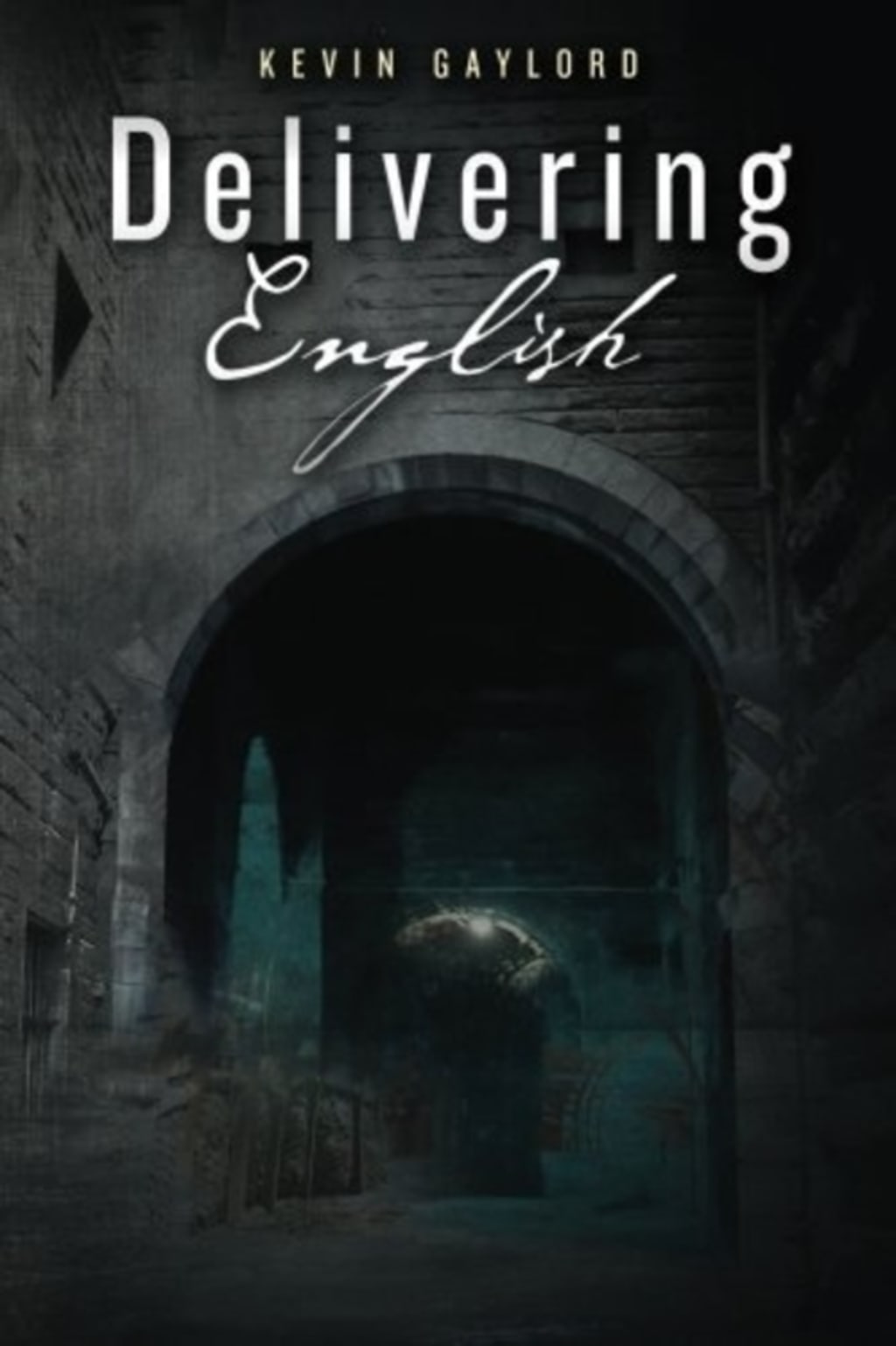
He could see the castle-like structure of the asylum as they approached; it reminded him of a dungeon, looking dark, dismal, and decayed. Hartley was intimidating in every way except for the sign in the front of the building, which must have been either a project completed by someone with a morbid sense of humor or a testament to the fact that this place had once worked for the betterment of their patients. The sign was the only piece of Hartley that was kept up. HARTLEY INSTITUTE was printed in huge font. Floral pots flanked it, and it was freshly painted and brightly lit up, as if to fully demonstrate the contrast between society and this closet where people shipped off their skeletons.
As the hospital staff released the still-silent patient into the care of the orderlies at the asylum, English noted that he was being treated as if he were a parcel and not a person at all.
“Got another catatonic for us, eh, boys?” the orderly commented.
“Yeah. Good luck with this one. He hasn’t said a word in weeks, but at least he’ll eat and wipe his ass by himself now, so it’s better than the last one,” the hospital staff responded with no emotion.
“OK, someone let David know we’ve got a new one in tonight. Have Paul process this one; he’s still the low man on the pole,” the orderly went on. “And make sure he gets put on the log for shock therapy right away. If we’re going to fix him, we might as well do it quickly.” And with that the hospital staff exited, and English was wheeled down the hall and into hell.
About the Creator
Kevin Gaylord
Two-time author who lives in the western North Carolina, along with wife and two young boys. Long passionate about writing, I feel compelled to take stories rattling around in my mind, and slave over a laptop until they are out.
Keep reading
More stories from Kevin Gaylord and writers in Fiction and other communities.
Eighty Years
I suppose it is time to go. It seems more difficult than expected after all these many years. Some things change, some never do; I’ve been here through a lot. I’ll miss it, but I am tired…so tired. I wonder where I’ll end up. After so long, I can hardly remember where things began.
By Kevin Gaylord4 years ago in Fiction
Emotions and ideas of a Rainbow
“The rainbow has such a beautiful tint to it. The colors permeate into my very soul.” “What do you mean permeate?” “The red seeps into my skin with anger, enjoyment, love, and life. Red is a strong color that makes me dance inside with desire. It gives me the energy of love but says hello I am dangerous. It brings excitement. Makes your heart rate go up quickly and can contribute to arousal in ourselves. Red stresses the intensity of the positive and negative thoughts that corrode our very being. Red prompts quicker decisions in us that can be rash decisions at times. In Africa red can symbolize mourning and death of life.”
By Tabitha Hinkley4 days ago in Fiction




Comments
There are no comments for this story
Be the first to respond and start the conversation.