
CHAOS IN PETROGRAD
A Family’s Hope Amidst the Flames of Revolution

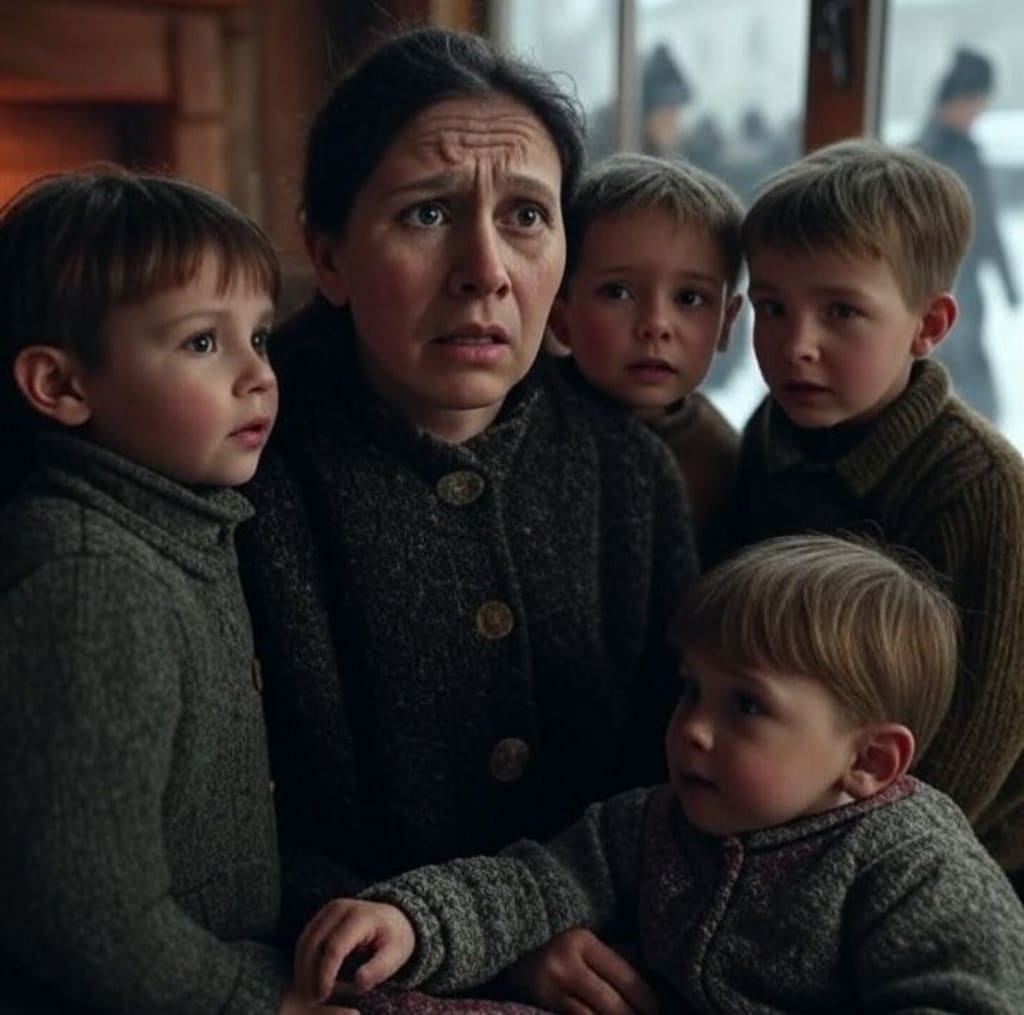
Petrograd, February 1917, was a city on the brink. A bitter chill gnawed at the streets, yet an electric tension simmered beneath the frost. Alsa Ivanov, a housewife, felt this unease acutely as she drew her shawl tighter around her shoulders. The Ivanov household was modest, but warm, in stark contrast to the frigid air outside. Her husband, John Ivanov, was a factory worker, often working long hours under grueling conditions. They had three children: Nikolai, the eldest at sixteen; Maria, a bright-eyed twelve-year-old; and little Pavel, just six, who was the heartbeat of their home.
John’s factory job provided barely enough to scrape by, and Alsa supplemented their income by taking in laundry and mending clothes. Despite the struggle, their home was filled with love and resilience.
That morning, Alsa could hear the distant murmur of unrest as she stirred a thin cabbage soup for breakfast. John had left for work before dawn, as usual, but today something felt different. The wind carried whispers of something monumental, something that could alter their lives forever.
“Nikolai, fetch some firewood from the shed,” Alsa instructed her eldest, glancing worriedly at the thin walls that did little to keep the cold at bay. She then turned to Maria, who was helping Pavel with his boots. “And Maria, see if we have any more bread left.”
Nikolai returned quickly; his face flushed from the cold. “Mother, there are people gathering in the square. They’re shouting about bread and the war”.
Alsa frowned, “Stay away from the square, Nikolai. We have enough problems without getting involved in such things.” But it was too late; the seeds of curiosity had been sown in the boy’s mind. As the day progressed, the distant murmurs grew into a roar. Alsa tried to maintain a semblance of normalcy, but the fear gnawing at her heart was hard to ignore.
John returned late that evening, his face drawn and weary. “Alsa, there’s trouble brewing,” he said, his voice heavy with worry. “The workers are striking. The food shortages… they can’t go on like this.” Alsa nodded, her eyes wide with fear. “What will we do, John?” John sighed and took her hands in his. “We’ll stay safe. Keep the children indoors. And pray this storm passes quickly.”
But as the days passed, the storm did not pass. It grew. Strikes spread across Petrograd, and more and more workers joined the protests. Alsa watched from their small window as crowds surged through the streets, chanting and waving banners. Nikolai was entranced by the movement. “Mother, we should be out there. They’re fighting for a better life for all of us.”
“Nikolai, you’re just a boy. Stay here where it’s safe,” Alsa pleaded, but she could see the determination in his eyes. It was the same determination that had driven his father to work tirelessly to provide for them.
By mid-February, the city was in chaos. Soldiers sent to quell the uprisings had started to join the protesters. John came home one night with a grim look on his face. “The Tsar’s days are numbered,” he said. “The Duma is defying him, and the soldiers… they’re on our side now.” Alsa’s heart pounded. The safety of her family was her foremost concern. She clutched little Pavel close, as if her embrace could shield him from the turmoil outside. “What will become of us, John? John tried to smile, but it was a weak attempt. “We’ll endure, Alsa. Like we always have. Together.”
One morning, the sound of gunfire echoed through the streets. Alsa’s blood ran cold. She gathered her children and huddled them in the corner of their small home, praying for the chaos to end. On February 23rd, International Women’s Day, the protests reached a fever pitch. Women, workers, and soldiers flooded the streets, demanding bread and an end to the war. Alsa felt an urge to join them but knew she had to stay with her children. John did not return that night. Alsa spent a sleepless night, her mind racing with fear and worry. The next morning, Nikolai announced he was going to find his father. “No, Nikolai!” Alsa cried, but the boy was resolute. “I’ll be careful, Mother. I promise”.
Hours passed like years until finally, Nikolai returned with John. He was wounded, a gash across his forehead. “The factory was attacked. I tried to help,” John explained wearily. Alsa cleaned his wound, tears streaming down her face. “This has to end,” she whispered. “We can’t live like this.” By the end of February, the city was unrecognizable. The Tsar abdicated, and Petrograd was in the hands of the revolutionaries. There was a sense of cautious hope in the air, but also a palpable uncertainty. John’s wound healed slowly, and he was unable to return to work immediately.
The family’s already precarious situation grew even more dire. Alsa took on more work, sewing and mending, her fingers raw from the effort. Despite the hardships, there was a glimmer of hope in Nikolai’s eyes. “Mother, this is the start of something new. We can build a better future”. Alsa wanted to believe him. She wanted to believe that the sacrifices, the pain, and the fear would lead to a better life for her children.
Spring came hesitantly to Petrograd, melting the snow and ice that had gripped the city. The revolution had left its mark on every street, every building, and every soul. But with the thaw came a new sense of possibility. John slowly recovered and began to help organize workers in the newly formed Soviets. Nikolai, inspired by his father’s resilience, became involved in the youth movements, determined to shape a brighter future.
Alsa continued to work tirelessly, but now there was a spark of hope in her heart. The chaos of the revolution had brought unimaginable hardship, but it had also kindled a spirit of determination and solidarity. One evening, as the family gathered around their modest table, John looked at his family and said, “We’ve been through so much, but we’re still here. Together.” Alsa smiled, looking at her children’s faces, each filled with a renewed sense of purpose. “Yes, John. Together, we can face whatever comes next.” The revolution in Petrograd was only the beginning of a long and arduous journey for Russia.
The Ivanov family, like many others, faced numerous challenges in the years that followed. But the spirit of resilience and hope that had carried them through the days of February continued to guide them. Alsa, once a simple housewife, became a symbol of strength and perseverance in her community. John, a humble factory worker, became a respected leader among the workers. Nikolai, Maria, and Pavel grew up in a world transformed by their parents’ courage and determination. In the end, the chaos of the February Revolution had forged not only a new Russia but also a stronger, more united family. The flames of revolution had tested them, but like a phoenix rising from the ashes, they emerged renewed, ready to build a better future together.
About the Creator
Khan Ali
I craft fictional stories woven with the emotions and truths of real life, bringing relatable characters and moments to every page.
Rage
Content Warning: Domestic Violence, Assault Rage D. A. Ratliff “Who did this?” My voice echoed through the house. All I wanted was a cup of tea, but one of the twins, running through the house like maniacs, knocked it over. My nerves tingled, and every muscle in my body felt coiled like a spring. Survival seemed out of reach.
By D. A. Ratliff7 days ago in Fiction




Comments
There are no comments for this story
Be the first to respond and start the conversation.