
Centuries Pass, Paris Stays the Same
An Undying Love
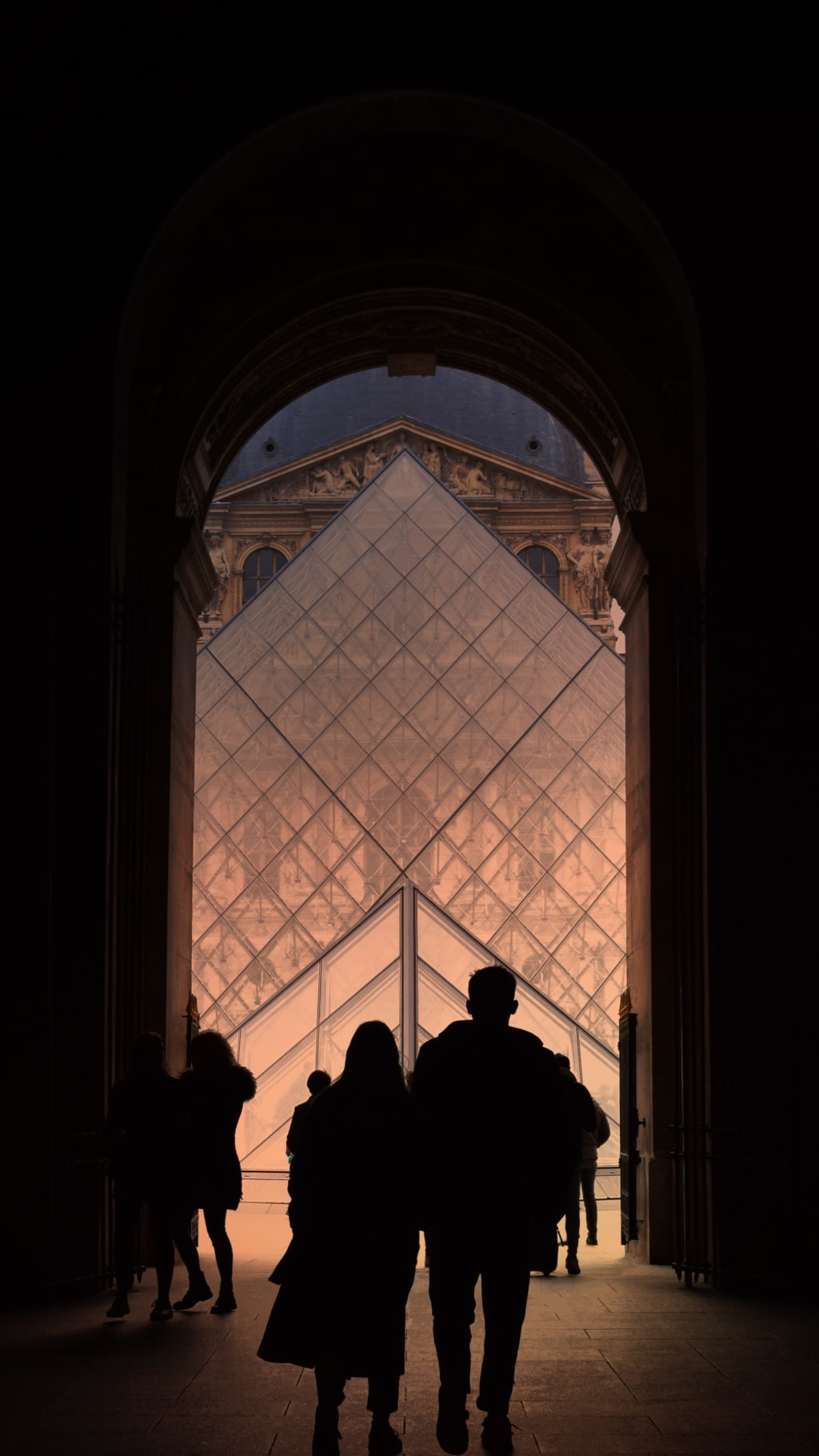
Entry to the Louvre is free twelve evenings of the year. On the first Saturday of each month, I wait until the night rolls out in a dark fog across the sky, dress simply, and depart the small one-room apartment that contains my meagre belongings. I walk along the Seine, dawdling; it should take me forty-five minutes, but tonight it takes an hour. Boats drift lazily along, their fat passengers drunk and raucous. I cannot blame them for their hedonism, for I was naïve and drunk on my own beautiful youth once too. Centuries pass, Paris stays very much the same.
My shoes strike the pavingstones pleasantly, the heel clicking just loudly enough for me to hear over the bustle. A woman’s laughter startles me, and I watch her as she accepts a kiss from the man beside her. Jealousy unfurls in my gut like plumes of smoke, and I have to fight the vicious anger down.
The Louvre waits for me.
When I arrive, the line of eager visitors wraps around the glass pyramid in front of the castle, chattering amongst each other. Most of the guests fancy themselves academics, or artists, or romantics. They are mere foolish adolescents. I have a talent for slipping past unseen when I need to, and I employ this gift most liberally on the first Saturday of each month, when I want to be at the front of the entry line. The security guard blinks when she sees me.
“Monsieur, like clockwork, no? A pleasure to see you again.” Her perfume is sickly sweet, and I can feel it choking my very pores. It is better than the one she wore last month, if only marginally. I dip my head at her politely and walk into the museum. I don’t stop to marvel at any of the art, or any of the advertisements for the exhibits. The French paintings on the second floor are closed on these Saturday nights, which is why I choose to come.
I would know my way around these rooms blind, deaf, and dumb. I weave through clusters of people until I am alone, and then I walk some more. The silence is overwhelming, nothing but my measured breath and the heels of my shoes against marble.
I stop when I see them: his paintings.
What is there to say about Andri Houdain? If I read the small plaques beside the six paintings of his that the Louvre has managed to acquire, I am told that he was born in Strasbourg in 1572, and died in Paris in 1593. He was a little-known painter, whose works only became recognized after his tragic death. He worked primarily in oil, though he was known to experiment with charcoal.
What the plaques at the Louvre do not say is that Andri Houdain was a droll, sarcastic young man with eyes the same golden hue as the leaf he brushed onto his works. They do not say that he was lithe and strong, wiry and languid. They do not write that he ate grapes by the bunch as he read poetry aloud with the shutters flung open. The plaques do not, of course, mention me. They call me “the unknown model,” the same unidentified figure in all six paintings in the museum’s collection. But there I am, pale and sour and tired, posing for Andri only because his eyes would lock onto mine and he would beg.
This year, it will have been 428 years since Andri died, his final breath a plea to make the pain stop. The pain, as it is wont to do, stopped on its own; it took Andri with it.
•••
“You are so beautiful,” Andri says, looking between me and his canvas and grinning.
If I could blush, I would be. Instead, I say, “Only because you paint me that way, darling.”
He does his final brushstrokes with a dramatic flourish, then steps away from the painting. “I believe we’re done.”
Much to his chagrin, I slip back into the silk robe I wear around his studio and come to see how he’s painted me this time. It is lovely—they always are. I do not fancy myself a particularly worthy subject for his skill, but there is absolutely no denying that he has an unmatched talent. I stare at myself in the painting, and my own dark eyes glower back at me.
“Excellent, as always,” I mutter, pressing a kiss where his hairline meets the nape of his neck.
“I wish you would smile,” Andri answers, turning to face me. A smirk plays at the corner of his lips, and I feel myself very much compelled to kiss them. I let him close the gap, keeping a tight rein on my urges. Loving Andri—or more accurately, Andri being loved by me—is a dangerous gamble. I am very much what the legends say: creature of darkness, monster of the night, bloodsucking demon; but I am also beloved by this gilded youth. I break away from him to let him breathe, and move across the studio to examine a charcoal sketch of the Seine at night.
“I thought you hated landscapes,” I remark.
“That…” Now it is Andri’s turn to look sheepish. “That is the precise spot where we first met.”
Ah. Sentimental boy, beautiful sentimental boy. I lift the page from his desk, and notice that he’s already set the sketch with fixative. “Could I keep it?”
“Do you even need to ask?”
I smile at the black-and-white sketch of the river, then back to Andri. “Thank you.”
“Thank me properly,” he counters.
And so I do. I take him into my arms, feel the alive warmth of him against me, and think for the thousandth time that whatever curse I was meant to incur must have skipped me. I do not feel in this moment like a demon’s spawn: I am blessed.
He kisses me goodbye so I may feed. I do so in the gutters and alleys, hunting rapists or batterers or thieves. I am glad that Andri never sees me like this, fist full of some man’s collar and mouth full of esophagus. I’m always careful to hunt quickly and cleanly, so that I may return to him.
I saunter back up to his studio with the sweet taste of iron in my mouth, invigorated by the blood of a procurer. I take the stairs three at a time, and let myself in without a knock. The silence that greets me is peculiar at first, but I imagine that he must have fallen asleep while I was away. The living tend to do that quite easily. But then I hear the gasp, and the croaking of my name, and suddenly I am running.
Andri is in the corner by an unstretched roll of canvas, his golden eyes blown and his throat seeping weak pulses of pitch-black blood. His fingers seek purchase on his wounds, but they catch nothing.
I cannot think. I only kneel, a keening cry rising in my gut, and ask him, “Who? Who did this?”
His irises wobble. His eyes lock on mine. “Nicolas, make it stop,” he rasps. “It hurts.”
Andri’s sobs are deafening. I take his face in my hands, ignoring the well of saliva in the back of my mouth at the smell of all of this blood. I tell him I love him, again and again and again. His eyes lose their focus, but in the moment before his last breath wheezes out of him, his lips twitch into a smile.
•••
Andri is not there when I jerk myself out of the memory. Of course he isn’t. Everything that he was, everything that he could have become, exists in these six paintings in this small room in the Louvre.
People often pass the small selection of Andri Houdain’s art without sparing so much as a glance. Another French Renaissance painter, one of hundreds. I take one more look at my sour-faced portraits and turn away from the room, striding out of the Louvre in a flurry. I walk towards the Seine, the laughter and the love and the music enraging me. These people, this foolish, fragile people, are worth nothing. Nothing!
A man is smoking a cigarette against a lamppost. I push him out of the way with a shoulder, and ignore his exasperated cussing. He storms away, his trail of smoke hanging in the air around his head like a cloud. I unfold a small scrap of treated canvas from my pocket and hold the sketch up in front of my face.
There it is. The spot where we first met.
Beneath the lamppost, now electric rather than the oil it was in my youth, two women lean in for a kiss, their feet planted exactly where I extended my hand for Andri to shake that day. The women share a smile, and intertwine their hands. My anger dissipates. I stare, knowing they won’t notice my gaze.
Centuries pass. Paris stays very much the same.
About the Creator
Keep reading
More stories from writers in Fiction and other communities.
The Path to Salvation
The late autumn evening air filled the monk's lungs, but it wasn't the season that chilled his bones. The heavy-handed presence of evil he had sensed upon entering the woods surrounding this mountain village had not bothered to conceal itself from him.
By Made in DNA3 days ago in Fiction
Autonomy Is The Real Privilege
Good morning, freedom-seekers! Today we’re gonna be looking at autonomy. A strange word, I know; one many would probably look at blankly and run away from on sight. We’re gonna figure out what it actually means, consider how it’s achieved, and decipher just how deeply most of us are tangled up in dependence without realising it.
By That ‘Freedom’ Guy5 days ago in Humans



Comments
There are no comments for this story
Be the first to respond and start the conversation.