
Bulls > Bears > Humans
A Dominance Hierarchy
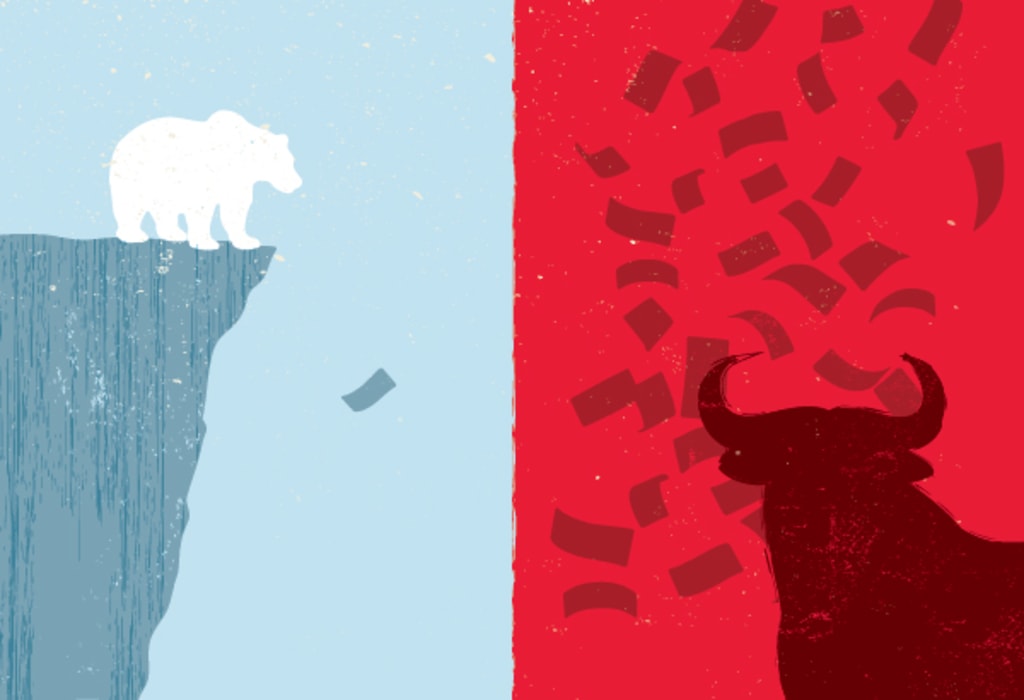
There was a world that had three classes of animals: bulls, bears, and humans.
The bulls were at the top. Aggressive and carefree, they tackled every venture with a thrust of their horns. Although lacking in morality, their modus operandi led to their successful reign over the cautious bears and frail humans. They dominated the business world due to their relentless risk-taking. Their ruthless attacks on fellow candidates rendered them unbeatable in politics. Their social circles had no room for humans, and only the slightest for a few bears.
Donning only the finest suits, the bulls drove the hottest cars and spared no expense on their estates. Their lavish lifestyles were the envy of the other species. Bookstores had entire self-help sections dedicated to books on how to get rich like a bull, how to have a strong body like a bull, how to outperform others in the bedroom like a bull, and so on. These books were bestsellers due to the deprived human race. It was hard for the humans to get ahead in a world occupied by animals at least twice their size and that could annihilate them with minimal exertion.
While still craving the bulls’ success, the bears, on the other hand, were not as desperate as the humans. They did not approve of the manner in which the bovines had seized the top rank in the food chain. Although the bears were capable of being as ferocious as the bulls, they chose to adopt a more careful and tranquil approach to life. They lived well below their means, taking the odometer reading of their second-hand cars to record highs, fixing up the broken houses they acquired, and buying food and clothes at discounts. They were also very selective with their life partners (cheating was very rare among the bear population). They adhered to the rules that the bulls placed on them, and never tried to break them nor take excessive advantage when they played in their favor. Their caution proved to be beneficial for their modest wealth, which would steadily increase throughout their lifetime. Avoiding debt at all costs, their house, university funds, and accrued investments would provide a sturdy net for their cubs to land upon.
The bulls, knowing full well about the dormant ferocity of their clawed subordinates, would stay courteous to them. They would even hire some as advisers – more so to keep up appearances, for they could not let themselves accept advice from underlings. They reserved a level of respect for the bears but never would they trade their abundant lives for the one of temperance and moderation that their direct inferiors possessed.
For decades, the bulls maintained this class system. Their industriousness and influence intensified their power over the years. Meanwhile, the cyclical transfer of wealth made the bears more affluent. The banking system, while used most savagely by the bulls, became fully operated by the bears. Humans were not as fortunate, nor crafty; poverty further plagued them. Bears would sometimes try to share insights with the weak bipeds, but the humans only desired to follow in the footsteps of bulls. They would settle for nothing less.
The overwhelming growth among the bull class resulted in an oversaturation. Too many bulls were crowding the field, and something needed to be done about it. Political and business leaders, all bulls, from around the globe gathered in international assemblies to determine solutions for this crisis. Of course, no humans nor bears participated, with the exception of a few from the latter species who were invited for symbolic purposes. The result of these assemblies was a worldwide order to limit the number of calves to one per bovine couple. This mandate was of no use though, as bulls were never strictly monogamous to begin with and refused to change their ways. Shortly thereafter, another policy was put in place, enforcing a limit of fifty million calves to be produced every year. Any calf born after that count would be slaughtered and sold to the bears and humans.
In the ensuing months, after the count was reached, calf meat became the most sought-after produce in grocery stores. Humans were the primary consumers as they believed that they would gain the prosperity of the bulls by consuming their meat. The bulls marveled at the demand for the flesh of their young and quickly poured all their business drive into the new industry. They erected establishments where fellow bulls and cows were employed to produce as many calves as possible.
The new farming industry was met with a mixed reception from the bovine public. As acts of protest, some bulls volunteered to have themselves castrated to prevent their young from falling victim to this new insidious industry. This revolution created a legion of oxen who lived like bears, only lacking their wisdom and financial know-how. The newly minted steers fell below the humans who looked down upon them. When the humans realized the docility of the once golden oxen, they began to forgo the calf meat and instead pulled their dwindling resources together to entrap the tamed bulls and slaughter them. As the calf meat rotted away in stores, the debt of the ruling bull class skyrocketed, making the horned animals lose their riches and prestige. Unable to bear their losses, they resorted to their physical strength in order to maintain their dominance. It was no use. After having slaughtered countless oxen, the humans had discovered many ways to handle these large animals and were able to fend off the once almighty beasts.
The bears supported neither side. They watched and waited.
About the Creator
Keep reading
More stories from Julian Moritz and writers in Fiction and other communities.
Flowers from the City
Few cars – especially the ones most common in the city – ever travel the roads of northern Alberta. And if they do, odds are they do not belong to nearby residents. Cracked by the cold of prior winters, and not always paved, the roads are suitable for big vehicles only: the trucks, vans, and occasional SUVs. In the summertime, any modest car with only two wheels working would be scared off by the road’s powerful horses. In the winter, they would drift off uncontrollably. Ever so often though, a car manages to toughen the roads. Descendants from the south would make their occasional visits. Others from out-of-town would come to take pictures of themselves against the country scenery.
By Julian Moritz4 years ago in Fiction
How would an alien invasion look like? Part 2
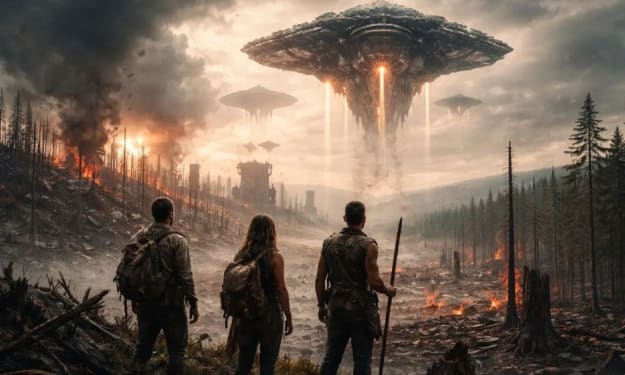
As told in the first part of the story, an alien invasion would unfold without large battles, with humanity overwhelmed not by brute force but by systemic collapse designed from orbit. Humanity becomes collateral damage, displaced, suppressed, or extinguished by environmental and technological interventions, not direct warfare.
By Aurel Stratan5 days ago in Fiction


Comments
There are no comments for this story
Be the first to respond and start the conversation.