

Elisha took off his hat and wiped the sweat from his brow with a grubby handkerchief. The sun was high overhead, and the early October heat was as stifling as it had been in August. It had been a productive morning. Pieces of the old fort now lay neatly stacked at the edge of the little clearing, and atop the small rise where it had once stood was a clean, bare spot. Elisha dropped the head of his sledgehammer to the ground and leaned on its handle, surveying the results of his work with a look of satisfaction. He and George had spent a lot of time here, as boys. Many a deer, squirrel, and rabbit had landed in stew pots as a result of their time in these woods.
A rattling, clattering noise behind him shook Elisha out of his reverie. Turning toward the sound, he saw George lumbering up the trail towards him, pulling an old, beat-up mule wagon. The wagon was loaded down with two huge crawfish pots, a coil of copper tubing, and what appeared to be an old brass bedframe.
“Hoo-wee!” George looked around the clearing in amazement. “You done gone and got it all set t’ rights!”
Elisha scowled. “Yeah, well, been out here all morning. Thought you’d’a been here already.”
“Took some doin’ t’ talk Lispeth outta her good crawfish pot. Had t’ promise her I’d get her one o’ them newfangled ”namel’ ones outta th’ Sears and Roebuck catalog.” George rolled his eyes as if his sweet, long-suffering wife were one of the most unreasonable creatures he’d ever met. Truth was – and everybody in town knew it – Lispeth Simmons put up with more grief from George than any less patient woman would have.
“Well, let’s get started.” Elisha slung the sledgehammer over his shoulder and helped George pull the wagon to the top of the rise.
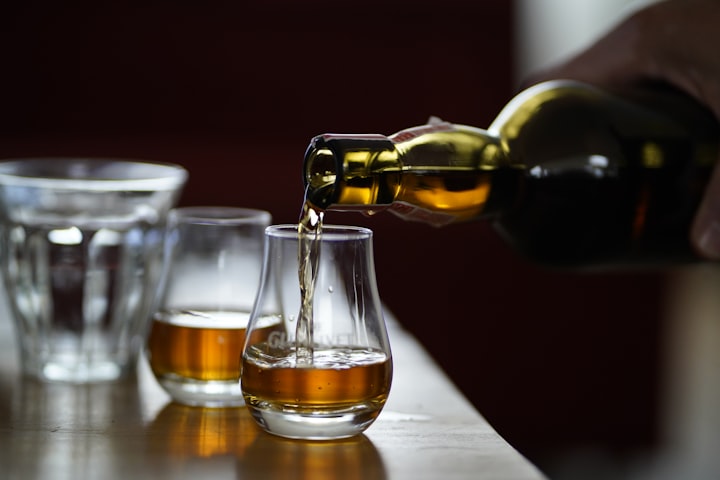
It was well-nigh dark by the time they finished building the twin stills. Neither looked particularly sturdy, but George swore they would work. “Now, we just need us some corn,” he announced, grinning.
Elisha nodded solemnly. “Like we talked about, we’ll use a batch o’ my seed corn and what you got left from your fall crop to test ’em out. I got to go to Jonesboro tomorrow, but we’n get started Wednesday. You sure you know how to do this?”
George cocked his head to one side and scratched his salt-and-pepper beard. “Well, I seen it done. My pappy’s brother – ‘member Uncle Tommy? – he ran a still down Natchitoches way. Out b’hind his house. I watched him do it a bunch o’ times.” He paused and reached for his flask. Uncapping it, he closed one eye and peered hopefully into it. By the disgusted look that settled across his face, Elisha figured the thing must be empty. Unsurprising, given how many trips out of George’s pocket it had made that afternoon. Elisha just hoped George could stay sober long enough to figure out how to run the still, or the whole plan might fall apart.
Early Wednesday morning, Elisha and his son Omer carried four fifty-pound sacks of seed corn to the stills. The Missuses Harrison – Elisha’s wife Ada and Omer’s wife Patty – were left with the impression their husbands were setting up feeding spots at their deer stands. As Elisha explained to Omer, “If you want something kept secret, you don’t tell the womenfolk.”
Arriving at the little clearing where the stills stood, father and son were surprised to find George already there, apparently sober. He had his old mule wagon loaded down with three barrels of freshly cut corn. Elisha and Omer let their bags slide to the ground next to the wagon.
“Now, George, you remember our deal, right?” Elisha nodded to Omer and continued, “We gonna get it all said and settled here with Omer to witness. It’s my land, your materials, and both our corn goin’ into this. We work it equal-like, and split all the liquor fiddy-fiddy, right?”
George screwed his face up into a deeply offended expression. “Well, now, you know I’m a’gon honor our agreement, ‘Lisha. Didn’t hafta bring the boy with you for that.” He grabbed a half-barrel of corn off the wagon and dumped its contents into the two big pots. “Here, Omer, take this down to th’ crick and bring it back fulla water.”
Omer looked at his father. Elisha nodded, almost imperceptibly, and Omer took the barrel and trudged off toward the creek. As soon as he was out of earshot, George wheeled on Elisha. “You don’ trust me after all these years? Have I ever lied to you?”
Elisha threw his arm around his childhood friend’s shoulder. “Just for show, George. The boy’s not worth his salt as a farmer. I told his mama I’d find something for him to do. He’ll be more like’ to take all this serious-like iffen he thinks he’s…” Elisha trailed off, as if he were searching for a word, and George nodded wisely and winked.
“Well, seein’ you put it like that, I reckon maybe we can use ‘im.”
When Omer returned with the water, he set it down by the wagon and looked expectantly at the older men. Elisha peered at the water, the corn, and the stills, then at George. “Well? Whadda we do now?”
George took on a knowledgeable air and said, “First, we gotta make us a mash. Gotta soak all this corn for a while, then mash it up.” He took a dented metal bucket and started scooping water into the barrels of corn. “You ain’t got nothing to soak yours in, so we’ll jes’ start with mine.”
Omer and Elisha exchanged glances and shrugged. “How long’s that take?” Omer asked.
George thought for a minute, then answered, “Til it sprouts, boy, til it sprouts. I dunno, ’bout eight, ten days.” He continued ladling water into the barrels until all the corn was covered. “I reckon I’ll jes’ leave the wagon here fer now. Lispeth ain’t gon’ notice.” He cocked his head to the side. “Say, y’all ain’t told Ada ‘n’ Patty ’bout all this, have ye?”
Elisha shook his head firmly. “Naw,” he said, “Women gossip. Can’t have folks knowin’ ’bout this place. Me, you, and Omer, here, ‘s the only ones knowing. Figger maybe you might wanna bring Junior in, just so’s we can have the help.”
George nodded, then squinted at the sky. “Well, guess I better get on back to th’ house. Lispeth thinks I’m huntin’ and if I’m gone much longer she gon’ ‘cuse me o’ drinkin.'” He shook his head as if such an accusation would be wildly outlandish. Omer turned his back to hide his amusement.
Elisha clapped George on the back. “Yep. We best be heading home, too. Meet up here next Friday morning?”
George nodded. “Yup.” He turned and shuffled off toward the path to his house. Elisha and Omer started back home, too.
On the path, they walked in silence a ways. Omer finally spoke. “Daddy? You think that old drunk knows what he’s doing?”
Elisha did not answer until the back of his house was in view and they could smell Ada’s famous fried cornbread. Keeping his eyes fixed on the back door, he answered quietly, “I sure hope so, son, I sure hope so.”
About the Creator
Dawn Harper
Preacher's kid, unrepentant bibliophile, reformed lawyer, aspiring author
Keep reading
More stories from Dawn Harper and writers in Fiction and other communities.
Roadkill
My father was a conundrum of a man. A living, walking oxymoron. He was a good ol’ country boy, but never once in his life did he ever drink a beer. He was an academic, an intellectual – but enjoyed what Jeff Foxworthy would call “a glorious lack of sophistication.” He was a redneck. World-traveled and exquisitely well-read, Dad was, but he operated the world around him on the premise that if a thing could not be fixed with duct tape, baling wire, or JB Weld, it was dadgum well broke. He could (and often did) debate fine points of theology while scaling a mess of fish with his pocket knife, and in the next moment be picking his teeth with the same knife. He was a pastor the first 17 years of my life, and wore a suit most of the time; thereafter he was a residential construction contractor and only exchanged his jeans and t-shirts for suits on Sundays for church.
By Dawn Harper5 years ago in Fiction
From ad men to mad men
It's after 2am in the morning when a local police patrol vehicle in Northern New Jersey spots a figure costumed as Quasimodo, The Hunchback of Notre Dame, proceeding southbound on the sidewalk along Lydecker Street. Though the hunchback’s costume stuffing offers added insulation, it's January, and friggin’ freezing. Carefully, the officers slow down, gently question the subject, and offer him a ride home.
By David W. Maury2 days ago in Humor


Comments
There are no comments for this story
Be the first to respond and start the conversation.