
Blood Pact: Forbidden Gunshots on the Peckos Riverbank
When the bullets of the feuding families pierced the last wild rose I gave him - A true story of love tragedy on the Texas border in 1892
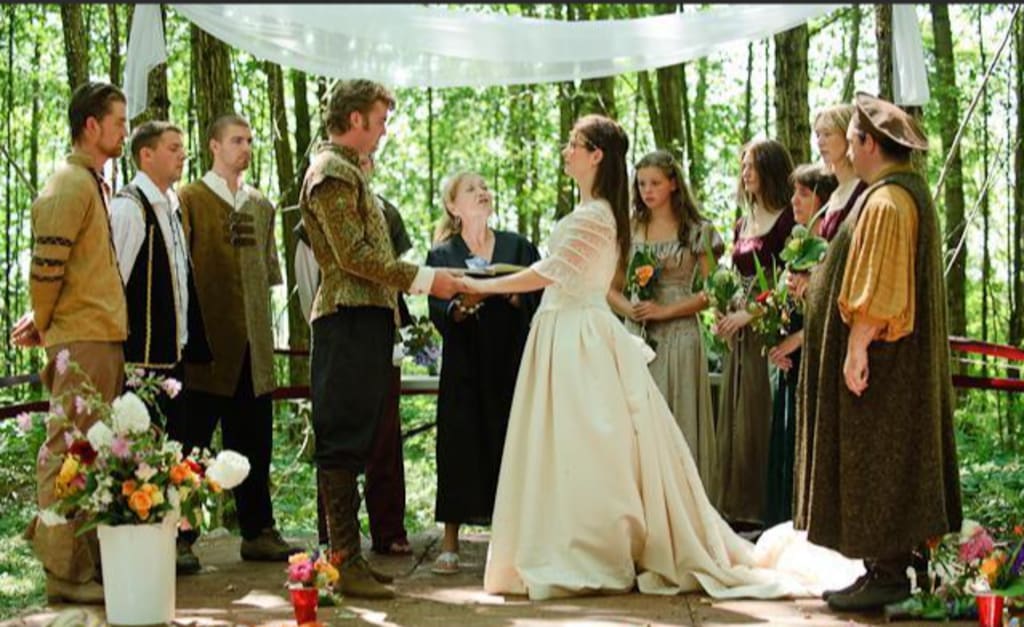
1892, West Texas
The Pecos River cut the land in two—to the north lay the Lawson family’s fifty thousand acres of rangeland; to the south, the McCarthy cotton plantation. Three decades of feuding over water rights had seeded a hatred deeper than the riverbed.
Jesse McCarthy first saw Lila Lawson in the church cemetery. He was burying his father—old man McCarthy had fallen from his horse into a canyon, and some said they’d seen the Lawson brand on the cliffside nearby. Sixteen-year-old Jesse clenched his fists as he spotted his enemy’s daughter standing alone under an oak tree, her black dress billowing like a flag of surrender in the wind.
“Your father killed mine,” he blocked her path.
“Proof?” Seventeen-year-old Lila lifted her chin, her eyes dark as the Pecos pools.
“Right here.” He struck his own chest.
“Then your hatred is misplaced,” she brushed past him, her skirt grazing his spurs. “My father was in San Antonio last week.”
A mistaken beginning demands more mistakes to sustain it. Three months later, at a border town fair, Jesse’s stallion spooked and charged toward the Lawson caravan. It was Lila who reined her mare across the runaway wagon’s path. As the horses nearly collided, he saw her bitten lip bloom with blood.
“You owe me a life,” she said afterward, wiping rope burns from her palms.
“A Lawson life isn’t worth much.”
“What about a McCarthy’s?”
They met under moonlight in a dry riverbed. First came arguments, then silence, and finally, Jesse offered a wild rose—its thorn pierced his thumb, blood dripping onto the petals. “Like our land,” Lila said, “beautiful but cruel.”
Their secret rendezvous point was an abandoned outpost north of the Pecos. Lila brought books of poetry; Jesse brought his harmonica. She read Whitman’s Leaves of Grass: “I am large, I contain multitudes.” He played the Irish ballads his grandmother taught him. On those nights, their surnames faded under the moon, leaving only two young people—she twenty-one, he twenty—believing love could irrigate a parched riverbed.
“Elope,” Lila said abruptly one summer night. “To California. My aunt’s in Sacramento.”
“Your father would hunt us to the ends of the earth.”
“Then we’ll wait for him there.” She took his calloused hand. “Or we stay and change everything.”
Innocence was the original sin. They began trading secrets: she revealed the Lawson plans to dig a diversion channel; he disclosed the McCarthy intent to buy upstream land. Like double agents, they believed they were mending a rift, yet were weaving a noose.
The fracture came during the great drought of 1883. The Pecos shrank to a trickle, and the two families faced off on its banks. Jesse’s brother Billy shot at the Lawson waterwheel; Lila’s brother Tom returned fire. When Tom fell from his saddle, Jesse saw the shattering in Lila’s eyes.
“We have to stop,” she said that night at the outpost, refusing his kiss.
“Stop what? Love?”
“Everything.” She wept. “Tom’s leg is crippled. Your brother’s shot.”
“Your father stole water first!”
“You poisoned the stream first!”
Truth coiled between them like a rattlesnake. Old man McCarthy, it turned out, had found poisoned cattle downstream a week before his death. Thirty years of hatred had long woven a web; they were merely the newest moths trapped in it.
But the flesh is wiser than reason. On gunpowder-scented August nights, they still met at the outpost. Kisses turned bitter, embraces desperate. Lila began bringing whiskey; Jesse brought his revolver. They drank cheap bourbon, made love, then wept separately.
“What if there’s a child?” she once asked.
“We’ll name him ‘Peace’,” he smiled bitterly.
“She’ll be called ‘Forgetfulness’.”
The breaking point came before Thanksgiving. The Lawson fences were sabotaged, fifty head of cattle lost to the canyon. Old man Lawson, convinced it was McCarthy work, surrounded the McCarthys’ ranch house with his men.
Jesse slipped out the back window and rode to Lila. They met among the cottonwoods by the river, her face pale: “Father found my diary. He knows everything.”
“Then we leave tonight.”
“I can’t. He’s locked me in. Tomorrow he sends me to a convent back East.”
They made their wildest decision—elope that very night. Lila braided bedsheets into a rope and climbed down from the second floor. Jesse caught her in the shadows like a falling star. But they’d barely ridden half a mile when torchlights pursued them like will-o’-the-wisps.
Old man Lawson led the posse, his face showing not anger but something worse—shattered pride.
“Lila, come back,” the old man reached from his saddle. “I forgive you.”
“Father, I love him.”
“Love?” The old man’s laughter sounded like crows. “You love the thrill of betrayal!”
Jesse drew his gun without intent to fire—only to scare off the pursuers. But the gunshot spooked Lawson’s horse. The rearing hooves, the heavy thud of a body hitting the ground, the duller crack of skull against stone—time froze.
Torchlight danced on every face. Lila ran to her father, cradling his head. Blood seeped from silver hair, staining her white dress.
“He’s… still alive…” she trembled, feeling for a pulse.
Jesse dismounted and approached. Then he saw it—the half-drawn dagger at Lawson’s belt. The old man’s eyes snapped open, and with his last strength, he thrust the blade forward.
The gunshot sounded like Jesse’s own heartbeat.
But the pain bloomed in his chest. He looked down to see red spreading across his shirt like a desert rose in late bloom. Then he saw the gun in Lila’s hand—his gun, dropped earlier.
“You…” He meant to ask why, but blood filled his throat.
Lila’s eyes went empty. She stared at the gun, at her father, at him, as if reading illegible words. Then she fired again—into the sky.
“Father is dead,” she stated.
“Lila…” Jesse knelt.
“You killed my father.”
“He tried to kill me—”
“So you killed him.” She raised the gun, aiming at him a third time. “And I kill you.”
This time, she didn’t hesitate.
As the bullet struck Jesse’s forehead, his final thought was: She wore blue today, not white. Blue like the Pecos at dawn.
Lila stood still until the torches died, until the eastern ridges flushed with morning light. She laid down the gun and walked to the two bodies. Closed her father’s eyes, then closed Jesse’s. Their blood mingled in the sand, seeping into the thirsty earth.
Then she picked up the gun, pressed it to her temple, and pulled the trigger.
A hollow click—no bullets left. Fate was stingy even with the right to die together.
When the Lawson men arrived, they found their young mistress kneeling in blood, holding her father’s hand in one of hers and her lover’s in the other, as if presiding over a twisted wedding. She didn’t cry, only hummed the Irish tune Jesse often played on his harmonica.
Later, people said Lila Lawson went mad. Sent to a sanatorium back East, she died there three years later. Her will held a single line: Bury me at the abandoned outpost north of the Pecos. No headstone. Plant wild roses.
Jesse McCarthy was buried at the edge of the family plot, without ceremony. The following spring, strange plants grew on his grave—half grass, half cotton.
And the Pecos River flowed on, thinning in drought, flooding in rain, indifferent to the loves and hatreds along its banks. Only the oldest ranch hands claimed that on certain windless nights, you could hear a harmonica and the recitation of poetry from the ruins of the north bank outpost:
“I am large, I contain multitudes…”
But if you approached, only the wind through the wild rose thorns remained—like sighs, like unspoken vows, like the echoes of all stories that begin in love and end in blood.
As for the feud that altered two families? The Lawsons and McCarthys reconciled unexpectedly after the drought—having lost their heirs, their lands were eventually bought by the railroad.
Hatred sometimes needs the living to sustain it. When those who carried the grudges lay in their graves, enmity became a few blurred lines in the county records. Only the Pecos remembers that two young people once tried to irrigate the desert with love, but only watered three premature graves.
The river still flows. The stars still rise. Wild roses bloom crimson each year, then wither, waiting for another mistaken spring.
About the Creator
Wild Card Weekend Recap: What Happens Now?
I think I figured out why I love Wild Card Weekend so much. It's because it's the first playoff anything of the calendar year. The NFL season starts in the fall, and once upon a time, the champion was crowned either on or slightly before New Year's. The evolution of the NFL schedule has resulted in the playoffs starting just into the New Year, and currently, the final week of the season falls on the first weekend of the New Year, with Wild Card Weekend coming a week after that. So yes, chronologically, the NFL's Wild Card Weekend serves as the first playoff anything of the calendar year.
By Clyde E. Dawkins5 days ago in Unbalanced



Comments
There are no comments for this story
Be the first to respond and start the conversation.