
Black Beauty (2020): An Analysis
A Wise Horse Once Told Me...

SPOILER ALERT!
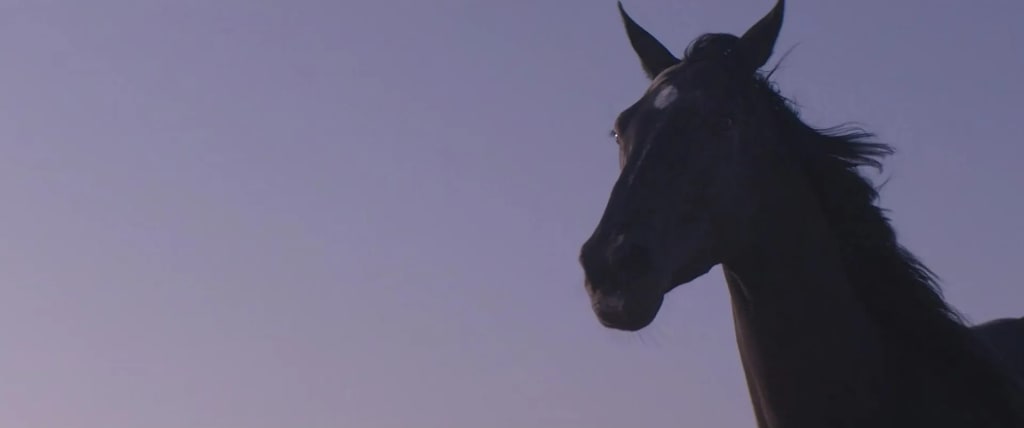
A wise horse once told me… that the spirit of a heartwarming story is one that must never be broken. It must have the strength of the ocean, and live forever. For the most part this movie’s does, but not completely.

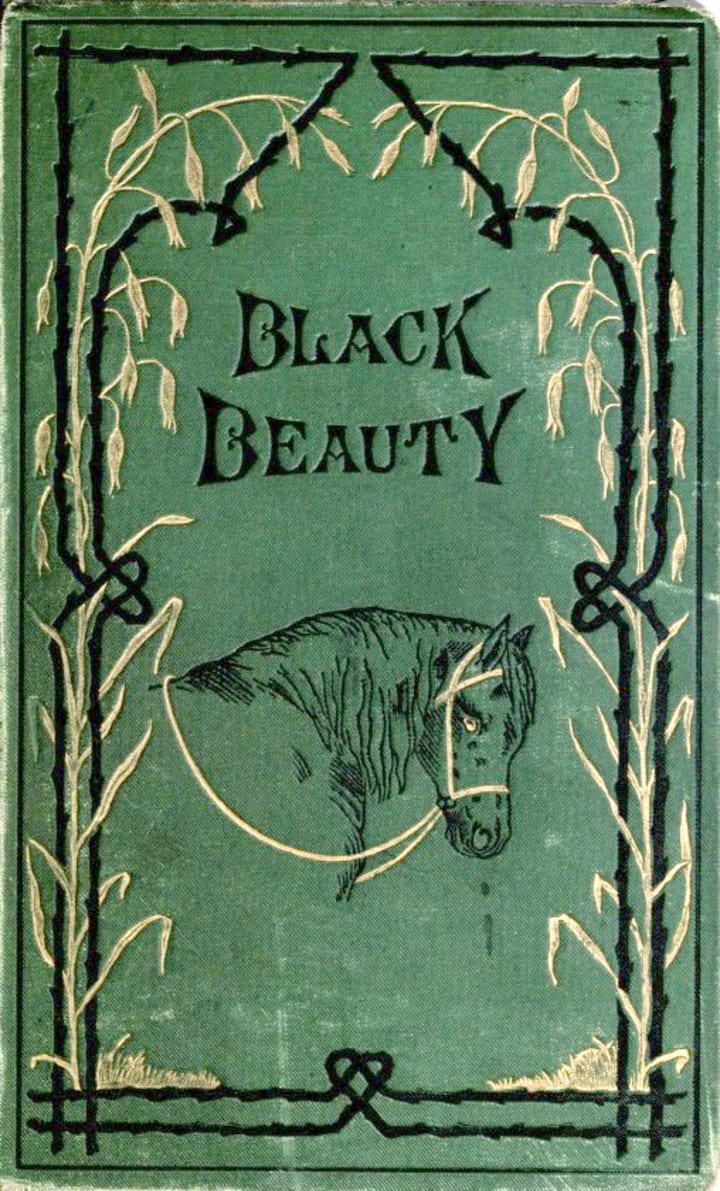
Black Beauty (2020) is the latest adaptation of the critically acclaimed novel Black Beauty: His Grooms and Companions, the Autobiography of a Horse written by Anna Sewell in 1877. This novel was written based on Anna Sewell’s love for horses when she was left permanently disabled from an injury to both ankles. Thanks to her respect for horses, and the fact that she always helped her mother edit her works which were juvenile bestsellers. The novel itself is written in the form of an autobiography of a horse, a horse named Black Beauty and tells the story of his carefree childhood through hardships and kindness as a cab puller in Victorian London, to his retirement in the country. This kind of story broke new ground initially because it was considered to be one of the first fictional animal autobiographies, and it was originally meant to be read by adults to bring about awareness of proper treatment of horses, but is now seen purely as a children’s book.
There are a number of differences between the book and this 2020 adaptation which stars McKenzie Foy (The Nutcracker and the Four Realms), Iain Glen (Resident Evil, Game of Thrones, Downton Abbey) and featuring Kate Winslet (Titanic, Revolutionary Road) as the voice of Black Beauty.
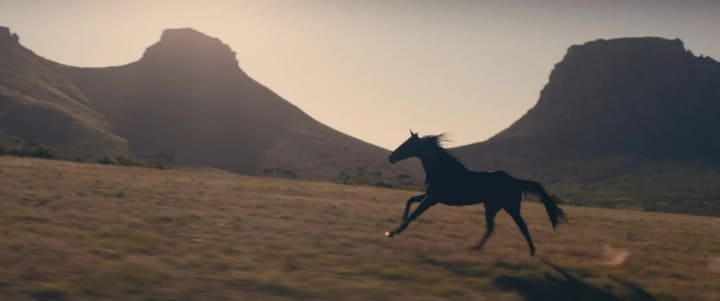
In the original novel, which is set in Victorian England, Black Beauty is a stallion and domesticated from birth. In the 2020 adaptation, Beauty is initially a wild mustang who lives in the Onaqui Mountains of Utah, USA and is now a mare and not a stallion. Personally, I like how it was changed from a stallion to a mare, because the term “Beauty” is much more appropriate for the female gender in my opinion.

Beauty is subjected to several obstacles in being domesticated, but along the way finds solace in an orphaned girl, Jo Green (Foy) who wants nothing to do with Beauty’s caretaker who is her uncle, John Manly (Glen). She then is forced to overcome bad treatment from other characters, before being separated completely from Jo who she had forged a strong bond with, and going on other adventures both good and bad, including ending up in New York City as a carriage horse in Central Park.
Much like in the book, this version of Beauty is once again subjected to the same kind of hardships and the same kind of character arc that many are subjected to in literature. Beauty in the novel is born to a carefree childhood before being snatched away into hardships, but doesn’t forge an unbreakable bond with one of the human characters. The 2020 version’s unbreakable bond with a human character adds for a very heartwarming tale, as well as the test of Beauty’s character as a horse. Although the bond between Beauty and Jo Green is very typical, like a child being separated from a pet who the parents have no choice but to leave behind and is reunited at the end.

The tests that Beauty is subjected to are almost similar to those in the book, but I think the ones in the 2020 film are worse. The worst treatments that Beauty is subjected to in the film are from overly harsh riding from Georgina Winthorp, Fern Deacon’s character, who holds the persona of a spoiled upper class daughter who feels she can have what she wants whenever she wants. Poor horse riding that results in Beauty losing a shoe, which was mirrored in the novel, and injuring her leg. As well as the hard work and poor working conditions of a farmer after her second owner retired, but the worst is where she ends up in a stables in New York which treats horses cruelly and engages in illegal trading.
The worst that Beauty is subjected to in the book is when he is drunkenly ill-treated, not intentionally as well as an instance where he almost went blind from the poor lighting in his stables. The closest thing in the 2020 version is when she is owned by her third owner and an incident required a vet’s attention. The vet didn’t know anything about horses and left Beauty without her blanket, which caused her to get very ill from the cold.
Here, we can see that the director Ashley Avis, has tried to stay as true to the novel as much possible and is very effective in giving it a modern-look. Although it could have stayed truer to the novel a little better, particularly if it showed more instances where Beauty is shown having to get used to horse equipment, like in the novel. The film does show such instances, but it could have focussed on the equipment a little better. One example, is that the farmer who is the third owner subjects her to a horse-drawn plough, perhaps the film could have shown Beauty’s dislike of the collar and how it was known to cause injuries to horses when subjected to heavy work, a little like the eponymous scene in War Horse (2011).

The bond between Beauty and Jo Green is the true aspect that drives the story as it gives Beauty something to hope for, and if a character doesn’t want something the story doesn’t have any purpose. Jo Green is also a relatable character for many, as she starts off as a city girl who is orphaned and is forced to live with her uncle who she barely knows. When she meets Beauty and gives her the name, she gains more purpose in life and purpose in story when Beauty is taken from her. It's here where the message of spirituality comes into play, and how it is more important than physicality and biology. Jo and Beauty form a bond through holding the same "Mustang spirit", something that Beauty has from birth before she is rounded up and holds onto it all her life. The bond is forged from how their own spirits seemed broken after they lost their families, but in truth their spirits were never broken and were empowered by one another.
Jo and Beauty's hope to see each other once they're separated is their true spirituality. This tells us that if we don't give up on hope (a way of accepting our spirituality), a way will pave itself for us no matter what we want. I have experienced this myself, and sometimes what I feel spiritually is not accepted by those around me. But I realise, this is to test my spirit. If a spirit is not tested, it has no purpose in life. Legally and biologically I'm British, but I am have the spirit of a true American. Whenever I visit that great country, I always feel happier and at home.

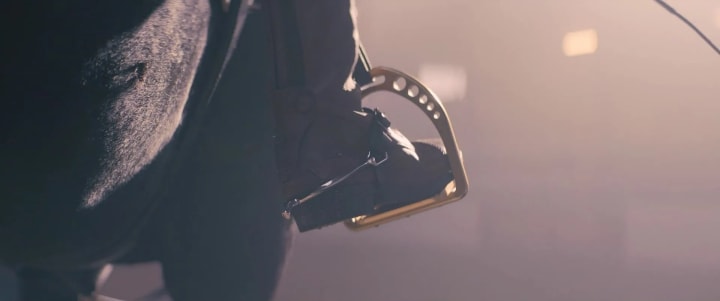
One of the problems with this film is that it doesn’t seem to have a clearly defined antagonist, even though there are some very unlikeable characters. The first one I will mention is Georgina Winthorp. Georgina is an upper class teenager who is clearly used to getting what she wants whenever she wants it, and immediately takes a liking to Beauty when she first sees her. But her poor behaviour causes problems, even though Jo has been employed to sooth Beauty into the new setting. Georgina’s poor treatment results in Beauty being injured from vigorous spur usage. This is something similar to what Anna Sewell would have wanted to address if she never wrote the original novel, as many horses suffer injuries from such pieces of equipment. One can only imagine how many injuries horses suffered in the west from polocrosse rowel spurs, some of which were sharp and could even cut people’s fingers.

Another unlikeable character is Mrs Winthorp who is played by Claire Forlani. In fact, Claire Forlani auditioned for the role of Rose in Titanic (1997) before Kate Winslet was cast. She is a typical upper class woman, who thinks very little of those around her and is not kind to Jo, seemingly forgetting that Beauty truly is Jo’s horse even though she is leased. She also doesn’t approve of her son, George getting to know Jo better, as a romance does develop between the two of them. Unlike Mrs Winthorp and Georgina, George is down to earth and kind.


The other most unlikeable characters that are largely unfocussed on, are the farmer who is Beauty’s third owner and the final stable company, thanks to their ill-treatment of horses and their illegal trading. But they’re not focussed on as much, their activities are told rather than shown. All we have is some long shots of dank surroundings and characters with clearly intimidating personalities coupled with Kate Winslet’s narration, but they don’t do enough abuse of horses in person, nor does the film show how the stable company is performing illegal activities. All we see of the “illegal” activities is that a police officer who arrests a thug that Beauty kicked in the head, states “we’ve heard rumours of horses disappearing,”.

Another factor is Kate Winslet voicing Beauty, something that doesn’t truly make sense. Although a film always needs a recognised star for its main live action hero, I feel Kate Winslet was wasted in this role because she is only doing a voice. It also doesn’t seem right as to why an expensive British actress was hired to pull a twangy American accent, especially when that expensive actress is not physically seen on camera. Why not hire a cheaper and lesser known American actress?
Ashley Avis has clearly used the novel as a template for this movie and it does have a very true and clearly defined message, the importance of holding onto hope. This I feel is the true reason why anyone's spirit can never be broken, it is only when we give up on hope that our spirits are truly broken. They may feel broken sometimes, but if hope is there no one's spirit is ever broken. But I feel it deviates a little much from the content in the original novel. So much that I don’t feel it is worthy of being titled “Black Beauty” and labelled as being “based on the original novel by Anna Sewell”. Perhaps titling it simply as “Beauty” and labelling it as “inspired by the novel by Anna Sewell". As heartwarming as the story is, its references to the original novel were not pronounced enough. Other than those problems, I feel this was a very heartwarming story that could have benefitted from a little further faith towards the original novel.
References
Films
Black Beauty. 2020. [Film]. Directed by Ashley Avis. USA, UK, South Africa, Germany, France. Constantin Film, JB Productions, Disney+
War Horse. 2011. [Film]. Directed by Steven Spielberg. USA. Dreamworks Pictures, Reliance Entertainment, Amblin Entertainment, The Kennedy/Marshall Company. Walt Disney Studios Motion Pictures.
Images
Figs 1, 2, 4-13. Black Beauty, directed by Ashley Avis. (2020, USA, UK, South Africa, Germany, France. Constantin Film, JB Productions, Disney+). https://movie-screencaps.com/black-beauty-2020/
Webpages
IMDb. 2020. Black Beauty. Available at: https://www.imdb.com/title/tt8484160/ [Accessed 13/11/2022].
About the Creator
Luke Milner
Writer, Maritime History, Travel, and Film enthusiast. Here you can find my many articles on such topics, and learn more. You may also find my recommendations for films, and traveling.
Keep reading
More stories from Luke Milner and writers in Fiction and other communities.
Titanic's Sister: A Dark Secret? PART ONE
Prologue The sinking of the passenger ship Titanic is one of the most tragic and famous stories of all time. Her story is known all over the world, thanks to how well documented it is. From books, film, websites, social media, video games and music. But with any disaster, as long as there are unanswered questions, research will continue. While research continues, newer evidence will always be uncovered, and sometimes evidence that may pull us away from the accepted story as we have been told. Newer evidence has been uncovered regarding the Titanic, that may point us towards a horrifying new reality. A reality in which the ship that fell two and a half miles to the bottom of the Atlantic Ocean, was NOT the Titanic, but her sister ship Olympic, and that the disaster was not a pure, simple accident, but something very sinister. With evidence on both sides, we are left with a chilling question, which of the two ships rests on the ocean floor today?
By Luke Milner3 years ago in FYI
Lightning Never Strikes Twice
The distant rumble, the sudden deluge, the crescendo of sound, the flash of light, the explosive energy — it never gets old. I became an amateur storm chaser about two years ago. My wife, Cindy suggested it. Sort of. She said, "Alex, you know this cancer is killing me. I've come to terms with that, but you're smothering me. Go join a band, write a book, or become a storm chaser, for all I care. I love you, but you need a hobby."
By Julie Lacksonen6 days ago in Fiction


Comments (1)
Really interesting, thank you for writing