
"Beyond Words"
Unlocking the Secrets of Telepathy

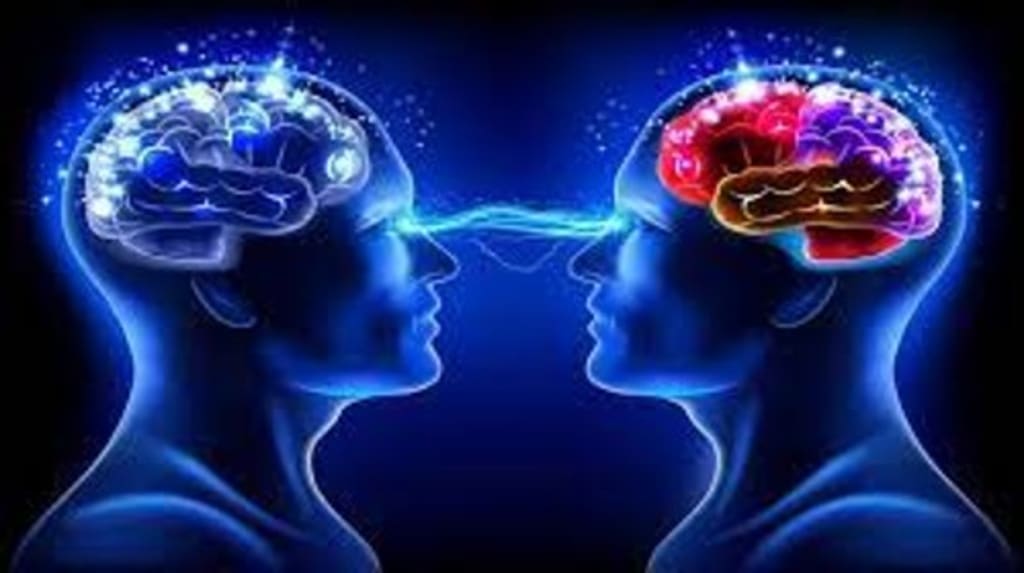
Introduction
In the realm of the extraordinary and unexplained, telepathy has long been a subject of fascination and skepticism. The concept of mind-to-mind communication, free from the constraints of language or physical proximity, is both alluring and mystifying. This article delves into the intriguing world of telepathy, exploring its historical roots, scientific investigations, and the tantalizing potential it holds for humanity.
The Historical Fascination with Telepathy
The idea of telepathy has captured the imagination of humans across cultures and ages. From ancient mystical practices to modern science fiction, telepathy has appeared in various forms. In early civilizations, shamans and oracles claimed to possess the power of mind reading, bridging the gap between humans and the divine. Telepathy has also been depicted in myths, folklore, and religious texts, further deepening its enigmatic allure.
Psychic Phenomena and Parapsychology
As interest in the supernatural grew, so did the scientific exploration of telepathy. The emergence of parapsychology in the late 19th and early 20th centuries sought to investigate and understand psychic phenomena, including telepathy. Researchers conducted experiments to test claims of telepathic abilities, employing methodologies like telepathic card guessing and remote mental influence. While results have been mixed, some studies suggested intriguing evidence, prompting further investigations.
The Enigma of Twin Telepathy
One aspect of telepathy that continues to puzzle scientists and the public alike is twin telepathy. Twins, especially identical ones, have been known to exhibit astonishing connections, seemingly able to sense each other's emotions or even communicate without conventional means. Case studies and anecdotal evidence have generated interest in exploring the unique bond between twins and its possible telepathic aspects.
The Brain's Untapped Potential
In recent decades, advances in neuroscience have shed new light on the human brain's astonishing complexity and untapped potential. The brain's ability to generate electrical and magnetic fields has sparked speculation about the transmission of thoughts beyond ordinary sensory channels. Some researchers argue that telepathy may be a latent ability waiting to be unlocked within the intricate neural networks of the human mind.
The Role of Quantum Mechanics
The emergence of quantum mechanics has introduced unconventional theories that could potentially explain telepathy. The concept of entanglement, where particles instantaneously influence each other regardless of distance, has inspired speculation about whether similar phenomena could exist in the human brain. Some scientists propose that quantum processes within microtubules in brain cells might play a role in telepathic communication.
The Limits of Telepathy
Despite the tantalizing evidence and theoretical possibilities, the scientific community remains divided on the validity of telepathy. Skeptics argue that the evidence is inconclusive and that the phenomena attributed to telepathy can be explained through more conventional means, such as coincidence or subconscious cues. Additionally, the lack of replicable and robust experiments challenges the scientific acceptance of telepathy as a genuine phenomenon.
Telepathy in Popular Culture
The allure of telepathy has seeped into popular culture, becoming a recurring theme in books, movies, and television shows. From superheroes with mind-reading abilities to futuristic societies with telepathic communication, popular media has perpetuated the idea of telepathy as an extraordinary and desirable skill.
Ethical Considerations and Practical Applications
Suppose telepathy were proven to be a genuine phenomenon. In that case, it would undoubtedly raise profound ethical and practical questions. Issues of privacy, consent, and potential misuse would need to be carefully considered. On the other hand, the prospect of telepathic communication could revolutionize fields like medicine, communication, and even security, potentially leading to groundbreaking advancements in human interaction.
Conclusion
The concept of telepathy continues to capture the human imagination, blurring the lines between science, mysticism, and popular culture. While evidence for telepathy remains elusive and controversial, the allure of the mind's potential to transcend conventional boundaries remains undiminished. Whether telepathy will forever remain a fantastical concept or eventually find its place within the realm of scientific understanding, its exploration serves as a testament to the boundless mysteries of the human mind.
About the Creator
Keep reading
More stories from SHAJEETHA KHANAM and writers in Fiction and other communities.
The Nexus of Artificial Intelligence (AI) and Automation
Introduction In the ever-evolving landscape of technology, Artificial Intelligence (AI) and automation have emerged as transformative forces, revolutionizing industries and reshaping the way we live and work. AI, a branch of computer science, aims to simulate human intelligence in machines, enabling them to analyse data, learn from experiences, and make informed decisions. Coupled with automation, the integration of AI into various processes has unleashed unparalleled efficiency and productivity gains. This article explores the rise of AI and automation, their impact on industries, and the implications for the future.
By SHAJEETHA KHANAM3 years ago in Futurism
Miss Persephone's Manual to a Seemingly Ordinary Life
Miss Persephone was found at the dining table, her blue eyes swollen, her tears arriving and retreating like the tides of the ocean. Earlier that day, her family had visited her in the retirement home where she had lived for eight years. It was her eightieth birthday.
By Imola Tóth5 days ago in Fiction



Comments
There are no comments for this story
Be the first to respond and start the conversation.