
Beyond the Headlines
How U.S. Cities Are Quietly Winning the Fight Against Homicide

By Sarfraz Khan
Washington, D.C. — In a media landscape often saturated with stories of crime and chaos, a quieter, more hopeful narrative is emerging from the heart of some of America’s most troubled cities: homicide rates are falling—and fast.
According to newly released crime data from the Department of Justice, major urban centers such as Baltimore, Philadelphia, and New Orleans have experienced a sharp and consistent drop in homicides over the past three years. From a 12% reduction in 2023, to 14% in 2024, and a projected 20% decrease by the end of 2025, the trend is no statistical blip. It’s the product of a coordinated, grassroots-driven push to reimagine public safety.
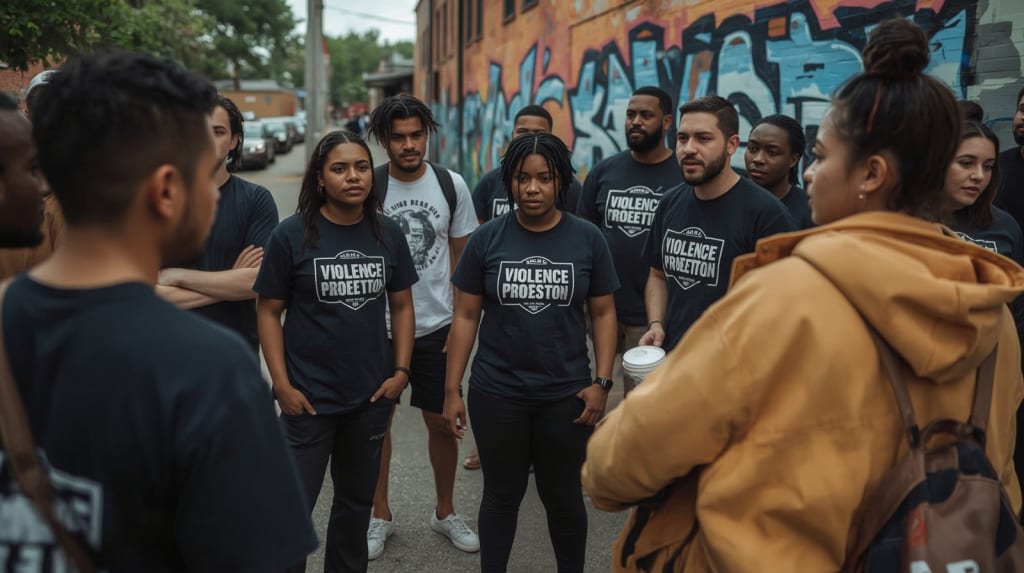
At the center of this transformation are community violence intervention (CVI) programs—locally run initiatives that blend mentorship, mental health support, neighborhood presence, and police-community collaboration.
“We stopped looking at crime just as a police problem,” says Latasha Green, director of Heal the Block, a CVI program based in Philadelphia. “We started seeing it as a symptom of deeper community trauma—and once we addressed that, everything changed.”
These programs are not just anecdotes—they are working. In Baltimore, once dubbed America’s “murder capital,” homicides are at their lowest point in a decade. Neighborhood watch groups have partnered with youth organizations and trauma specialists to provide support to at-risk teens before they become statistics.
In New Orleans, a city long plagued by gun violence, a partnership between city hall, local churches, and conflict mediators has helped resolve over 300 potential retaliatory acts in the past 18 months. The number of fatal shootings has dropped by 19% compared to the same period last year.
Experts point to a paradigm shift in public safety strategy—moving from reactive policing to proactive prevention.
“The data shows what we’ve always suspected: that public safety is not just about arrests; it’s about relationships,” says Dr. Marvin Hughes, a criminologist at the Urban Policy Institute. “The cities that invested in people are seeing the payoff.”
Federal funding has also played a role. In 2022 and again in 2024, Congress approved grants to support violence prevention programs as part of broader community development packages. The U.S. Department of Justice reported that over $500 million has been disbursed to such efforts since 2022.
But perhaps the most powerful transformation is cultural. Communities are reclaiming their neighborhoods, refusing to let crime define their identity. Former gang members have become mentors, local artists have turned abandoned spaces into murals and workshops, and school leaders are training counselors instead of installing metal detectors.
This shift hasn’t come without setbacks. Some critics argue that de-emphasizing traditional law enforcement weakens deterrence. But even many police departments are embracing the new model.
“We don’t see these programs as competition,” says Captain Robert Lane of the Baltimore Police. “We see them as partners. Every act of violence they prevent is one less tragedy we have to respond to.”
For families who have lived under the shadow of gunfire, the change is more than a statistic. It’s a sigh of relief.
“Three years ago, I was scared to let my son walk home from school,” says Monique Davis, a single mother in New Orleans. “Now, he’s joining a youth leadership group run by the same people who used to run the streets. That’s real change.”
As the country prepares for another volatile election season and the media cycles churn with political drama, these stories may not make the front page. But for thousands of Americans living in cities long dismissed as lost causes, the decline in homicide is a daily, lived victory.
And in the world of public safety, sometimes quiet success is the loudest kind.
Sarfraz Khan
Urban Affairs Contributor
About the Creator
Keep reading
More stories from The voice of the heart and writers in Fiction and other communities.
A Breath Between Storms
Stockholm, Sweden — In a world increasingly defined by high-stakes geopolitical rivalries, a moment of relative calm arrived this week, not with fanfare, but through a carefully worded press release issued at the conclusion of U.S.-China diplomatic talks held in Stockholm.
By The voice of the heart7 months ago in Fiction
TUS NUA - ch 53
TUS NUA – ch 53 New Beginnings – Mia and Midnight (*)(*)(*) Finola knew Ali’s brother-in-law needed to put his mind at rest. She fed her arm through his and led him outside. “We’ll sit here. If you like, I can put a block around us so our conversation will be private.”
By Margaret Brennan4 days ago in Fiction
It Lurked in Darkness
Ray enjoyed investigating abandoned places with his friends. It was something of a hobby now that they all started as just a fun thing to do when they spent time together. This weekend they would be visiting the Halloran Manor a long since abandoned home that had been forgotten by time.
By 3rrornightshiftabout 8 hours ago in Fiction



Comments
There are no comments for this story
Be the first to respond and start the conversation.