
A Breath Between Storms
The 90-Day Pause That Could Reset U.S.-China Trade Tensions By Sarfraz Khan

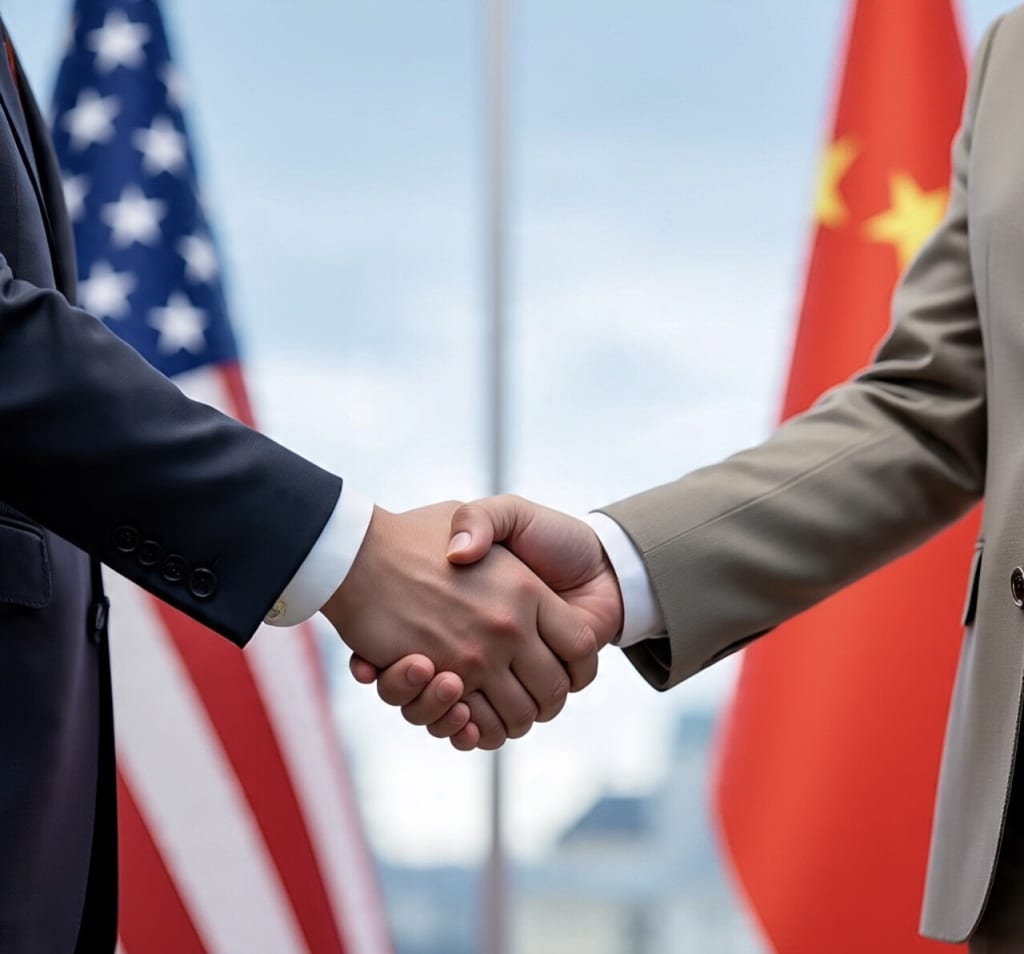
Stockholm, Sweden — In a world increasingly defined by high-stakes geopolitical rivalries, a moment of relative calm arrived this week, not with fanfare, but through a carefully worded press release issued at the conclusion of U.S.-China diplomatic talks held in Stockholm.
After years of tariff escalations, trade sanctions, and mutual mistrust, negotiators from Washington and Beijing emerged with a modest but meaningful agreement: a 90-day moratorium on new tariffs. While the deal does not reverse existing economic measures or resolve long-term disputes, it signals something rare—a willingness, at least for now, to listen rather than retaliate.
The agreement, reached behind closed doors and without media theatrics, offers a temporary reprieve for businesses, supply chains, and investors worn down by constant uncertainty. More importantly, it demonstrates that dialogue—carefully timed and diplomatically framed—can still soften hardened positions, even between adversaries with clashing worldviews.
For U.S. trade officials, the Stockholm accord is seen as a tactical win. With presidential elections looming and inflationary pressures persisting, a tariff freeze helps contain import costs without appearing to capitulate. For China, navigating a slowing domestic economy and increasing pressure from regional neighbors, the move provides a chance to regroup without losing face.
But this is not peace. It’s a pause—and the real work lies ahead.
Observers close to the talks suggest that the 90-day window is intended as a confidence-building interval. It provides space for mid-level diplomatic teams to outline a roadmap for deeper engagement, particularly in areas like intellectual property enforcement, green technology access, and agricultural imports. Both sides, insiders say, are cautious but not cynical.
“This is not the end of hostilities,” remarked Lin Zhao, a senior fellow at the Stockholm Center for Strategic Dialogue. “But for the first time in months, we are seeing a shared understanding that escalation is not a sustainable strategy.”
American tech firms, particularly those relying on rare-earth minerals and advanced chip components, have reacted positively. Several publicly listed companies, including semiconductor giants and EV manufacturers, saw a bump in share prices within hours of the announcement. Chinese markets responded similarly, reflecting optimism—if not outright confidence.
Yet history demands realism. Similar truces have been attempted before, often derailing due to miscommunication, domestic political pressures, or sudden incidents—cyber attacks, South China Sea maneuvers, or flashpoints in Taiwan. Still, diplomats on both sides insist that this time, groundwork is being laid more carefully.
Unlike the headline-grabbing summits of previous years, Stockholm was marked by lower-profile delegations and technocratic pragmatism. “They spoke less in absolutes and more in contingencies,” one official, who requested anonymity, reported. “It’s clear neither side is ready to fully commit—but neither wants a collapse either.”
The global community has welcomed the détente. Southeast Asian economies, often caught in the economic crossfire between the superpowers, view the pause as an opportunity to stabilize their own export-import balances. European markets, wary of currency volatility tied to trade disruption, have expressed cautious optimism.
But the most important takeaway may not lie in the specifics of the 90-day agreement. Rather, it is the reminder that even in an era of digital diplomacy, algorithm-driven markets, and nationalist rhetoric, face-to-face human negotiation retains its power to alter the trajectory of global affairs—however slightly, however temporarily.
In the end, Stockholm may not be remembered as a breakthrough. But it may be remembered as a breath—a moment when two global giants chose restraint over reaction, patience over provocation.
And sometimes, that is enough to begin again
Sarfraz Khan
Global Affairs Correspondent
For Okhl Media
Sarfraz Khan
Global Affairs Correspondent
For Okhl Media
Sarfraz Khan
Global Affairs Correspondent
For Okhl Media
Sarfraz Khan
Global Affairs Correspondent
For Okhl Media
About the Creator
Keep reading
More stories from The voice of the heart and writers in Fiction and other communities.
Is Saad Punjwani About to Get Married? A Mysterious Instagram Post Sparks Curiosity
A single Instagram post is sometimes enough to start a wave of curiosity online — and that is exactly what happened when Pakistani technology entrepreneur Saad Punjwani suddenly appeared on Instagram after years of silence.
By Jon B. Carroll4 days ago in Fiction
My First Time Skiing and I Got Lost, Alone, in the French Alps
Looking back, I can trace some of my life’s biggest adventures to a simple action from my sister. She’d introduced me to Tommy (a very long time ago), a colleague of hers, who had overshared his penchant for Italian-looking women, and I ticked that box.
By Chantal Christie Weissa day ago in Humans


Comments
There are no comments for this story
Be the first to respond and start the conversation.