
Between Two Flames: The Iran‑Israel War of 2025
When decades of covert conflict exploded into overt war—and humanity bore the cost

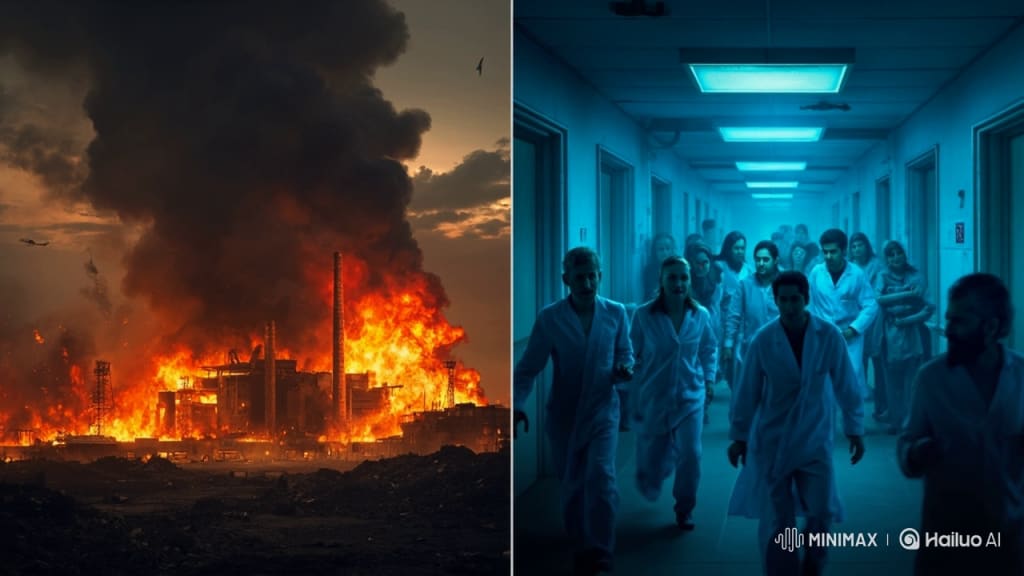
The explosion shattered the dawn in Tehran.
It was June 13, 2025. Israel’s Operation Rising Lion had begun—precise, massive, and unannounced. Missiles and bombs tore through Iran's air defenses, silencing sirens and beginning a campaign targeting nuclear sites at Natanz, Fordow, and Isfahan. Top commanders—Hossein Salami, Mohammad Bagheri—and leading nuclear scientists were killed in the opening hours .
For a moment, the world held its breath.
Then the skies roared.
---
🌍 Prelude to War
This was the first truly open conflict between Iran and Israel since 1979, after years of proxy strikes and covert cold war tactics. The tensions had steadily escalated—Israeli and U.S. intelligence feared Iran was closing in on a bomb. Iran had enriched more than 400 kg of 60% enriched uranium—just shy of weapons grade . Israel and its allies warned that they might not wait for Iran to cross that threshold.
Iran braced. Authorities fortified nuclear sites, shored up air defenses, added S‑300 missiles . Iranian officials warned: any strike would be considered an act of war—and worth grim retaliation .
---
💥 The Opening Salvo
In ten minutes, launch pads and missile stockpiles boomed under Israeli airstrikes. Over 60 fighter jets attacked a dozen bunker‑buried targets. Spy networks, including Mossad-run drone bases within Iran, disabled air defenses and opened the skies for the strike .
Iran responded with waves of ballistic missiles, and drones launched at Israeli cities. Hospitals became emergency shelters. Flights from Tehran emptied. Within 48 hours, over 100,000 civilians had fled north toward provinces like Mazandaran and Gilan .
---
🏥 Hits and Retaliation
On June 19, Iran fired a Sejjil missile at Soroka Medical Center in Beersheba—a hospital serving many Israelis and Bedouins—deeply wounding dozens . Iran said it targeted nearby military assets; Israeli staff called it “a war crime.”
The hospital strike shattered fragile peace hopes and drew global outrage. Meanwhile, Israel confirmed low collateral damage—yet admitted crushing missile factories and nuclear component sites near Tehran .
---
📉 Ceasefire and Consequences
By June 24, a ceasefire was brokered—fragile and mediated by the U.S. and Qatar . Israel declared victory, claiming Iran's program was set back “by decades,” though white‑paper leaks suggested only a few‑month delay . Iran’s parliament halted cooperation with the IAEA, while stockpiled enriched uranium—possibly relocated—remained intact .
Politically, Israel’s leadership consolidated domestic power; Iran’s leaders vowed to rebuild—but faced possible internal backlash. The global oil market trembled. Diplomats warned that unless this pause leads to talks, conflict would reignite .
---
🧩 The Cost of War
Human toll:
Iranian casualties ranged from 1,000 to over 1,600, with thousands more injured .
Israeli damage included one civilian death, several hundred injured, and disrupted towns and hospitals .
Tens of thousands on both sides were displaced .
Structural impact:
Iran lost much of its visible missile and nuclear infrastructure—possibly sabotaged at least 35 missile storage sites .
Israel confirmed the deaths of at least 14 key scientists .
America’s role—providing bunkerbusters and intelligence—made it complicit in Israeli strategy, drawing further scrutiny .
Long-term concerns:
Iran could bury rebuild sites deeper or hide them in civilian zones .
Iran may completely withdraw from non-proliferation treaties, accelerating covert nuclear efforts .
Regional and economic stability are at risk—displacement, drought, oil price surges—could change regional geopolitics .
---
🕊️ A Fork in the Road
Israel must decide: strike again to dismantle Iran’s core capabilities—or risk Iran rebuilding and escalating. The U.S. and West must choose between pressure and diplomacy—or accept a radically destabilized Middle East .
Iran’s Supreme Leader Ali Khamenei, under internal and external pressure, faces a stark choice: retaliate fully and risk collapse or war—or seek talks while consolidating power at home .
---
🕰️ What Comes Next
1. Short-term: Ceasefire holds while talks on nuclear limits begin. Iran may launch proxy attacks or drone strikes through allies like Houthis.
2. Medium-term: Rebuilding Iran’s facilities underground; Israel may join U.S. in further covert or overt strikes.
3. Long-term: A Cold War‑style standoff may post‑1945 return to proxy battles—unless diplomacy succeeds.
---
🧭 Final Words
The Iran–Israel war of 2025 marks a dangerous departure: the region’s first actual war between Iran and Israel since 1979. The weapons fell fast—and the wounds run deep. But beyond politics, negotiations, and strategies, this was humanity at war—families fleeing, doctors overwhelmed, cities broken, and communities forever changed.
In the rubble of Natanz and under Israel’s hospital walls, lives were lost. And in the ceasefire’s pale calm, millions await the next flame.
Because until leaders choose dialogue over destruction, the fires will light again.
About the Creator
Waqif Khan
i'm creating history from old people
Keep reading
More stories from Waqif Khan and writers in Fiction and other communities.
The Path to Salvation
The late autumn evening air filled the monk's lungs, but it wasn't the season that chilled his bones. The heavy-handed presence of evil he had sensed upon entering the woods surrounding this mountain village had not bothered to conceal itself from him.
By Made in DNAa day ago in Fiction


Comments
There are no comments for this story
Be the first to respond and start the conversation.