
"Best Friends"
A Historical Exploration of a Queen and her Handmaiden

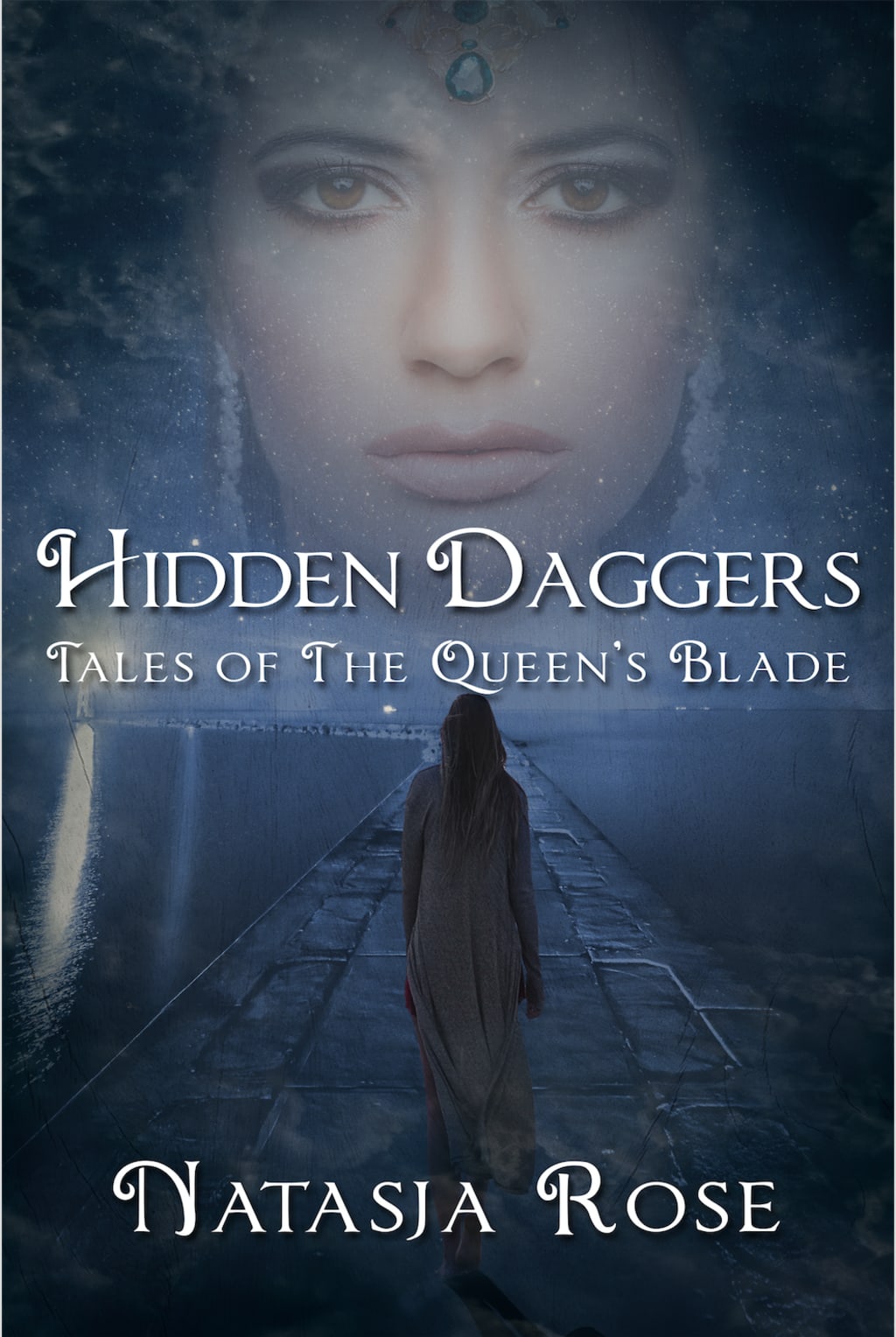
Written in the style of a historical text discussing the reign of Queen Alexandra of Dorion, first Empress and second ruler of the Alexandrian Empire. Inexplicably intwined with her reign is the fierce debate about the exact position occupied by her ‘best friend’ and bodyguard, the assassin Sayfiya al-Aziz...
Inspired by countless instances of same-sex relationships being misidentified as "just really good friends". Also, feel free to play 'Spot the Historical Reference'!
Queen Alexandra of Dorion, known also as “The Peacemaker” and “The Queen of the World”, occupies an unusual place in history.
Along with the debate of whether she should be considered the first or second ruler of the Alexandrian empire (A debate which has grown to such heights that many modern conferences ban it as a topic, and some institutions assign it as a punishment essay topic), the historical figure better known as the Queen of the World defies all of the boxes that many historians like to fit powerful women into.

Like Kleio the 7th, the last Queen of the Joined Kingdoms, contemporaries report being attracted more to Queen Alexandra’s mind and personality than to her physical looks.
This is not to say that Alexandra of Dorion was unattractive or unappealing, merely that it was not her most notable trait. Unlike that Queen’s infamous seduction of powerful leaders, or the mythical war that sprung from the vow of Mutual Militarisation made by Helene of Troios’s many suitors, however, there are no indications that Alexandra ever so much as glanced thoughtfully outside of her marriage. Queen Alexandra and King-Consort Ramessu had only one child, Prince Milche, but there is no historical evidence to suggest so much as an affair on either of their parts. Efforts to paint her as a Cunning Seductress have thus far been met with ridicule.
Indeed, such a play is noted as The Bard’s one and only flop in his well-documented career.
In the same vein, it is impossible to paint Alexandra in the likeness of similar powerful Queens who either never married or were widowed young, and largely spent their lives alone, sharing power with no-one. King-Consort Ramessu was known to have taken a more ceremonial and religious role, but Alexandra’s decision not to re-marry after her restoration to the throne seems to have been spurred by a desire to avoid upending the fragile balance of powers, more than any great grief or fear of how a foreign husband might be received. A Virgin Empress or Widowed Queen she certainly was not.
While it is undeniable that Alexandra’s power came from her father’s relentless conquest, she rarely lead an army herself, and her only participation in military strategy, aside from the battles to re-take her empire, is the greatly-debated instance of her freezing an army in place until they surrendered. Rumours can be documented to her reign, but the only account stating so is the memoirs of Prince Varos, who claimed to have heard it second-hand from ‘a knowledgable source’. This source was never named, and the account was written near the end of Varos’s life, three years after Alexandra’s death. While later historians have interpreted the account in many different ways, it is considered an unreliable, or at least highly biased, resource.
Common speculation leans toward boggy ground or a once-in-a-millenium freeze, or even the enemy army being dosed with a delayed-action paralytic. Records survive from a number of infamous court assassins, speculating that Alexandra had knowledge of antidones to their poisons, and perhaps even a working knowledge of the poisons themselves.
Thus, Alexandra also cannot to be said to join the ranks of famed Warrior Women such as Hua of the Middle Kingdom, Jeanne of the Sainted Visions, General-Queen Artemisia (who pre-dates Alexandra by some centuries), or Victoria of the Painted Ones, all of whom fought to defend their lands. While the brief period where she was dethroned can be compared to the origin stories of a number of Pirate Queens, Alexandra regained her throne on the strength of her alliances and the instability of her usurpers, as much or more than by force of arms or destruction of her enemies.
It is likely that Queen Alexandra had some amount of combat training, given the dual context of Aleksandros the Conqueror’s opinions as a passionate advocate of female self-defence, and her survival of the many well-documented attempts on her life, but War was not her chosen field. Rather, she is noted by contemporaries and later sources as a skilled diplomat and politician, living up to her moniker of “The Peacemaker”.

Unusually among powerful Queens - indeed, powerful rulers in general - Alexandra stands out for her lack of family conflict. Phillos, her uncle and temporary usurper, was a documented imbicile who was undeniably being manipulated by others. Although some suspect Alexandra’s great-grandmother and namesake of involvement in her husband’s death, the majority of her family tree stands out as being remarkably even-keeled, lacking much of the sibling in-fighting that tends to cripple dynasties.
Out of all Queen Alexandra’s relationships, the most notable are not with her husband or her head bodyguard, the demigoddess Agathe, but with two of her ever-present handmaidens: Thalia and Sayfiya.
Thalia of Dorion, as well as being her Principal Handmaiden, was also Queen Alexandra’s bastard half-sister. Despite this, the sisters were raised together, almost as Heir and Spare, and by all accounts remained close until Thalia’s death during the uprising. The few remaining sources from that time period suggest that Thalia was targeted in a case of mistaken identity, and killed by mercenaries searching for the Queen.
The surviving fragments of Thalia's personal correspondance reveal a witty sense of humour, an inclination for commentary to the point that several historians have questioned how Queen Alexandra maintained the serene visage she is known for, and a determination from a young age to never marry. This must have been a great disappointment to many, because contemporary sources also describe Thalia of Dorion as a great beauty, to the point of speculating on divine parentage.
Whether through a desire to avoid navigating another mass of suitors, or through sisterly affection, Queen Alexandra respected her half-sibling's desires, and sources from the time period note that Thalia spent much of her time with her close friend Agathe, Queen Alexandra's personal bodyguard.
Of Sayfiya al-Aziz, on the contrary, very little is known of her personally. Her name, the school she founded under Queen Alexandra’s patronage, and the closeness that all surviving accounts agree she enjoyed with Queen Alexandra are well documented to the point of being common knowledge, but the woman's private life is a mystery.

There has been a great deal of debate over the role of a royal handmaiden in the Dorion court. Some sources claim that they were merely an early equivalent of Ladies-in-Waiting, attendants to fill the time between childhood and marriage, as the vast majority of her known handmaidens were married off to unsuccessful suitors shortly after Alexandra’s marriage to Ramessu of the Joined Kingdoms.
Other theories suggest that the handmaidens fulfilled a similar function to the Royal Companions of Alexandra’s predecessors; close and trusted friends from childhood who served as informal advisors and a last line of defense.
By all accounts, Sayfiya al-Aziz was something of a latecomer to the ranks of Queen Alexandra's attendants, casting doubt on the latter theory, as the first records of her do not appear until a year or so into Alexandra’s reign. Indeed, some accounts wonder if Sayfiya was a handmaiden at all, and did not merely approach the Queen to petition for a school for girls. A long-running and highly selective institution, the records are destroyed or remain tightly sealed, rather than being made public after the usual time period.
One fact is undisputed among contemporary sources: despite her later arrival, Sayfiya al-Aziz was Queen Alexandra’s life-long companion and dearest friend.
Sharing quarters and meals, and reported to be physically affectionate with each other, Sayfiya al-Aziz was afforded a closeness to Queen Alexandra that few others, even among the Queen’s other handmaidens, could claim. They were rarely seen far from each other’s side, and much of the iconography and imagry of Queen Alexandra also depicts Sayfiya al-Aziz in the near background.
Outliving Alexandra by approximately a year, Sayfiya was entombed beside her in the family mausoleum, bearing the epitah “The Queen’s Blade”.
If you liked this story, leave a heart or a tip, and follow me on Vocal and Medium!
About the Creator
Natasja Rose
I've been writing since I learned how, but those have been lost and will never see daylight (I hope).
I'm an Indie Author, with 30+ books published.
I live in Sydney, Australia
Reader insights
Outstanding
Excellent work. Looking forward to reading more!
Top insights
Compelling and original writing
Creative use of language & vocab
Easy to read and follow
Well-structured & engaging content
Excellent storytelling
Original narrative & well developed characters
Expert insights and opinions
Arguments were carefully researched and presented
Eye opening
Niche topic & fresh perspectives
Heartfelt and relatable
The story invoked strong personal emotions
Masterful proofreading
Zero grammar & spelling mistakes
On-point and relevant
Writing reflected the title & theme
Keep reading
More stories from Natasja Rose and writers in Fiction and other communities.
A Flight Of Dragons
There weren't always dragons in the valley. That was not to say that there were never dragons in the valley. The high peaks that surrounded the fertile land, dotted with farms, apparently made for very good nests during early Spring, much to the disgruntlement of the birds of prey who lived there year-round. The goats and other animals who inhabited the lower slopes made for a convenient food supply, and the thermal vents kept the nests warm while the parents hunted.
By Natasja Rose4 years ago in Fiction
It Lurked in Darkness
Ray enjoyed investigating abandoned places with his friends. It was something of a hobby now that they all started as just a fun thing to do when they spent time together. This weekend they would be visiting the Halloran Manor a long since abandoned home that had been forgotten by time.
By 3rrornightshift4 days ago in Fiction
Author’s Advice
If you would’ve asked me 20 years ago did I know I’d become a writer and an author, I would’ve said “nope, ain’t happening”. As fate would have it I did become an author and I can honestly say I’m loving it so far. It really does feel good to be a writer. I’ve learned a lot on this journey and I feel like with even me being as new to this world as I am, there’s some wisdom I need to share with every other aspiring author.
By Joe Patterson4 days ago in Journal



Comments (2)
This was so captivating! Loved your storytelling!
Helene of Troios made me chuckle lol Intriguing! Love the backstory and detail.Adore the name Sayfiya.