

She did not tell me—she may have said it in Greek—that it will be snowing in Athens. I dislike snow, no matter that I have lived most of my life in Canada—gone now informally but salvageable with the right fate. I have no faith or belief in anything except for love, and I mean the Anthi-and-M kind, not the dead Romeo and Juliet at the end, both. I never felt it to be romantic. There is nothing romantic about dying. It was a tragedy, of course, but Anthi and M is a tragedy too, except that nothing tragic has occurred yet. Someone must die or disappear, especially in reality; I mean, fiction. Actually, one of the narrators disappeared. It was expected by the writer, but it was sad. Eléni was loved, even by Goddess Athena, who had renamed her so. At least, I can bring Eléni back, whereas reality is much more complicated. Free will is a poor game, even worse than true or false. The human condition speaks volumes along its bloody history and uncertain future. The weather condition, on the other hand, also a poor game, relies on models and trends, and the amount of snow that a city can receive from the skies before it metamorphoses to white piss or pissy ice. But Athenian snow was different. It was almost welcomed; serene with the white houses and blue accents all the way to the sea. She did not tell me, but I knew. How could I not?
About the Creator
Patrick M. Ohana
A medical writer who reads and writes fiction and some nonfiction, although the latter may appear at times like the former. Most of my pieces (over 2,200) are or will be available on Shakespeare's Shoes.
Keep reading
More stories from Patrick M. Ohana and writers in Fiction and other communities.
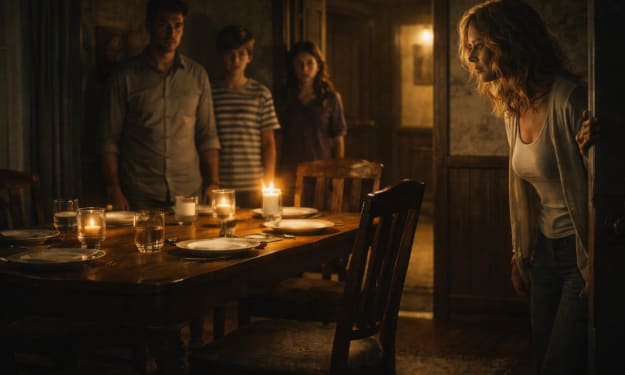
THE EXTRA CHAIR
The first time the chair appeared, it was already set for dinner. Marianne noticed it when she brought the pot roast to the table. There were five place settings instead of four. Five forks aligned like silver ribs. Five water glasses catching the yellow light.
By Ajan Lori Abei6 days ago in Fiction


Comments (1)
"The human condition speaks volumes along its bloody history and uncertain future." Powerful line in a piece that is speaking about love and life. The contrast between the snow in Canada and Athens is interesting too!