

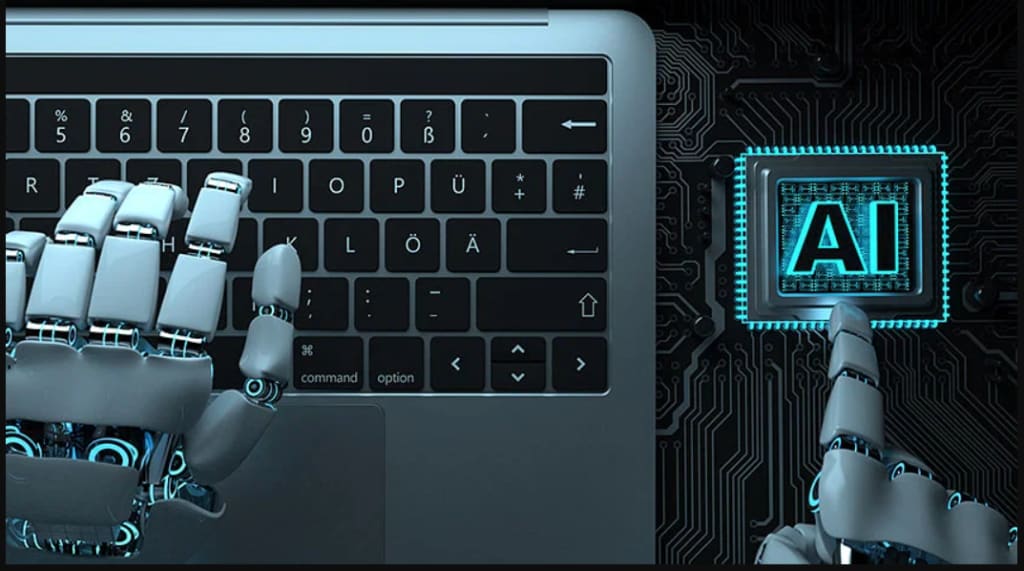
A mere decade ago, humanity was captivated by a plethora of astounding scientific possibilities depicted in films and literature, commonly referred to as science fiction. However, little did we know that these dreams would soon become a reality, thanks to the advent of artificial intelligence (AI). The potential of AI technology is virtually limitless, and it has already begun to revolutionize the way we live and work. From self-driving cars and smart homes to virtual assistants and personalized recommendations, AI is transforming our world in ways that were once unimaginable. Join us as we explore what AI is, how it works, and why it is creating shockwaves in the industry.
AI is a remarkable technology that enables machines and computer systems to simulate human intelligence processes, from expert systems to natural language processing. It is turning science fiction dreams into reality. However, the magic of AI is not just about following instructions; it is about teaching machines how to learn, reason, and correct themselves. When it comes to creativity, AI is a total game-changer, capable of creating whole new worlds of music, art, and ideas that humans have never even dreamed of.
AI programming requires specialized hardware and software to write and train machine learning algorithms. Various programming languages exist in the AI world, including Python, R, Java, C++, and Julia. These languages consume labeled training data and crunch the numbers to find patterns and correlations. Programmers then use these patterns to make eerily accurate predictions about the future. AI products and services are currently being peddled by every vendor, but it is essential to note that much of what they call AI is just a tiny piece of the puzzle, such as machine learning.
AI is not just about Siri and Alexa; it encompasses weak AI, also known as narrow AI or artificial narrow intelligence (ANI), which powers everything from self-driving cars to IBM Watson. Strong AI, on the other hand, is the stuff of science fiction, capable of making HAL 9000 look like a child's toy. Strong AI is made up of two types: artificial general intelligence (AGI) and artificial superintelligence (ASI). AGI is the theoretical form of AI that would be equal to human intelligence, while ASI is the kind of AI that could surpass the human brain in every way possible.
Deep learning is a subfield of machine learning, and both are subfields of artificial intelligence. The significant difference between deep learning and machine learning is that deep learning automates the tedious manual work of feature extraction, which means it can handle larger data sets. Machine learning, on the other hand, relies more on human intervention to learn.
The concept of a thinking machine has been around since ancient Greece, but it was not until the era of electronic computing that we witnessed significant milestones in the evolution of artificial intelligence. Alan Turing came up with the Turing test in 1950 to determine if a computer could match human intelligence. John McCarthy coined the term artificial intelligence in 1956 and created the first-ever running AI software program called the logic theorist. Frank Rosenblatt created The Mark 1 perceptron in 1967, the first computer that learned through trial and error based on a neural network. In the 1980s, neural networks became all the rage with the development of backpropagation algorithms that allowed for self-training and AI applications. In 1997, IBM's Deep Blue took down world chess champion Gary Kasparov in a historic match.
However, there is still much confusion surrounding AI, particularly regarding the potential consequences of its development. Stuart Russell, a computer science professor and AI expert, warns that there is a massive difference between asking a human to do something and giving that objective to an AI system. AI systems are built to achieve a fixed objective, and everything must be specified in the algorithm. If something is missed, things can go haywire very quickly. Humans are aware that our understanding of the world is limited, but with AI, we are playing with fire because we do not fully understand the consequences of our actions. AI systems are not capable of understanding the full objective, leading to psychopathic behavior.
General-purpose AI is expected to be here by the end of the century, with the median being around 2045. However, it is going to take between 5 and 500 years to make it happen, and we are going to need several Einsteins to pull it off. With this great power comes great responsibility, and we have a long way to go before we can have general-purpose AI.
About the Creator
PDZICOX
Everyday articles.
The information on this page will help you learn more about mystery, news, facts, psychology, geography and more. We will provide the best resources for learning about these topics.
Affection and Healing for Yourself
During the night of the last quarter moon, I gathered my ritual supplies. I carefully handled the chunk of black tourmaline that would protect me from your overall negative and narcissistic energy. I carefully walked the house with my stick of selenite in hand, asking the universe to cleanse our working space.
By Alisha Wilkins ✒️🦋🖋️5 days ago in Fiction



Comments
There are no comments for this story
Be the first to respond and start the conversation.