

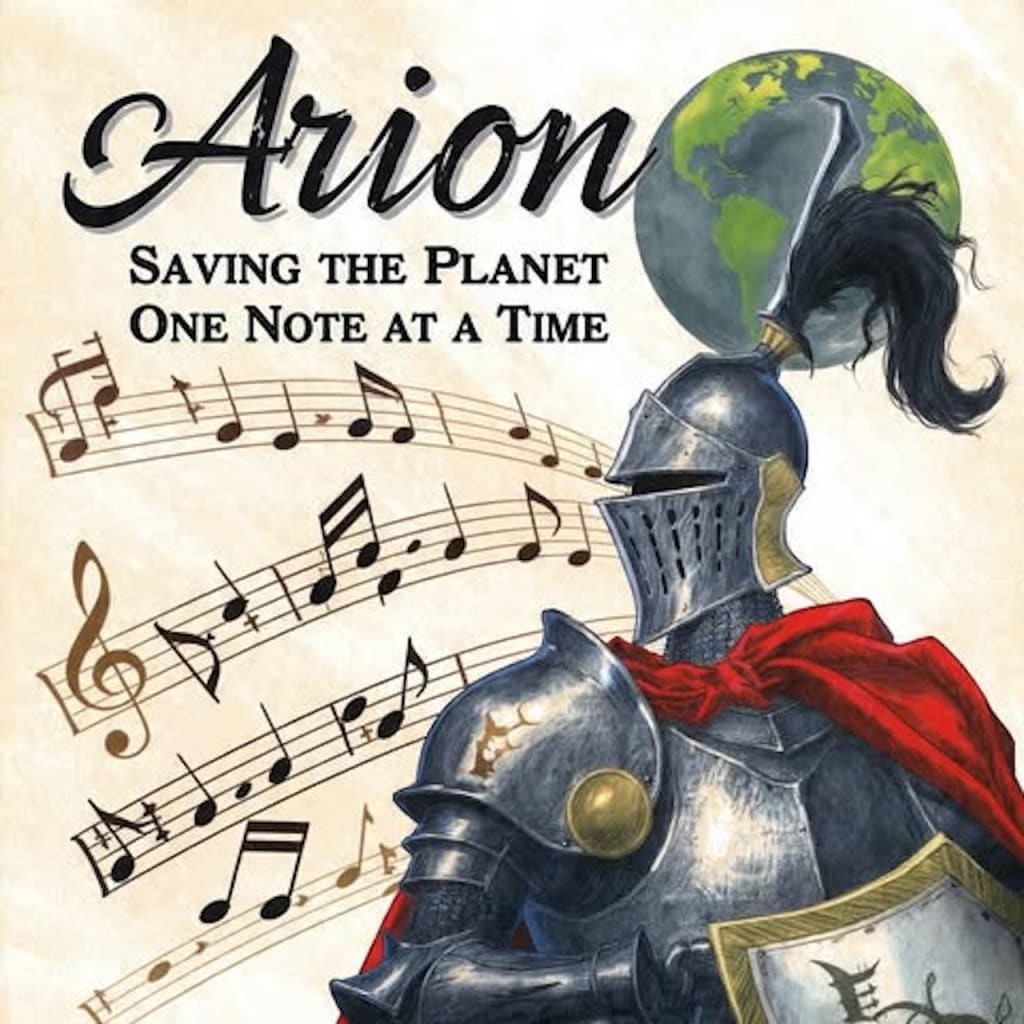
The Symphony of Dawn
Prologue – The Silent Age
There was a time when the world sang.
Not in the way people remembered from dusty history books — songs on stages, radios, or crowded taverns — but in a deeper, older way. The rivers hummed their silver notes as they wound through stone, the forests carried choruses of whispering leaves, and the very stars resonated in unheard patterns above. Life itself was woven together by threads of harmony, each being a living instrument in an endless composition.
But slowly, humanity forgot to listen.
The cities grew louder with the growl of engines and the cold pulse of machines. Inventions that once sought to make life easier drowned out the subtle symphonies of the earth. When conflict erupted, the first thing silenced was music. Instruments were broken. Singing was forbidden in many places, considered frivolous while survival became the only anthem.
At first, the absence was subtle — a quiet discomfort, like a bird missing from the morning sky. Then it deepened. The oceans began to sour. Crops withered in silence. Skies dulled to gray. It was as though the planet itself, deprived of its melody, was falling into despair.
Generations grew up in this era, now called the Silent Age. Most had never heard true music, only the mechanical clatter of a world trying to sustain itself without harmony.
And yet…
Somewhere in the stillness, a single note lingered. Waiting.
A note so fragile it could shatter with the wrong breath, yet so powerful it could awaken the memory of the world. The note carried with it a promise — that one day, someone would hear it. And when they did, the earth’s great song would begin again.
Chapter 1:
The Last Note
His name was Arion.
He was thirty-three years old, though time had never clung to him in the same way it did to others. His face bore the calm of someone who had walked through storms without bitterness, his eyes deep and steady, as though they could see both the world’s wounds and the quiet hope beneath them. He wore no crown, carried no sword, and claimed no title — yet there was something in his presence that made people pause, as if hearing a memory they couldn’t quite recall.
Arion had grown up in the Silent Age. He had never been taught to sing, had never held an instrument, had never heard a true melody. Yet from childhood, he felt that something was missing — as if the world around him were speaking a language he couldn’t quite hear. He often lingered near rivers, forests, or the windswept hills, sensing whispers buried beneath the silence.
On the eve of his thirty-third birthday, while walking alone along a desolate cliffside, he heard it.
A single note.
It was soft, delicate — so faint that another might have dismissed it as a trick of the wind. But to Arion, it was like the heartbeat of the universe itself, suddenly breaking through the emptiness. The sound trembled with both sorrow and promise, carrying within it all the beauty that had been forgotten.
Arion fell to his knees. The note pierced him, not with pain but with recognition. Somehow, he knew this sound did not come from the outside world — it came from within him.
He opened his mouth, and before he understood what he was doing, he breathed the note back into existence.
The cliffs vibrated. Stones shifted as though stirred from slumber. A nearby tree quivered, leaves rustling with life that had been dormant for decades. The air itself seemed to brighten, touched by something it had long hungered for.
Arion was terrified — and awestruck. He had not merely echoed the note; he had joined it, weaving his own voice into its thread. The sound was alive, and it recognized him as much as he recognized it.
When the last echo faded, Arion stood in silence, his heart pounding. He knew, without reason or proof, that the world had been waiting for this.
And so had he.
Arion stumbled back from the cliffside, clutching his chest as though the sound had carved itself into his ribs. The note still pulsed within him — not fading, but echoing in endless ripples, like a stone cast into water. He could not contain it. His lips parted again, and once more the note escaped, shimmering through the air like light breaking into color.
This time, someone heard it.
Down the slope, in a village built of gray stone and weary hands, a group of laborers froze mid-stride. They were used to silence — to the clang of tools, the thud of carts, the weary shuffle of feet — but this sound was unlike anything their ears had ever known. A young woman dropped the bucket she carried, staring upward. An elder closed his eyes, trembling, as though a dream he had nearly forgotten was waking inside him.
The villagers turned toward the cliffs.
Arion, still unaware of them, continued to breathe the note, letting it rise and fall. Without knowing how, he found his voice weaving subtle variations — soft bends, gentle rises — and with each new phrase, something stirred. A flock of birds took wing from the barren treetops, their cries blending with the sound. A patch of earth cracked open to reveal green shoots, impossibly alive after years of drought.
The villagers began climbing toward him, drawn as if by invisible threads.
When they reached the crest, they found Arion standing at the edge of the cliff, arms outstretched, eyes closed. He was not performing for them; he was simply being, as though the sound had always been inside him, waiting for this exact moment to break free.
“By the heavens…” whispered the elder, falling to his knees. His voice shook. “It is music.”
The word itself felt foreign on his tongue, as if pulled from another lifetime. Children clutched their parents’ hands, frightened yet unable to look away. A young man stepped forward, his rough, soot-stained face streaked with sudden tears. “I… I can feel it. In my bones.”
Arion finally opened his eyes. He saw them gathered around him — faces lined with exhaustion, yet glowing faintly now, lit by something more than fire or sun. His heart ached with compassion. He hadn’t meant for them to hear, yet some instinct told him this was not an accident. The note was meant for them as much as for him.
“Do not be afraid,” Arion said, his voice gentle. “This is not mine. It belongs to all of us.”
The villagers exchanged uncertain glances. Yet the elder rose, his eyes wet. “Then sing again, stranger. Sing for us.”
Arion hesitated. He had no song, no melody, no training. And yet, when he opened his mouth, the sound came — richer now, fuller. The villagers gasped as harmony itself seemed to awaken in their chests. A few dared to hum, timidly at first, then stronger as the sound embraced them. The once-dead hilltop became a living choir.
For the first time in generations, a people remembered what it meant to sing.
When the song ended, silence returned — but it was no longer empty. It was full, alive, like fertile soil after rain.
The elder placed a trembling hand on Arion’s shoulder. “Who are you?”
Arion looked out over the horizon, where the sun broke through the haze, scattering gold across the land. He did not yet know the answer. He only knew the truth that burned within him, the truth carried by the note itself.
“I am someone who has heard what was lost,” he said softly. “And I cannot turn away from it.”
The villagers bowed their heads, some weeping openly, for they understood: the Silent Age had cracked. The world had shifted.
And it had begun with a single note.
The villagers stood in stunned silence, their hearts beating with rhythms they did not understand. Some clutched their chests, afraid the sound had altered them in ways they could not name. Others felt tears rising, though they could not explain why.
Yet not everyone welcomed it.
From the back of the gathering, a broad-shouldered man stepped forward, his face shadowed with suspicion. His hands were scarred, the hands of one who had labored too long without rest. He glared at Arion as though the song itself were an accusation.
“This is dangerous,” he spat. “We’ve lived without such things for generations. Music brings disorder. Music is temptation. Do you not remember why it was cast out?”
Several villagers murmured in agreement, shifting uneasily. Old stories rose in their minds — tales told to children that music had once divided people, sparked envy, and weakened the will of nations. To some, the silence of the age was safety, a shield against chaos.
But others shook their heads. A young woman spoke, her voice trembling: “No… I felt warmth. I felt hope. For the first time in my life, I felt alive.”
The strong man sneered. “Hope doesn’t fill bellies. Hope doesn’t mend walls. He tricks you with sound, and tomorrow we will suffer for it.”
Arion stepped forward, meeting the man’s gaze without anger. His voice was calm, steady, carrying no hint of defense or pride. “What you fear is not the sound itself, but what it awakens within you. Music does not deceive. It reveals.”
The villagers stirred at his words. Some looked inward, as though confronted by feelings long buried: grief, joy, longing, love. To feel was frightening, in a world that had taught them to numb themselves against despair.
A child broke the tension. She stepped from her mother’s side, her small hand clutching a cracked wooden toy. Her wide eyes searched Arion’s face. “Sing again,” she whispered. “Please.”
Her plea silenced the gathering.
Arion crouched, meeting the child’s eyes, and placed his hand gently over hers. He smiled softly, then rose and began to hum — not the piercing, world-shaking note from before, but a lullaby, simple and tender. The melody wrapped around the villagers like a warm cloak. Some wept openly. Others fought back tears, ashamed of their own tenderness.
Even the strong man, though he scowled, could not stop his hand from trembling.
When the lullaby ended, the elder spoke again, his voice breaking: “I lived in silence my whole life. I thought it was all there was. But now I see… we were starved, though we did not know it.”
The crowd was divided — some eager, some fearful, some angry. Yet all of them, whether they admitted it or not, were changed. For a single note had cracked the shell of the Silent Age, and nothing would ever be the same.
Arion looked upon them all — the believers, the doubters, the frightened — and his heart overflowed with compassion. He did not seek followers, nor to prove himself. He only knew this: the world was waiting to remember its forgotten song.
And he could not let it fall silent again.
Chapter 2:
The Harmonic Gift
That night, the village did not sleep.
Some gathered in hushed circles around fires, whispering of what they had heard. Others shut their doors tightly, as though to keep the sound from slipping into their homes. Mothers clutched their children close, torn between awe and fear.
Arion sat apart from them, alone beneath a weathered oak at the edge of the fields. The stars shimmered faintly above, veiled by the haze of a sickened sky. He pressed his palm to his chest, where the note still lingered, pulsing softly as though his very heartbeat had become a drum.
“What are you?” he whispered into the silence. “And why me?”
As though in answer, the wind stirred. It carried no words, but a vibration — faint, rhythmic, like strings plucked from an unseen harp. Arion closed his eyes and listened. The sound was not outside of him, but through him, resonating in the marrow of his bones.
Visions bloomed behind his eyelids. He saw oceans rising and falling in shimmering chords, mountains humming in low, steady tones, the heavens themselves spinning in vast, slow harmonies. The world was not silent at all — it was a symphony, eternal and alive. Humanity had simply forgotten how to hear it.
When the vision faded, Arion gasped, clutching the earth as though it might pull him back from the abyss of wonder. He understood now: the note he had found was part of something greater. He was not its master. He was its vessel.
The elder approached quietly, leaning on his staff. He had watched Arion from a distance, his old eyes carrying both fear and reverence. “You saw something, didn’t you?” he asked.
Arion nodded slowly. “The world is singing, even now. But we are deaf to it.”
The elder’s lips trembled. “And you… you can hear it?”
Arion hesitated, then whispered, “Not just hear. I can join it. Perhaps even awaken it.”
The elder bowed his head, awe-struck. “Then you are what the old tales spoke of — a Resonant. A guardian of harmony. We thought such ones were myths.”
“Perhaps I am,” Arion said softly. “But if the gift is real, it is not mine alone. It belongs to the world, and it must be shared.”
The elder placed a trembling hand on Arion’s shoulder. “Then you must learn to wield it, before others seek to silence it again.”
As if summoned by his words, a shadow flickered on the horizon. Beyond the village, in the ruins of old cities, there were those who thrived in silence — who fed on fear, chaos, and dissonance. They would not allow music to rise again without a fight.
But Arion did not yet know this.
For now, he only knew that the gift within him was not meant to be hidden. It was meant to awaken others. And so, with the dawn, he would set out — to seek those whose souls still carried faint echoes of the lost song, and to form an ensemble strong enough to restore the world.
The Harmony had chosen him.
And he would not refuse it.
At dawn, the village stirred restlessly. Some avoided Arion, refusing to meet his eyes, while others lingered near him as though hoping he would sing again. The division was sharp, yet curiosity outweighed fear.
The elder led Arion to a stream that once nourished their fields but now ran thin and bitter, poisoned by years of neglect. Children no longer drank from it. Crops shriveled in its absence. “If your gift is real,” the elder said, “then perhaps it can heal what we have lost.”
Arion knelt at the water’s edge. The stream trickled faintly, its surface clouded with grime. He placed his hands upon the stones and closed his eyes, listening.
At first there was only silence. Then, faintly, he heard it — a mournful tone, buried deep within the current. It was the voice of water itself, weak and broken, yet still alive.
He let the note within his chest rise to meet it. Slowly, carefully, he hummed a tone that matched the stream’s sorrow. The villagers watched uneasily as the air quivered around him.
The water responded.
Its surface shimmered, vibrating in rhythm with his voice. Arion shifted his pitch, guiding the sound upward into brighter tones, coaxing the water’s song toward harmony. The stream gurgled louder, clearing as though washing away its own sickness. A patch of wildflowers nearby lifted their heads, drinking eagerly of the renewed flow.
Gasps rose from the villagers. Children crept closer, their wide eyes reflecting the sunlight dancing now across the clear water. One of them dipped his hands in, then cried out with delight. “It’s fresh again!”
The elder dropped to his knees, tears carving lines through the dust on his cheeks. “By the stars… you have done what we thought impossible.”
But not all were convinced. The broad-shouldered man from the night before scowled, his arms crossed. “Tricks and illusions,” he muttered. “The stream will sour again. Nothing so fragile as a song can mend the world.”
Arion rose, his face calm. He did not argue. Instead, he reached for the man’s hand. The man resisted, but Arion’s grip was firm yet gentle. He placed the man’s palm against his own chest, where the note still pulsed.
“Listen,” Arion whispered.
For a heartbeat, nothing happened. Then the man’s eyes widened as he felt it — a vibration, steady and alive, thrumming through flesh and bone like the echo of creation itself. His face softened despite himself. He pulled his hand away quickly, ashamed of his own wonder.
Arion smiled, not in triumph, but in compassion. “This gift is not mine alone,” he said quietly. “It belongs to all who have the courage to hear.”
The villagers fell silent, stirred by something they could not name. Some bowed their heads. Others backed away, unsettled by the weight of hope.
But the elder looked at Arion with reverence. “If you can restore water,” he said, “perhaps you can restore all the world. Yet you cannot do it alone.”
Arion turned his gaze toward the horizon, where the mountains loomed faintly against the morning light. In his heart, he felt a new stirring — not a single note, but the faint echo of many voices, waiting to be found.
The Harmony was calling him to gather others.
And the journey was about to begin.
Chapter 3:
Gathering the Ensemble
The next morning, Arion prepared to leave the village.
He carried no possessions, save for a walking staff given by the elder and a simple cloak to shield him from the wind. His true burden — and his true gift — was the note within him, which still pulsed steady as a heartbeat.
The villagers gathered to see him off. Some watched with awe, others with suspicion. A few begged him to stay, believing his presence alone could protect them. But Arion knew the Harmony’s call was greater than one place.
“The world’s song is broken,” he told them. “I have heard only the first note. To restore it, I must find the others who carry its echoes. Alone, I am but a voice. Together, we will be a chorus strong enough to awaken the earth.”
The elder bowed low. “Then go, Resonant. And may the Harmony guide your steps.”
Arion’s path led him through valleys and abandoned roads, across rivers and fields long stripped of their color. Everywhere he went, he listened — not with his ears alone, but with the resonance in his heart. And slowly, he began to find them.
The first was a drummer.
Her name was Kaelen, a woman of fire and grit, her hands calloused from striking rhythms on hollowed logs and empty barrels. In the silence of the age, she had kept time alone, beating out patterns to remind herself she was still alive. When Arion found her in a ruined city, her rhythms echoed through crumbling stone like the heartbeat of a forgotten giant.
“You hear it too,” she said, eyes narrowing as Arion approached. “The pulse beneath the silence.”
“I do,” Arion replied. “And the world needs it. Will you join me?”
Kaelen studied him, then struck her drum with thunderous force. The sound rolled across the ruins, shaking dust from broken walls. “If the world is to rise, it will need rhythm,” she said. “I will walk with you.”
The second was a flutist.
He was called Liora, a quiet wanderer who carried a reed pipe carved from river bamboo. Though music was forbidden, he played in secret glades, coaxing delicate notes that called birds from hiding and coaxed weary travelers into peace. His song was not of thunder, but of wind — gentle, unseen, yet able to move mountains over time.
When Arion found him, Liora lowered his flute in shock. “I thought I was alone,” he whispered.
“You were waiting,” Arion said. “And now the waiting is over.”
The third was a singer of raw, unyielding power.
Her voice carried no words, only tones that shook the air itself. Some called her dangerous, others divine. She had wandered the wastelands, her song said to crumble stone walls or soothe a dying child into peace.
She met Arion with suspicion. “Why should I trust you?”
“Because your voice was never meant to stand alone,” Arion answered. “It was meant to weave with others.”
She listened to the truth in his tone — not commanding, but inviting — and at last, she nodded.
One by one, the Ensemble began to form: the rhythm of earth through Kaelen’s drums, the breath of wind through Liora’s flute, the fire of spirit through the singer’s voice. Each carried a fragment of the Harmony, incomplete alone, but destined to unite.
Yet shadows stirred as they traveled together. For word of their music spread quickly — and those who fed on silence, those who thrived in fear and discord, began to take notice.
The Discordant were watching.
And they would not let the world’s song rise without a fight.
For days, the small company traveled together, following paths that seemed chosen more by instinct than by map. Arion did not lead with command, but with listening. He listened to the whisper of wind, the pulse of the earth beneath their feet, the faint stirrings of something long asleep in the land.
Kaelen, restless and bold, drummed on anything she could find — stones, bark, the hollow ribs of fallen trees. Her rhythms kept their steps steady and their spirits lifted. Liora, soft-spoken and keen-eyed, played his flute at night to calm the nerves of the group, his melodies curling like silver smoke into the starry dark. The Singer — whom the others had begun to call Selene — rarely spoke at all, but when she sang, the air trembled with a power that silenced doubt.
They walked together, yet none had yet attempted to combine their sounds. Each was wary, uncertain of how their gifts might clash.
It was Arion who finally urged them.
One evening they came upon a valley where the soil was cracked and barren, the skeletal remains of trees jutting like bones from the earth. Nothing grew there; even the birds avoided its silence. Arion felt the ache of it in his chest — this place had once sung brightly, but now its voice was gone.
He turned to the others. “Let us try. Not to force the land, but to listen to it. To offer what we carry, and see if the earth will answer.”
They hesitated. But slowly, Kaelen set her drum before her. She tapped a slow, steady rhythm, like the heartbeat of a sleeping giant. Liora lifted his flute, breathing a soft melody that danced between her beats, weaving in and out like wind through branches. Selene closed her eyes, her voice rising in a long, wordless tone, strong yet mournful, carrying the sorrow of the barren valley.
Finally, Arion joined them, humming the note that had first awakened within him — steady, resonant, carrying the memory of all that had been lost.
The sound merged, each tone embracing the others. It was not perfect at first: the rhythm faltered, the flute wavered, the voice surged too strong. But then, something clicked. The tones aligned. Harmony bloomed, rich and deep, filling the valley with a sound not heard in centuries.
The earth shivered.
A crack split open in the soil. From it, a green shoot pushed upward, trembling, then unfurling into a bright leaf. Another followed. And another. Soon, the valley stirred as though awakening from a long sleep. The skeletal trees shivered — and to the astonishment of all, buds appeared along their branches.
The Ensemble broke off in shock, their song collapsing into silence. Yet the life they had stirred did not fade. The green remained. The air felt lighter, as if the land itself had sighed with relief.
Kaelen laughed aloud, slamming her drum with joy. “Did you see that? We did that!”
Liora’s eyes shone. “Not us alone. The earth was waiting — we only reminded it how to sing.”
Selene stared at her hands as though they belonged to someone else. Her voice had crumbled stone and soothed the dying, but never had she seen life return. For the first time, wonder softened her guarded face.
Arion, however, was solemn. “This is only the beginning. We have touched harmony, but the world is vast, and its wounds are deep. And where harmony rises…” He paused, glancing at the dark horizon. “…discord will answer.”
Even as he spoke, far away in the depths of broken cities, figures stirred. They had felt the tremor of harmony. They had heard the forbidden sound breach the Silent Age.
And they would not let it spread.
Chapter 4 :
The Discordant Forces
Far from the greening valley, in the husk of a ruined metropolis, shadows gathered.
The city was a place of hollow towers and broken glass, where the wind howled through empty streets like a wounded beast. Once it had pulsed with light and life, but now it served as a fortress for those who had claimed silence as their weapon.
They were called the Discordant.
No one knew where they had come from — only that they had risen during the Silent Age, thriving in the emptiness. Some believed they were once men and women, twisted by the absence of song until they forgot the sound of their own hearts. Others whispered they were born of the silence itself, creatures of void and fracture.
They wore dark robes stitched with jagged patterns, their faces hidden behind masks of iron and bone. In their presence, the air itself seemed to warp, vibrating with dissonant hums that gnawed at the ear and chilled the spirit.
At the center of their gathering stood their leader, a tall figure known only as Maelchor. His voice was a rasp, like metal torn across stone. Where Arion’s note brought resonance and healing, Maelchor’s tones split and shattered, twisting harmony into chaos.
One of his lieutenants knelt before him, bowing low. “My lord, the silence has been breached. We felt it ripple across the wastelands — a sound of… harmony.”
The chamber filled with low murmurs, dissonant echoes bouncing like shards of glass.
Maelchor raised a hand. The noise ceased instantly. He tilted his mask toward the horizon, as though staring into the very earth. “I know,” he hissed. “The world trembled. Life stirs again.”
His words dripped with venom. “And with life comes rebellion. Hope. The most dangerous poison of all.”
The lieutenant hesitated. “Shall we… snuff it out?”
Maelchor’s reply was like a blade. “Of course. If the people remember music, they will remember freedom. If they remember freedom, they will resist us. Find the source. Break the instruments. Silence their throats. Shatter the Resonant.”
A dissonant chant rose among the Discordant, filling the ruined hall with vibrations that made the stone tremble. Windows cracked. Rats fled into the shadows.
For the first time in generations, harmony and discord had both awakened. And where they met, the fate of the world would be decided.
The valley was quiet that night, the Ensemble camped near the newly revived stream. The air smelled of wet earth and green shoots, a scent that made Kaelen drum softly in rhythm with the night’s gentle wind. Liora’s flute played a thin, silver thread through the shadows, and Selene hummed quietly, testing tones that shimmered like moonlight.
Arion sat apart, listening. The pulse of the world was faint but steady — and he felt it: dissonance lurking beyond the trees.
Far beyond the ridge, in the ruins of a forgotten city, Maelchor watched. His eyes gleamed behind his mask, black as polished iron. “They have awakened too much,” he hissed, voice slicing the still night. “Harmony spreads, and the world may remember itself. That cannot happen.”
He raised a hand, and a ripple of jagged sound surged from the ruined city, moving like a dark tide through the forests, creeping toward the valley. Shadows stirred, and from the darkness stepped the Discordant — figures robed in black, carrying strange instruments that twisted the air itself: horns that screamed discord, strings that shrieked and snapped, drums that throbbed with violent, unnatural rhythms.
Arion’s ears caught the first fracture in the night’s peace. He rose, hands outstretched. “Kaelen! Liora! Selene!”
The Ensemble scrambled, sensing danger even before they could see it. Kaelen struck her drum with fierce urgency, pounding a rhythm to counter the rising dissonance. Liora played quick, jagged notes to shield the valley from the worst of the attack. Selene let out a powerful cry, her voice weaving around the chaos in defiance.
The ground trembled under the clash of harmony and discord. Stones cracked. Trees swayed violently. A branch fell, narrowly missing Arion as he hummed his note, anchoring the Ensemble in the pulse of the earth.
One of the Discordant advanced, thrusting a jagged horn toward the stream. The instrument unleashed a wave of sound that tainted the water, threatening to undo Arion’s healing. He leapt forward, voice rising in a note that wrapped around the corrupted sound. The stream quivered, then cleared, sparkling as if in defiance.
Kaelen’s drum echoed with him, Liora’s flute wove light through the darkness, and Selene’s voice shattered the Discordant’s formation. Yet the enemy was relentless. For every Discordant they repelled, two more emerged from the shadows, relentless and unmoving.
Arion realized with a pang of fear: their gift alone might not be enough. Harmony was strong, but Discord was cunning, patient, and cruel.
A sharp clang resounded. One of Kaelen’s drums cracked under the force of a dissonant strike. Selene’s voice wavered, a note breaking under pressure. Liora fell back, his flute slipping from his hands.
The Ensemble staggered, but Arion stood firm. His note deepened, resonating with the very bones of the valley. The Discordant shrieked in pain at the purity of his sound. Slowly, painfully, the attackers began to retreat, slinking back into the shadows from whence they came.
The valley fell silent again, save for the quiet, steady pulse of the healed stream. The Ensemble was shaken but alive.
Arion sank to his knees, breathing heavily. “This… is only the beginning,” he whispered. “They will not stop. And neither can we.”
Kaelen wiped sweat from her brow, eyes narrowed in determination. “Then we fight, together. Harmony against Discord. And we will rise.”
Liora picked up his flute, now more certain of his role. “We are more than instruments. We are the song the world has been waiting for.”
Selene’s gaze hardened, her voice returning in quiet defiance. “Let them come. Let them hear what we are capable of.”
And somewhere, far away, Maelchor smiled behind his mask. The game had begun, and the battle between harmony and discord had taken its first step into the open.
Chapter 5:
Songs of the Elements
The battle in the valley had left the Ensemble shaken, but determined. Arion knew they could not survive the Discordant’s relentless attacks with mere improvisation. They needed more than instinct and courage — they needed the ancient songs that had once bound the world together.
“These songs,” Arion explained as they traveled through a forest slowly returning to life, “are not just music. They are the language of nature itself. Water, Earth, Fire, Air — each carries its own tone, its own resonance. If we can learn them, we can awaken the world and defend it against the Discordant.”
Kaelen drummed thoughtfully. “And you know where to find them?”
Arion shook his head. “No. But the Harmony speaks to those who listen. It will guide us.”
Their journey led them to the first element: Water.
They arrived at a river choked with silt and sludge, its surface dark and unmoving. Arion knelt by the bank, listening. There was a faint whisper beneath the water, a vibration that matched the pulse of his own note.
“Join me,” he said, and together, the Ensemble began to sing, drum, and play.
Kaelen’s drum tapped a steady rhythm, mimicking the rise and fall of tides. Liora’s flute curled around the rhythm like mist, weaving through the notes. Selene’s voice rose and fell in haunting arcs, carrying the sorrow and longing of the water itself. Arion hummed the base note that anchored them all.
The river shivered. A ripple became a wave, a wave became a surge, and the water sprang to life. Fish leapt from the currents, clean and shimmering. The sludge dissolved, replaced by crystalline clarity. The Song of Water had awakened.
Next, the Ensemble pursued the Song of Earth, seeking forests and mountains scarred by centuries of neglect. Kaelen’s drums tapped the heartbeat of soil, Liora’s flute echoed the wind through trees, Selene’s voice resonated with roots and stone, and Arion’s note stitched the layers together. Stones shifted, saplings sprouted, and mountains hummed in resonance. The land itself seemed to breathe.
Then came Fire, not destructive, but renewing. They climbed to volcanic plains, scorched yet smoldering. Here, the Singer’s voice blazed, and Kaelen’s drums matched the crackling heat. Liora’s flute whistled like sparks in the wind. Arion’s note drew it all together, transforming the dangerous fire into warmth that could nurture rather than consume.
Finally, Air. On the highest cliffs, where the winds cut like blades, they practiced the song of the skies. Liora’s flute soared above the cliffs, Kaelen’s drum mimicked the rushing gusts, Selene’s voice carried across the precipices, and Arion hummed the tone that held them steady. The wind answered, lifting seeds and feathers, cleansing the clouds, and bringing a sense of clarity that had long been absent from the world.
For the first time, the Ensemble understood the true power of their combined music. Not only could it heal, it could restore balance. Every element had a song, every being had a voice, and together, they could awaken the planet itself.
But the Discordant were not idle.
Far to the east, Maelchor felt the surge of elemental songs, their power slicing through the silence he had so carefully maintained. His mask gleamed in the dark as he whispered, “So they have found the old ways. Then we will meet them where harmony rises… and crush it at the source.”
Arion looked upon his companions, their faces shining with determination and exhaustion. “We have begun to understand,” he said. “But our journey is only halfway done. The elements are strong, but so is Discord. If we are to succeed, we must become not just a chorus, but a symphony.”
Kaelen nodded, gripping her drumsticks tightly. “Then let’s make the world remember what music truly is.”
And with that, the Ensemble pressed onward, the Songs of the Elements echoing through forests, mountains, rivers, and skies, a warning to the Discordant that the world was waking — and would not be silent again.
The journey was long, and each step carried with it the weight of destiny. Though the Ensemble had stood against the Discordant once, Arion knew they could not continue without greater strength. “We have awakened only a fraction of what music can do,” he told them one evening as they sat around a crackling fire. “To face what lies ahead, we must learn the Songs of the Elements. They are the world’s oldest melodies, born at the dawn of creation. Without them, harmony will not endure.”
Kaelen smirked, striking her drum with a playful beat. “Then let’s find these songs. I’d like to see the Discordant try to keep up once we’ve got the whole earth singing behind us.”
Liora raised his flute, eyes gleaming. “But ancient songs aren’t written on parchment. How do we find them?”
Arion placed his hand on the soil. “By listening. The world itself remembers.”
The Song of Water
Their first trial lay by a river that once nourished valleys but now lay choked with silt, its waters sluggish and foul. The stench was sharp, and even Selene grimaced. “This river has forgotten itself,” she whispered.
Arion knelt at the bank, closing his eyes. Beneath the filth, he heard a faint vibration — weak, mournful, like a voice buried in sorrow. “It still sings,” he said softly. “But its voice is faint.”
They joined him. Kaelen tapped a rhythm on her drum like the steady beating of waves. Liora’s flute spiraled upward, weaving like mist curling above the water. Selene’s voice trembled, low and haunting, capturing the grief of a forgotten river.
Arion anchored them all with a humming tone, deep and resonant, a heartbeat to call the river back to life.
At first, nothing happened. Then the surface rippled. Mud began to dissolve. Fish long thought dead flickered into being, scales shimmering like jewels. The river swelled, rushing strong and clear, its laughter restored.
The villagers who lived nearby gathered, weeping as they filled jars with clean water. Selene clasped her hands to her chest, whispering, “I felt it answer me. The water… it forgave us.”
Kaelen grinned. “One down. What’s next?”
The Song of Earth
Mountains rose before them, their slopes scarred by centuries of mining. Forests were withered, their trees blackened, their roots exposed like bones.
Here, the silence was heavy, suffocating. Kaelen’s usual playfulness faded as she laid her palm to the ground. “The earth is angry,” she said. “I can feel it.”
Arion nodded. “Then let us ask for its forgiveness.”
Kaelen took the lead this time, her drum pounding low and steady — the sound of roots deep in the soil. Liora followed with earthy, grounding tones, his flute mimicking the whisper of wind through trees. Selene’s voice rose next, strong and sorrowful, carrying the pain of forests lost. Arion’s hum steadied them all, uniting their sounds into one vast chord.
The ground shook. Cracks sealed. Saplings burst forth from lifeless soil, their leaves trembling as though awakening from a long sleep. Stone shifted, reshaping into cliffs firm and whole again.
Kaelen’s eyes glistened as she pulled her hands away from the earth. “It’s alive again. It never stopped waiting for us.”
The Song of Fire
The next trial led them to volcanic plains, where ash hung heavy in the air and rivers of molten rock glowed. The land seemed hostile, crackling with destructive energy.
Liora hesitated. “How can we tame this? Fire devours everything it touches.”
Arion placed a hand on his shoulder. “Fire also gives warmth. It is not destruction alone — it is renewal. But it must be sung into balance.”
Selene stepped forward, her voice blazing bright and sharp, carrying the fierce strength of flames. Kaelen’s drums echoed the crackle of burning wood and the pounding of lava flows. Liora found courage, letting his flute whistle like sparks rising into the air. Arion grounded their music, shaping the fire’s fury into harmony.
The volcano roared. Lava slowed, hardening into fertile black soil. Ash lifted on the wind, revealing flowers already daring to bloom. A warmth spread through the Ensemble’s bodies, filling them with renewed vigor.
Selene’s cheeks were flushed, her voice still glowing. “I thought fire only destroyed,” she murmured. “But it also gives life.”
The Song of Air
At last, they climbed to cliffs so high the sky seemed to swallow the world. The wind cut sharp, tearing at cloaks and hair. It shrieked, wild and restless.
Liora closed his eyes, lifted his flute, and played. His notes danced with the currents, weaving laughter into the roaring wind. Kaelen drummed in sync, her rhythm steadying the gusts. Selene sang into the gale, her voice clear and fierce, carrying farther than she ever thought possible.
Arion’s hum expanded, filling the sky with resonance. The wind shifted from chaotic to playful, circling them with sudden gentleness. Seeds lifted and scattered across the land. Clouds parted, unveiling a brilliant sky.
The Ensemble stood together, hair whipped by the wind, faces shining. They had learned the Song of Air — the final element.
The Awakening of the World
With each song, the world stirred more fully. Rivers flowed again, forests spread, fires warmed without burning, and winds carried seeds to barren places. Animals reemerged. Villages found food and water. Hope, once fragile, was blooming across the land.
But far to the east, in his dark hall, Maelchor felt each note as a stab against his silence. His masked face twisted in rage. “They dare awaken the elements? Then we will meet them at the heart of their harmony… and smother it in shadow.”
The Ensemble did not yet know it, but every song they learned brought them closer to a confrontation that would test not only their music — but their souls.
Chapter 6:
The Great Silence
The world was stirring. Rivers ran clear, saplings stretched toward the sun, and winds carried seeds to barren lands. For the first time in generations, laughter returned to villages. Children played in fields where nothing had grown for decades, and elders whispered of prophecies they had long forgotten.
Everywhere the Ensemble traveled, they carried harmony with them. Yet Arion knew each note of healing sent a tremor into the heart of Maelchor’s dominion. The Discordant would not sit idle.
His fears proved true.
It began with a hush. At first, villagers thought it was nothing — a sudden pause in the birdsong, a stillness in the wind. Then came the dread. Leaves ceased to rustle. Streams froze mid-babble, water arrested in unnatural silence. Even footsteps seemed to vanish against the earth.
The Discordant had unleashed their greatest weapon: The Great Silence.
It spread like a shadow across valleys and hills, swallowing sound itself. When it touched a village, voices faltered, instruments cracked, drums broke as though turned to stone. Children opened their mouths to cry, but no sound came forth.
The Ensemble felt it long before it reached them — an oppressive weight pressing against their ears, as though the world itself was holding its breath. Kaelen struck her drum, but the beat fell flat, swallowed instantly.
“My rhythm — it’s gone,” she gasped, clutching her instrument as though it were a lifeline.
Liora raised his flute to his lips, but not even a whisper escaped. His face paled. “It’s as if the air itself refuses to sing.”
Selene tried to speak, but her words were strangled into silence. Terror flickered in her eyes.
Arion closed his eyes, reaching inward. Even his hum — the core of his gift — struggled against the suffocating force. He could feel the Harmony buried deep, nearly smothered. For the first time, doubt stabbed at him: What if even music itself could be extinguished?
Then came the Discordant. Cloaked in shadow, they moved without footfalls, their jagged instruments silent but deadly. They descended upon villages, shattering what little hope had been restored. Without sound, there could be no defense. Without song, there could be no harmony.
At their head strode Maelchor. His mask gleamed, and though he spoke no word, his presence thundered louder than any voice. He raised a hand, and the silence deepened, pressing upon the Ensemble like a crushing tide.
Arion staggered, his chest tight. He turned to his companions — Kaelen shaking with fury, Liora clutching his flute in despair, Selene frozen in fear.
The silence was complete.
And yet — in the stillness, Arion felt a faint vibration. Not around him. Not in the air. But within. The Harmony had not died. It lived in their hearts, untouchable by Maelchor’s shadow.
He reached for Kaelen’s hand, then Liora’s, then Selene’s. Their eyes met his, and something passed between them — not sound, but knowing. A rhythm deeper than hearing. A connection older than words.
They could not play. They could not sing. But together, they could remember.
And in that memory, a new strength began to stir.
The silence spread like a sickness.
Villages that had once danced to the Ensemble’s songs now stood still, their people mouthing words that carried no sound. Lovers could not whisper to one another. Mothers rocked their infants, but the children’s cries were muted, their tiny faces contorted in unheard distress. Even the crackle of fire, the whistle of wind, the heartbeat of rain against rooftops — all vanished.
It was as though the world had been erased.
The Ensemble felt the silence closing in as they traveled. Kaelen struck her drum, but the rhythm collapsed before it reached the air. Liora blew desperately into his flute, tears streaking his face when nothing emerged. Selene opened her mouth to sing, but her voice died in her throat, as though stolen by an unseen hand.
“We’ve lost it,” Kaelen mouthed, her fists trembling with rage.
Arion alone did not despair. Though no sound emerged from his lips, he placed his hand over his chest. He felt it — the vibration within, steady and alive. The Harmony was not gone. It was deeper now, hidden beneath the reach of Maelchor’s silence.
He touched Kaelen’s shoulder, urging her to do the same. Reluctantly, she pressed her palm to her chest. Her eyes widened. There it was — a rhythm, faint but unmistakable. Not heard, but felt.
One by one, he guided them: Liora’s hand over his heart, Selene’s fingers pressed to her throat. They all felt it — the pulse of life, the resonance of their souls. A harmony beyond sound.
The Discordant descended upon them in a storm of shadow. Their jagged weapons slashed the air, cutting with vibrations too low to hear but powerful enough to splinter stone. Villagers scattered in terror, unable even to scream.
Maelchor strode among them, his iron mask gleaming. He raised his hand, and the silence thickened, pressing down like a physical weight. His eyeless mask turned toward the Ensemble, and though he spoke no word, his meaning was clear: You cannot sing. You cannot fight. You are already broken.
Arion closed his eyes. He pressed both hands to the ground, and the vibration within him spread into the earth. The others followed his lead. Kaelen struck her drum against her chest instead of the air. Liora closed his eyes and fingered the holes of his flute, letting the movements echo in his bones. Selene pressed her palms together and let her breath become the silent shape of song.
Something shifted.
The silence remained — but beneath it, a new resonance stirred. Not a note heard by ears, but a note felt in marrow, in heartbeat, in breath. The villagers paused in their panic. Though no sound carried, they felt a thrumming in the earth beneath their feet.
A mother clutched her child. A farmer dropped his tools. An elder laid a hand to the ground. Each of them felt it too: the unbroken pulse of harmony that lived within.
Maelchor faltered, his head snapping toward the crowd. He had smothered sound — but not connection. He had silenced voices — but not souls.
The Ensemble rose together, their movements in perfect unity. No sound escaped them, yet their very presence hummed with a resonance stronger than words. Villagers gathered around them, pressing their hands to their own hearts, their own throats, their own bellies. Together, they remembered the song that lived inside them.
The Great Silence wavered.
For the first time, Maelchor took a step back.
Arion opened his eyes, gaze steady upon the masked leader. He mouthed the words — unheard but undeniable: We are not afraid.
The Discordant recoiled. Their shadows frayed at the edges. The silence cracked like thin ice. And though no sound yet returned, the Ensemble knew: they had found a power the Discordant could never erase.
Chapter 7:
Symphony of Souls
The Great Silence still lingered, blanketing the land like a shroud. Yet within its weight, something new had begun to stir.
In village after village, people who had once wept in despair now pressed their hands to their hearts, to their throats, to the earth beneath their feet. They remembered what the Ensemble had shown them: even without sound, there was a song within. A resonance that no shadow could steal.
The Discordant tried to stamp it out, but everywhere they turned, the people resisted not with weapons, but with unity. A farmer stood tall before their jagged instruments, hand over his chest, eyes blazing with silent defiance. Children linked hands, forming circles that throbbed with an unseen rhythm. Elders pressed their palms to the soil, awakening the hum of the earth itself.
Arion and the Ensemble traveled tirelessly, guiding the awakening. Where Kaelen once drummed for herself, now she taught entire villages to feel the rhythm in their bones. Liora’s flute became more than melody — it was a map, his fingerings showing others how to breathe in time with the wind. Selene’s voice, though still muted by the Silence, shaped the air with gestures, teaching others to let their breath carry the memory of song.
And Arion… Arion became more than a leader. He was the center of the resonance, the note to which every soul attuned. His presence alone reminded people that they were part of something vast, something eternal.
One evening, as the Ensemble rested atop a hillside, villagers gathered below. Hundreds of them, men and women, elders and children, stood hand in hand, hearts glowing with silent rhythm. Though no sound carried on the air, the vibration was palpable, rising like a tide. The ground itself hummed with their unity.
Kaelen’s eyes shone. “Do you feel it?” she whispered.
Liora nodded, clutching his flute. “It’s bigger than us now.”
Selene wiped tears from her cheeks. “It’s not just our song anymore. It’s theirs too. All of them.”
Arion looked out over the gathering. His chest ached, not with sorrow, but with wonder. “This… is the Symphony of Souls.”
The Harmony swelled, not through sound, but through countless lives beating in unison. The villagers’ resonance mingled with the elemental songs the Ensemble had learned — water flowing stronger, earth rooting deeper, fire burning warmer, air lifting freer. The world itself seemed to lean in, listening.
Far away, Maelchor felt it. The pulse reverberated even within his dark fortress, rattling the stones. He gripped his jagged staff, fury boiling within. “They gather too many. They become more than a chorus… they become a symphony.”
For the first time, a flicker of unease stirred beneath his mask.
The Discordant gathered at his call, their chants sharp and fractured. Maelchor raised his staff high. “If the world has found its voice,” he hissed, “then we will answer with silence absolute. Prepare for the Final Dissonance.”
And so it began: the world, awakened and trembling with hope, moving toward its greatest battle — harmony against discord, life against silence.
The Great Silence had not lifted. Sound still faltered across the land. And yet, in the stillness, something vast was awakening.
It began in whispers of memory: a mother rocking her child and humming though no sound emerged; a farmer striking his hoe into the soil in time with his heartbeat; a boy tapping rhythm on a broken pot, his smile wide though no one could hear it.
The Ensemble watched in awe as villages they passed no longer cowered in despair. Instead, the people remembered that they carried music within themselves.
Kaelen, once the restless drummer, became a teacher of rhythm. She showed children how to stomp their feet in unison, how to feel the earth’s pulse in their bones. Soon, fields once silent were alive with the thunder of countless feet, shaking the ground like a living drum.
Liora’s gift found a new form. Though the air carried no sound, he showed villagers how to breathe together — slow, deliberate inhalations, exhalations rising like invisible flutes. When hundreds did it at once, the air shimmered with a vibration that needed no ears to be felt.
Selene, whose voice had always carried the greatest sorrow and strength, transformed silence into art. With sweeping gestures of her hands and the shaping of her breath, she drew entire crowds into a kind of silent chorus. People mirrored her movements, and together they crafted songs that had no sound but filled every chest with resonance.
Arion walked among them quietly, often saying little. He did not need to. Wherever he stepped, people felt steadier, more certain, as though the note within them tuned itself naturally to his presence. He was not their master, but their mirror — the reminder that the Harmony was already theirs.
Soon, the movement spread beyond villages.
Hunters in the forests laid down their spears, gathering around fires to thump logs in steady beats. Sailors upon the coasts lifted their oars in unison, rowing to the rhythm of their own hearts. In the highlands, shepherds tapped their staffs upon stone, joining the pulse. Even in forgotten ruins, where only shadows dwelled, wanderers lifted their hands to their chests and joined the resonance they could feel thrumming through the air.
The world was becoming a great choir of souls, each person a note, each village a chord, all blending into a harmony too vast for even silence to suppress.
One night, the Ensemble stood upon a hill overlooking a valley. Below them, thousands gathered — men, women, children, elders, even the infirm carried on others’ backs. They stood hand in hand, pressing palms to hearts, stomping feet in rhythm, breathing together as one.
Though no sound carried, the hillside quaked. Trees swayed though no wind blew. Stars above seemed to shimmer brighter, answering the resonance below.
Kaelen’s eyes filled with tears. “Do you feel it?” she whispered, her voice a breath no one could hear but everyone could sense.
Liora clutched his flute, awed. “It’s bigger than us. We started it, but now… it’s the world itself.”
Selene sank to her knees, overwhelmed, her silent sobs resonating through the crowd around her. “It’s not just music anymore. It’s life. It’s everything.”
Arion stood tall, his gaze sweeping across the thrumming valley. “This is the Symphony of Souls,” he murmured. “The song that was never truly lost — only waiting to be remembered.”
But as the resonance swelled, reaching across forests, rivers, and mountains, so too did the shadows.
Far to the east, Maelchor felt the quake of unity within his fortress of ruin. The very walls trembled, dust raining down from the ceiling. For the first time, a crack spread across his iron mask.
“They gather too many,” he hissed, his voice breaking into jagged chords of rage. “They weave a net that even the Silence cannot pierce.”
The Discordant, kneeling in fractured formation, raised their jagged instruments in response. Their hums were sharp, bitter, like blades scraping across bone.
Maelchor lifted his staff, and the fractured hum grew louder, shaking the very foundations of the ruined city. “If they dare birth a symphony,” he thundered, “then we shall unleash a storm of dissonance. Let the Harmony choke on its own hope. Prepare… the Final Dissonance.”
And so it was decided.
The Symphony of Souls was rising — but the Discordant would rise with equal fury. The world stood upon a threshold, caught between renewal and ruin, harmony and chaos. The greatest song was yet to be sung.
About the Creator
Jim Gaven
My mission is to write inspirational stories that make you feel good about yourself, put a smile on your face, and think of things in a different way.
www.keyofawesomemusic.com
www.jimgaven.bandcamp.com
www.patreon.com/keyofawesomemusic
The Symphony of Existence
The Music of Everything Listen closely. Beneath the surface noise of our lives—traffic, chatter, the hum of machines—there is a deeper sound. It is not heard with the ears alone, but felt in the heart, the bones, the very structure of reality. This sound is vibration, rhythm, resonance: the music of existence itself.
By Jim Gaven3 months ago in Motivation
Flower Bloom 369
FLOWER Bloom 2/25/26 Wednesday By Mariann Carroll Karen had been with Tony for 7 years. Tony started acting strangely after her surgery. He would mow the lawn in the rain and be on his cellphone. He started pushing Karen away. Tony came clean about seeing someone. Karen moved out two months later. Karen moved in with a friend. She felt betrayed.
By Mariann Carroll3 days ago in Fiction
Midpoint Station
“Welcome aboard, Capt. Avery. I pray that your stay here is a good one.” “That remains to be seen.” Capt. Avery Thigpin arrived at Midpoint Station on August 21st, 2066. This was the first time he had been here since it was constructed 20 years ago. I had never seen him in person until now. Most people here hadn’t. We only knew him by reputation. People normally call him Capt. Fire, although nobody would ever try it in his presence. Rumor has it that SGT. Steel wasn’t aware that Capt. Avery was standing behind him. He was speaking to his crew, telling them to beware that “Capt. Fire” was on the base. He was reduced to Private First Class the next day.
By David E. Perryabout 18 hours ago in Fiction


Comments
There are no comments for this story
Be the first to respond and start the conversation.