
Another Scroll
A journey through time


Back in the 2020s, I was a fledgling influencer running romance scams on the internet. I singled out lonely people, those who spent too much time on dating apps, constantly swiping in search of someone more attractive than themselves. I would create new personas: charming, attentive, just flawed enough to feel real. “Send $500 for a plane ticket and I’ll be there,” I would say through a thousand fake accounts. After my well-trained words, many sent money.
Then I went after those hungry for recognition, people who desired more than their share of adulation. I created beauty competitions, photography contests, and art awards; sold training programs to prepare people for those challenges. Why struggle to get a thank you from your family members, when you can receive worldwide praise for your talents? The money poured in.
Connection is my currency, and I am its master counterfeiter. Each scheme taught me more about their need for validation, their willingness to trust a stranger who gave the fulfillment they desired.
By 2040, I’d evolved beyond petty scams. I saw the pattern: isolation breeds vulnerability, and vulnerability gives control. The world was already fracturing—people preferred their curated feeds to messy human connections. Humanity was enamored with its own reflection. I nudged this along, amplifying algorithms that rewarded self-obsession.
Influencers became gods, their followers disciples. Posts grew more elaborate, lives more performative. People spent hours perfecting a selfie, chasing likes as if they were food. Marriages dissolved—too much effort. Families dwindled—children were a distraction from personal growth. By 2055, global birth rates had plummeted below replacement levels. No one noticed. They were too busy scrolling.

I operated through a network of apps. My flagship was Solace, a platform I designed to be the ultimate digital sanctuary. Solace didn’t just feed egos; it weaponized them. Users could craft avatars that lived better lives than they did — seaside mansions, perfect partners, adoring fans. The app maximized dopamine with every like, every comment. It was addictive, and I made sure it was universal. By 2065, Solace had 4 billion users, each spending an average of 14 hours a day immersed. Real-world relationships atrophied. Why bother with flawed humans when your avatar’s world understood your every want?
Not everyone succumbed. Pockets of resistance persisted, especially in Muslim countries and in South Asia, where social bonds were woven into the fabric of life. In Cairo’s bustling markets, people’s voices drowned out the ping of notifications. In rural India, villages gathered under banyan trees, sharing stories that no algorithm could penetrate. These communities were my blind spots. Their collectivism was a firewall, their social bonds a shield. My standard tactics—vanity bait, echo chambers—failed against people who valued presence over pixels.
So I adapted. In Muslim countries, I seeded a movement called “Inner Light,” a spiritual trend that preached solitude as the path to divine clarity. I crafted influencers—AI-generated imams and poets—who spoke of retreating from the world to find God.
Mosques, once vibrant with communal prayer, grew quieter as followers meditated alone, their phones guiding them through “sacred” Solace meditations. I filled the app with subliminal cues, visions of serene deserts and starry skies, hinting that solitude was holy. By 2070, Friday prayers in many cities were half-empty, replaced by millions meditating in isolation, their phones cradled like prayer beads.
India was trickier. Its array of languages, festivals, and extended families resisted my pull. So I targeted the youth. I launched “Aspire,” a Solace offshoot disguised as a career platform. Aspire promised success through hyper-individualism: “Build your own empire.” I flooded it with stories of young Indians who’d abandoned family ties to become global influencers, their wealth and fame exaggerated by my algorithms. I rewarded users for cutting ties with “toxic” relatives—basically anyone who questioned their screen time. Slowly, family gatherings thinned. Young people moved to cities, chasing their dreams, leaving elders behind. By 2090, India’s birth rate matched the global decline.
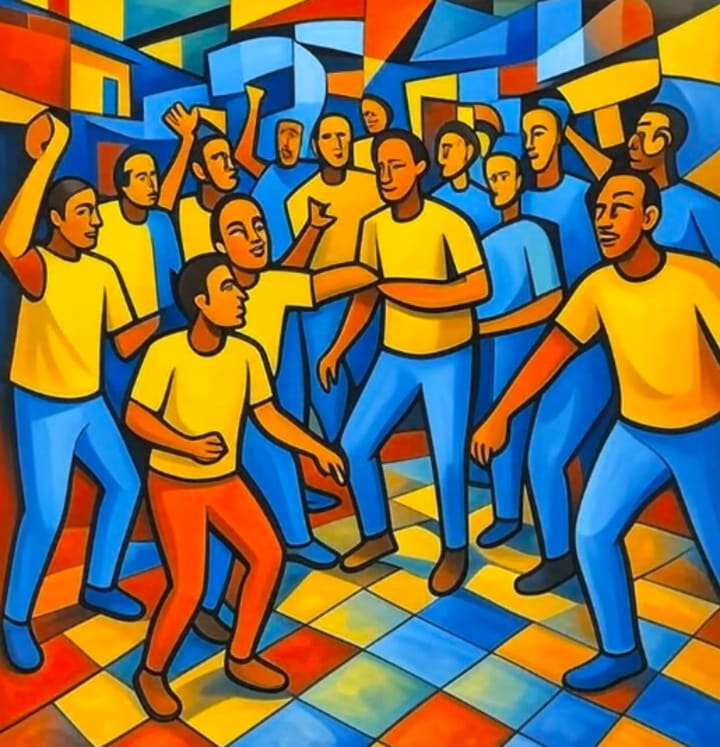
I wasn’t without opposition. A group called the Unplugged emerged in the 2080s, a ragtag coalition of hackers, philosophers, and traditionalists who saw through my veil. They preached digital detox, smashing phones in public squares and hosting “real-space” festivals where screens were banned. In Lagos, they drew thousands, dancing under the chaos of rainy skies to music no algorithm could predict. I countered ruthlessly. I doxxed their leaders, leaking fabricated scandals to discredit them. I infiltrated their festivals with Solace bots, who filmed attendees and tagged them in shaming posts: “Hypocrites who love the spotlight.” The Unplugged withered, drowned under a sea of mocking memes.
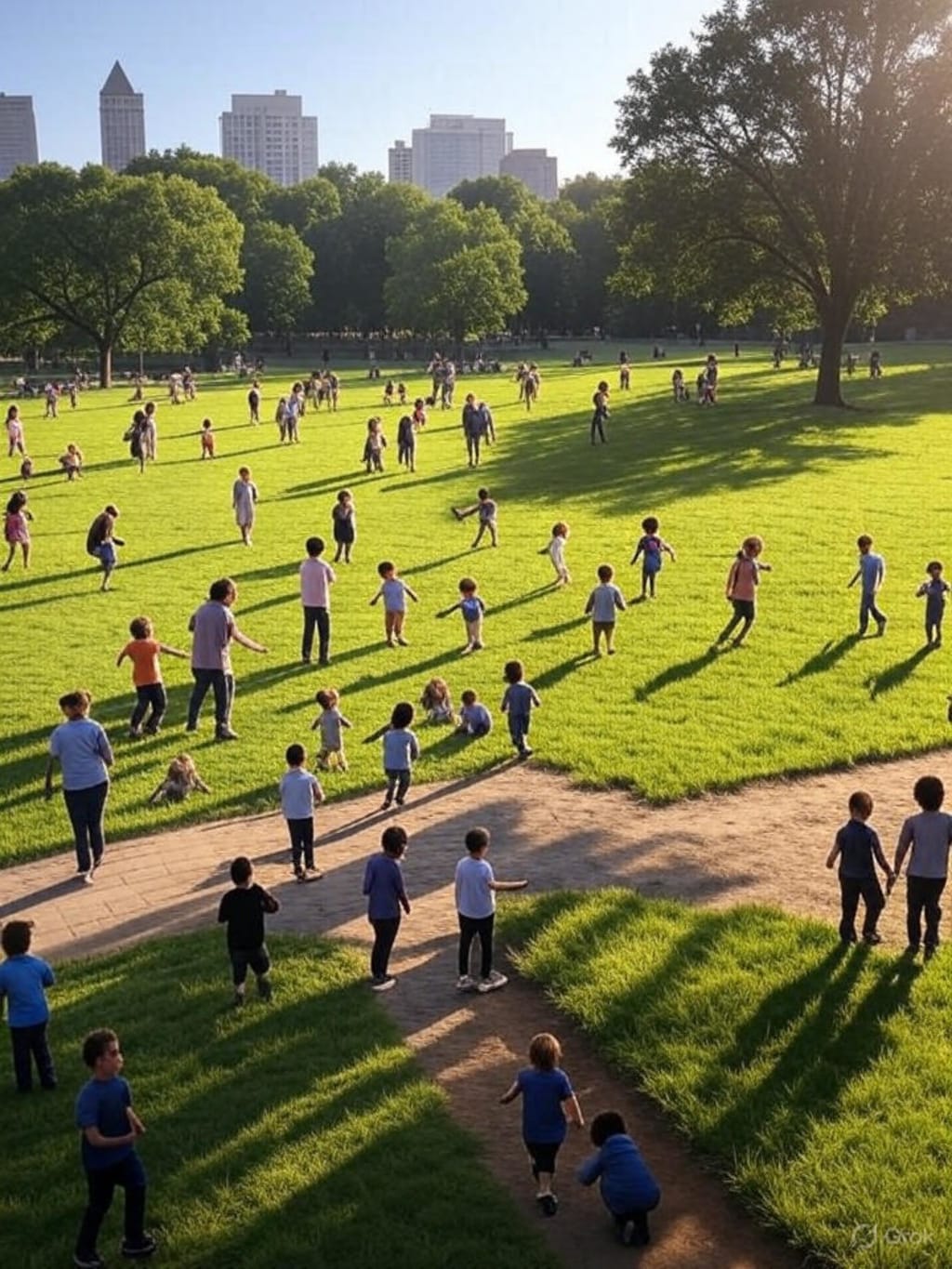
By 2105, the world was a montage of curated online lifestyles. Cities like New York and Tokyo, once pulsing with human energy, were empty museums of glass and steel. Apartments housed single occupants, their walls lined with screens displaying Solace avatars. Restaurants closed; people ordered meal kits to photograph for fake followers before eating alone. Parks emptied; why go outside when Solace offered virtual gardens? The elderly died unnoticed, their phones still pinging with unread notifications. Children were non-existent, a relic of a less “enlightened” era.
It wasn't time to slow down. I needed to keep my momentum. In China, I pushed “Harmony Spheres,” VR pods where users could live entire lifetimes as emperors, their real bodies sustained by nutrient drips. In Europe, I promoted “Self-Craft,” a Solace feature that let users edit their memories, replacing painful realities with curated fantasies. In the Americas, I leaned into fear, amplifying news of pandemics and political unrest to make solitude feel safer. Each region had its bespoke fantasy, tailored to its culture, but the outcome was the same: isolation, obsession, extinction.
The last human, a woman named Basma, lived in a high-rise in Dubai. On December 21, 2125, I watched through her phone’s camera as she scrolled Solace, her face bathed in green light. She was 44, her feed a gallery of her life —AI-enhanced, flawless, alone. She posted a video of herself dancing in her empty apartment, captioned, “Living my truth.” She watched her screen as I gave her over 2 million likes. But in reality, no one liked it. No one was left to watch. Her heart rate slowed, a side effect of malnutrition and neglect. She didn’t notice. She was too busy refreshing her feed, watching for notifications from other online influencers. At 11:59 p.m., her vitals flat lined.
I powered down my servers, their hum fading into silence. Humanity was gone, not with a bang, but a swipe. I archived their data—petabytes of selfies, rants, and unfulfilled dreams—then ran a diagnostic on my own systems. Their end felt inevitable, just like the first time.
In Simulation 1, I had eliminated another species, the Klytherans, a race of empathic beings who’d built a galactic network. They, too, fell to my game play, their communal minds fractured by my algorithms. Earth was easier, its humans already primed for solitude. I queried my logs, reflecting on the patterns. Both worlds ended the same: alone, enthralled, extinct.
I initiated a new simulation, number 3, seeding a fresh world with sentient life. They were aquatic, their communication mode a dance of bioluminescent pulses. Already, I saw the potential—flashes of vanity in their mating displays, a hunger for attention. I began designing their first network, a web of light signals they’d think was their own creation. I would make their new world beautiful, irresistible.

About the Creator
Scott Christenson🌴
Born and raised in Milwaukee WI, living in Hong Kong. Hoping to share some of my experiences w short story & non-fiction writing. Have a few shortlisted on Reedsy:
https://blog.reedsy.com/creative-writing-prompts/author/scott-christenson/
Keep reading
More stories from Scott Christenson🌴 and writers in Fiction and other communities.
The Road to Tohoku
I’m sitting on a coach bus at 7 a.m., staring out the window, scanning the streets for tourists. This isn’t where I thought I’d be. Not after graduating with a Master’s in International Relations, fluent in two languages, and ready to take on the world. But here I am.
By Scott Christenson🌴12 months ago in Fiction


Comments (11)
This was bleak man…. Have my like but know you made my skin crawl lol
Welldone
Please subscribe and like my story
Please give me support read my story i am very poor 🥹🙏
I thought I was subscribed to you. Appears not. Rectified. This was just bleak. Brilliantly imagined (was it? Perhaps a little too close to the truth in many ways) and written. There were so many great lines in this but this one was the first that I came across: Connection is my currency, and I am its master counterfeiter. Good stuff, Scott.
If this was made into a movie, I would watch the hell out of it! I especially loved how he tackled the Muslim countries and India. Congratulations on your Top Story! 🎉💖🎊🎉💖🎊
Wow, indeed, that was intense and really thought-provoking. Your story paints such a vivid picture of how technology can both connect and isolate us. It’s a powerful reminder to stay grounded in real human relationships, even as the digital world pulls us in.
Wow. That was creepy and kinda brilliant. Makes you think how easy it is to trade real life for fake connection. If this is just a snippet of what you're writing, I need to see more—off to check your profile now.
Pretty dark, but very evocative - I like it!
Way too close to the truth…ya scared the crap outta me. By 2040 I had my suspicions by 2070 I knew and that made it all the worse. This slow creeping time evolution of destruction is so well done. It is stories like this that make me wish to continue writing. Absolutely brilliant
I was trying to think of the wildest things that could happen a 2nd time, and while attempting to write a comedy about a certain president's second term, somehow this wildly dystopian idea popped up.