
And Yet Time Passes
An anthropomorphic depiction of the former Canadian residential school system.

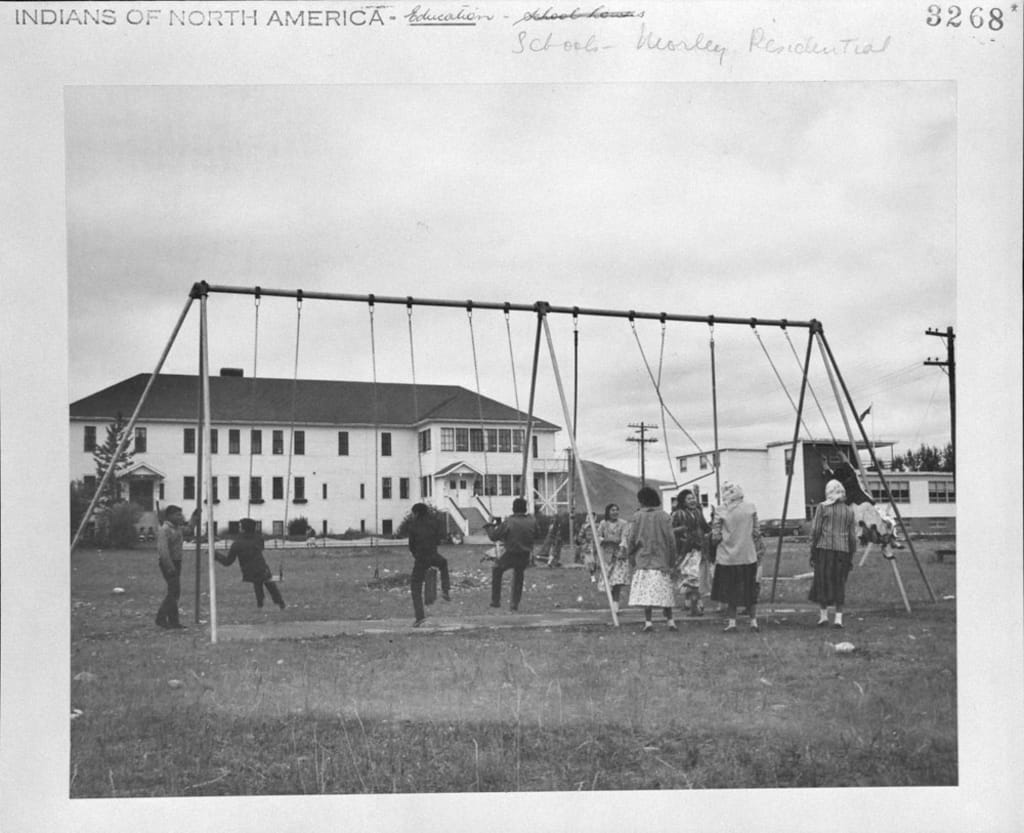
It was 1906 when the men placed my last plank, opened me up, forced them into my walls. They were their own at first, with long braids trailing down their spines and caribou skin hugging their shoulders. Their eyes were always dark; they fell into single file, their united front broken down into child size segments. Yet still they put up masks, holding an identity they knew was theirs to cling upon. Later I would recognize their eyes walking from the showers, now under a head of peach fuzz and cotton pyjamas. Their masks burned alongside their traditional dress; their new home had stripped them bare. They were so small.
I watched within my walls, my walls built for safety, my walls built for learning. I watched men and women in white and black cloth lead the small ones inside. I watched the small ones shovel and rake and clean. I watched when their language rang out, when the men and women rapped their wrists to quiet their tongues. I watched them paint letters on the sign they would hang from my mouth, “Farming Residential School”, and I watched as they etched their initials into the backside of its wood. I watched their tools turn as they told their stories on my bones. I remember every name of every child on every board.
I was the only one to notice when one of the men or women would pull a small one by the arm, in the middle of the night. Lay them down on the ground or push their heads into the cloth. I was the only one to notice the tears that began to stain my wood.
I saw small ones crawling through my tall crops in the night, the same crops they had tended to under the sun, hours before. I saw as they reached the fence and the fields beyond my reach. I saw them, hours later, carried on the backs of men. After they returned, I wouldn’t see them until I lost count of passing moons. I wouldn’t see them until the men put them back to gruelling work on a shrunken stomach.
I was there when the first one died. When the woman hit him too hard with her stick. When his body went soft and hard, heavy and weightless, when not even fear was left behind his eyes. I was there when the man came in and made the others carry him out, when the man made them dig his hole. I was there when they covered a child with dirt. Covered one of their own, with dirt. I was there for decades as one hole became many.
It was 1989 when my heavy pine doors rolled shut one last time, the last tomb covered, the last family torn. When the men burned a pit into my earth, burned the proof of what had been done inside. When they stopped tending to the land in the spring, and the grass began to grow tall and thick. When the vines began to climb my planks, and my planks began to swell and split.
I watched as their history held in pictures began fading, their initials changing. Self portraits, birthdates and time stamps, scrambled words in a lost language, one final mark to be remembered by, recognized by, rectified by. Their stories wearing down to thin lines, hair lines, fractures, cracks, breaks. My bones turned to dust in the wind as the children did below me.
I saw the flowers that had begun blooming over their bodies, the deep pink of a wild rose, the sweet purple of a prairie crocus. The native colours of Alberta peeking out for the first time, the last time, since decades of hiding under hoed down dirt. Grass growing greener now as it fed on tainted earth. Fed on fresh fossils, packed in graves so close their hands may have touched. In graves I feel their dark hair still growing, long enough by now to once again form a braid down their backs. They are lost, below, and yet time passes.
About the Creator
Keep reading
More stories from Isabella Frey and writers in Fiction and other communities.
Momma
You were born perfect. Our second boy, just a tad on the smaller side. Your nose turned up just the right amount, your eyes looking up at the pictures on the ceiling, your eyes stolen from your daddy. We stared at you for hours, all smiles and tears. During those first few days I didn’t care at all that you were different.
By Isabella Frey5 years ago in Fiction
TUS NUA - ch 49
TUS NUA – ch 49 New Beginnings – Mia and Midnight (*)(*)(*) As Mia spoke on the phone to Ali’s sister, Ellen, Finola slipped quietly away and walked to the stream behind Tus Nua. Carefully, she put a block on her family so no one could know what she was about to do.
By Margaret Brennan6 days ago in Fiction



Comments
There are no comments for this story
Be the first to respond and start the conversation.