
Aleister Crowley
The Occultist Who Defied Society's Boundaries
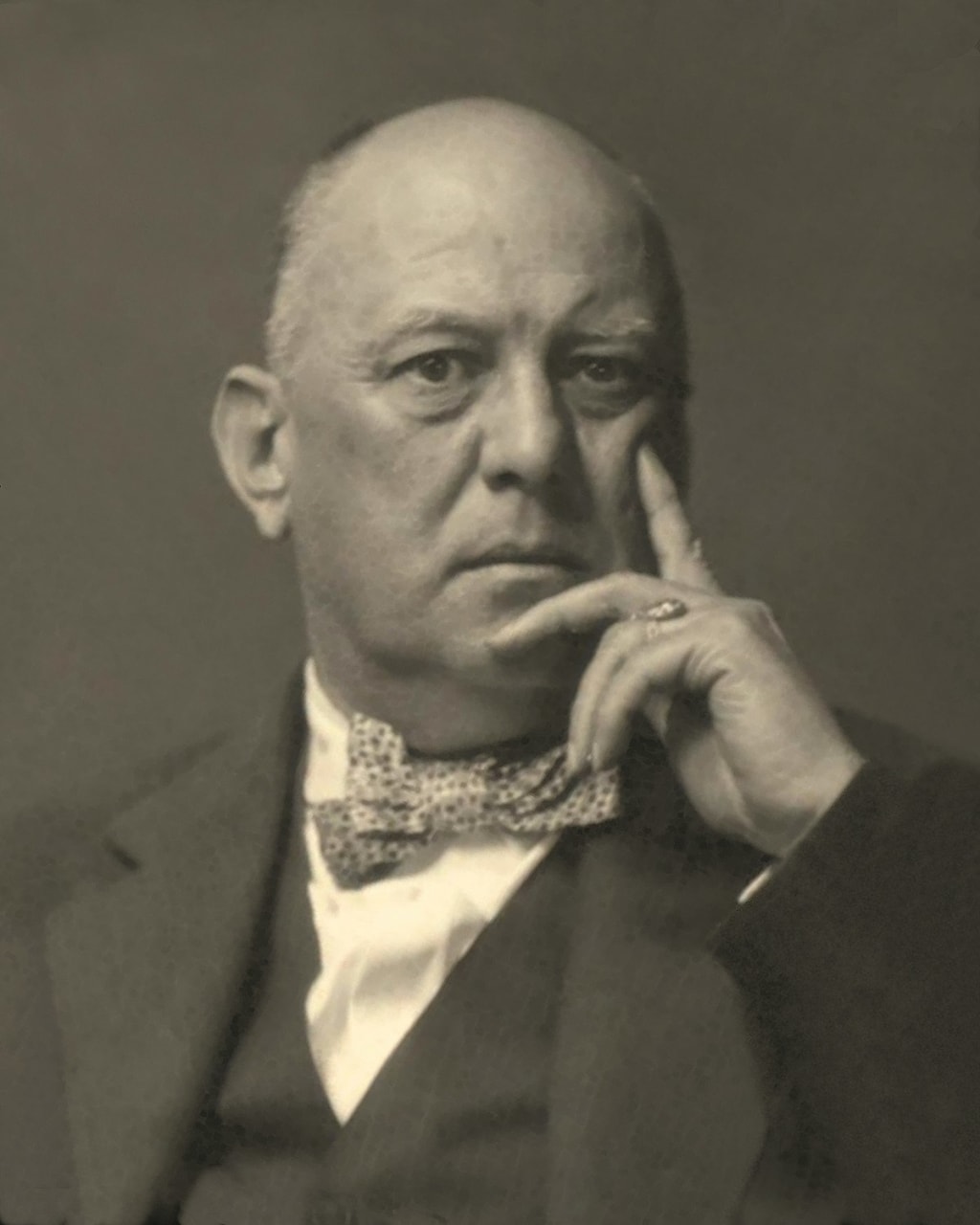
Aleister Crowley remains one of the most controversial and misunderstood figures in modern occult history. Born Edward Alexander Crowley in 1875 in England, he was a writer, ceremonial magician, mystic, and mountaineer who became famous for his radical beliefs, esoteric practices, and unapologetic lifestyle. Over time, he would be labeled everything from “the wickedest man in the world” to a visionary who challenged the spiritual and sexual repression of his era.
The Birth of “The Great Beast”
Raised in a strict Christian household under the Plymouth Brethren, Crowley rebelled against religious dogma early in life. He adopted the name “The Great Beast 666,” mocking traditional Christian labels and embracing a role that would both scandalize and mystify society. But behind the blasphemy was a man deeply interested in exploring the hidden truths of existence.
Thelema: A New Religious Philosophy
Crowley’s most enduring legacy is Thelema, a spiritual philosophy he founded after a mystical experience in Egypt in 1904. According to Crowley, he received a channeled text called The Book of the Law, which introduced the core principle:
“Do what thou wilt shall be the whole of the Law. Love is the law, love under will.”
Thelema emphasized personal freedom, self-discovery, and the pursuit of one’s “True Will” — the unique purpose of each individual. It broke away from traditional religious teachings and encouraged followers to explore magic, meditation, and alternative paths to enlightenment.
Sexuality and the Sacred
Crowley was openly bisexual at a time when homosexuality was criminalized in England. He viewed sexuality not as a sin, but as a sacred force that could be harnessed for spiritual transformation. Through his work in sex magic — a core element of some esoteric practices — Crowley taught that erotic energy could be directed toward mystical and magical goals.
He did not lead a group of "occultist homosexuals" as such, but he did attract a diverse circle of followers, including queer individuals who found freedom and expression in his teachings. His willingness to embrace non-normative identities made him a complex figure — part spiritual teacher, part libertine, and part cultural revolutionary.
Legacy and Cultural Influence
Despite widespread condemnation during his lifetime, Crowley's influence has only grown. He inspired artists like David Bowie, Led Zeppelin’s Jimmy Page, and writers like Alan Moore. The modern-day Ordo Templi Orientis (O.T.O.), a magical order Crowley helped shape, still exists and practices Thelema as its central doctrine.
Crowley remains a polarizing figure. To some, he was a dangerous narcissist; to others, he was a prophet who shattered taboos and lit a new spiritual path. Either way, Aleister Crowley left a permanent mark on Western esotericism, sexual liberation, and countercultural thought.
Conclusion
Aleister Crowley’s life was a defiant rejection of societal norms. He explored magic, mysticism, and sexuality in ways that shocked his contemporaries — and continue to provoke thought today. Whether seen as a madman or a mystic, Crowley invites us to look beyond convention and question what it means to truly live freely.
About the Creator
How to Become a Werewolf
Thank you for choosing Lycan Brands for your life alteration. WARNING: Side effects of becoming a werewolf may include: bloodlust; drowsiness; insomnia; increased appetite; nausea and decreased appetite caused by overeating; supernatural strength; intermittent and inexplicable aches and pains; itchiness and rash. Do not proceed if you are allergic to becoming a werewolf, or have vasovagal syncope related to the sight of blood (sudden drop in blood pressure resulting in loss of consciousness), or if you are nursing, pregnant, or may become pregnant.
By Ophelia Keane Braeden3 days ago in Fiction




Comments
There are no comments for this story
Be the first to respond and start the conversation.