
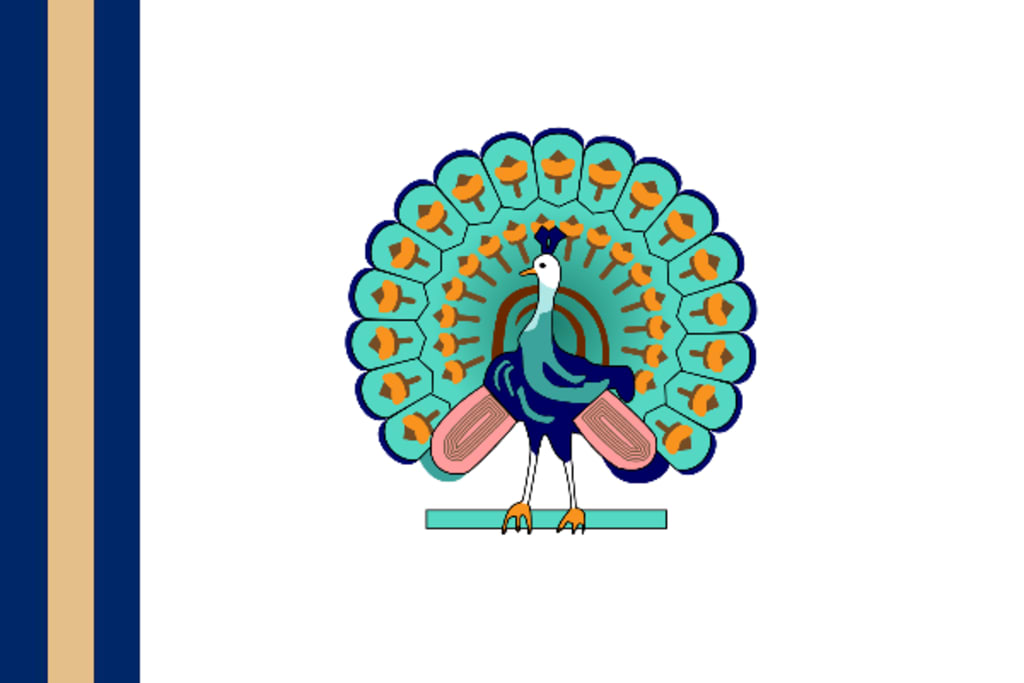
The Aimilii inhabited the area around the time of the Solarian conquest of Gaullica; some speculate that they had only recently migrated into the area of modern Aimilia at that time, while others suggest they were there for much longer. The Aimilian Wars saw generally unsuccessful attempts by the Solarians at conquering the modern day area of Aimilia. Eventually, the Aimilian peoples, organised as five tribes, agreed to become clients of a sort of Solaria. Over time, they were increasingly integrated, but by-and-large maintained the Aimilian language, culture and borders, fighting successfully against barbarians to the west on behalf of Solaria.
When Solaria fell, the Aimilian subdivisions became independent. During the medieval era their basic units, known as Judicatures and ruled by Judges, were preserved, but they were frequently ruled from abroad such as from Sudrosia or Gaullica, or were partially united with each other by a local ruler. The largely successful repeated Aimilian defences against barbarians to the west of Gaullica has been given credit by some historians for saving the Solarian presence in Gaullica.
During this period, Aimilian culture and language were significantly reduced on all sides, largely due to encroaching Weranian and Gaullican invasion, settlement, migration or influence. It was also during this period that the Aimilians were thoroughly Sotirianised, specifically under the Catholic tradition, largely through missionaries from Gaullica; they abandoned their old pagan faith. However, a significant proportion converted to Amendism when that arose in Euclea. Over time, the Judicatures all lost their independence to neighbouring powers.
Before the Airdale War, Sudrosia controlled Boziskag, and Gaullica the other four Judicatures. However, an ultimatum from Gaullica, accepted by Sudrosia, saw almost all of Boziskag become Gaullican.
At the start of the Great War, almost all of the five Judicatures were ruled by Gaullica, and only a fraction of Boziskag by Swetania, all having been integrated with their respective states for some time. During the war, many Aimilians volunteered to Gaullican forces, while many were also conscripted, but some also joined an Aimilian Legion fighting against the Entente, largely coordinating with Swetania which had ethnic Aimilians from Boziskag as part of its regular forces. There are no unified Aimilian Resistance, however, despite postwar myths.
After the war, the Gaullican Aimilian territories from before the Airdale War were split off as the Aimilian Republic by the Grand Alliance, as a buffer state, and seeking to reduce Gaullica's dominance in Euclea; this was the first time an Aimilian state with most ethnic Aimilians as part of it had been independent in over a thousand years. Boziskag was returned to Sudrosia. This new state's first action was to expel Gaullicans and encourage ethnic Aimilians abroad to return; the Gaullicanisation of Bezuntam's progress was quickly reversed. However, many Gaullicans in Aimilia simply claimed to be Aimilian rather than leaving, and so stayed; they became known as Paper Aimilians, for the manner in which their nationality was said to exist only on their papers. Paper Aimilians, because they often benefited from being bilingual and better socioeconomic status, played an important role in postwar Aimilian political, cultural and economic life. The capital was also then established at the then-small settlement of Kakzazna, with the four old Judicatures becoming provinces, but with territory split off from all four to create the new capital province of Kakzazna. The fifth historic Judicature remained integrated with Swetania, and remains so to this day as a canton under its federal system.
The Aimilian Republic, while nominally democratic, failed to build robust institutions and became a dictatorship within a few years. Despite a succession of dictators and the involvement of the military in politics, the postwar economic boom and the support for the regime by Estmere and Werania kept things quiet. However, by the 1970s, the economy was in a very poor state, and welfare programmes could no longer be maintained, and a wave of liberal sentiment saw the largely bloodless ouster of the dictatorship in favour of a liberal democracy. Following in the footsteps of the original intentions of the founders of the Aimilian Republic, a very strong judiciary was established.
Liberal multiparty parliamentary democracy has persisted to this day. Several attempts were made to apply to the Euclean Community during the period after the establishment of democracy, mainly by National Liberal governments who held power for most of the time until the present since then, but they never progressed very far, as Aimilia did not meet requirements. The Conservative Group came into government at the head of a coalition in 2015, becoming the largest party for the first time, ending several terms of National Liberal-led government; an economic downturn began shortly before that time and has persisted until the present day. In 2019, very large protests occurred against that government, and became known as the July Spring; however, they did not cause the resignation of the government as was their goal.
About the Creator
Keep reading
More stories from writers in Fiction and other communities.
The Duelist
The rays of a dying red sun flashed against the onrushing blade. The grey beards say the key to dueling lies in size, speed, reach, righteous fury, whatever the person in front of them pays them to say. Matteo knew better than any it was none of these and had an undefeated record on these sands to prove it.
By Matthew J. Fromm4 days ago in Fiction




Comments
There are no comments for this story
Be the first to respond and start the conversation.