
AI and the Art of Creativity: Can Machines Truly Be Artists?
ai and the art
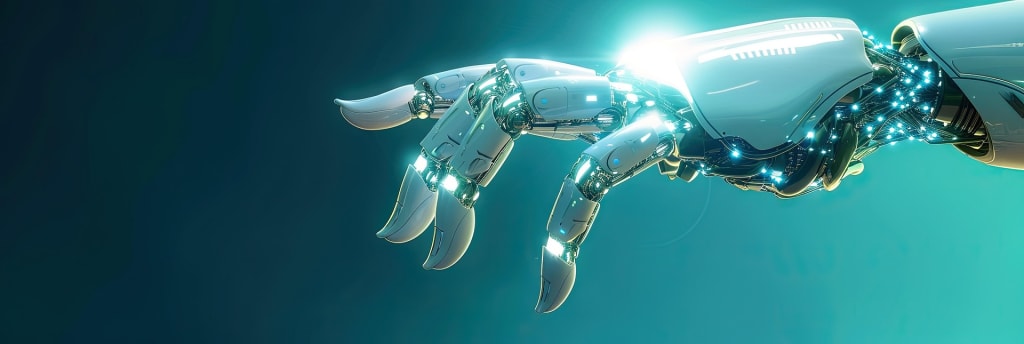
# Artificial Intelligence and Creativity: Can Machines Really Be Artists? In the grand tapestry of human history, art has always been a defining feature of our species. From the cave paintings of Lascaux to the symphonies of Beethoven, creativity has been a uniquely human endeavor—a way to express emotions, tell stories, and explore the boundaries of imagination. But as artificial intelligence (AI) continues to advance, a provocative question arises: Can machines truly be artists? Can algorithms, devoid of consciousness and emotion, create works of art that resonate with the human soul? This article delves into the intersection of AI and creativity, exploring the possibilities, challenges, and ethical implications of machine-generated art.
## The Rise of AI in the Creative Arts
AI’s foray into the arts is no longer science fiction. Over the past decade, machine learning algorithms have been used to compose music, paint portraits, write poetry, and even choreograph dances. OpenAI's DALLE and Google's Magenta, which produce music and visual art from textual descriptions, respectively, have demonstrated that AI can produce creative works. In 2018, an AI-generated portrait titled *Edmond de Belamy* sold at Christie’s for $432,500, sparking a global conversation about the role of machines in the art world.
These advancements are made possible by deep learning, a subset of AI that mimics the neural networks of the human brain. By analyzing vast datasets of existing artworks, AI systems can learn patterns, styles, and techniques, enabling them to generate new pieces that mimic human creativity. But does this ability to replicate artistic styles mean that machines can truly be creative?
## Defining Creativity: Human vs. Machine
To answer this question, we must first define what creativity means. For humans, creativity is often tied to emotion, intuition, and lived experience. It involves not only the ability to produce something new but also the capacity to imbue it with meaning and context. A painter, for example, might draw inspiration from personal struggles, cultural heritage, or the beauty of nature. Their work is a reflection of their inner world, shaped by their unique perspective.
AI, on the other hand, lacks consciousness and subjective experience. It does not feel joy, sorrow, or wonder. Instead, it operates on data and algorithms, identifying patterns and generating outputs based on statistical probabilities. Although AI is able to come up with novel combinations of ideas and styles, its "creativity" is fundamentally different from human creativity. It is a tool, not an artist—a means of augmenting human creativity rather than replacing it.
## The Collaborative Potential of AI and Artists
Rather than viewing AI as a competitor to human artists, many see it as a collaborator. AI can serve as a powerful tool for artists, enabling them to explore new techniques, overcome creative blocks, and push the boundaries of their craft. For example, musicians can use AI to generate melodies or harmonies, which they can then refine and build upon. Visual artists can use AI to experiment with different styles or generate ideas for new compositions.
This collaborative approach is exemplified by projects like *The Next Rembrandt*, where AI analyzed Rembrandt’s works to create a new painting in his style. While the AI handled the technical aspects, human artists and engineers guided the process, ensuring that the final piece captured the essence of Rembrandt’s artistry. Similarly, AI-generated music often requires human input to add emotional depth and nuance, transforming raw algorithmic output into something truly compelling.
## The Limits of Machine Creativity
Despite its potential, AI has significant limitations when it comes to creativity. One of the most notable is its lack of intentionality. Human artists create with purpose, whether to convey a message, evoke an emotion, or challenge societal norms. AI, by contrast, generates art without understanding or intent. It does not choose to create; it simply executes instructions based on its programming.
Another limitation is the reliance on existing data. AI systems are only as good as the datasets they are trained on. If the training data lacks diversity or contains biases, the AI’s output will reflect those limitations. This raises questions about originality and authenticity in AI-generated art. Can a machine truly create something new, or is it merely remixing what already exists?
## Philosophical and ethical concerns The rise of AI in the arts also raises important ethical and philosophical questions. Who owns the rights to AI-generated art? Is it the programmer who created the algorithm, the user who provided the input, or the AI itself? These questions become even more complex when AI is used to replicate the styles of famous artists. Is it ethical to create new works in the style of a deceased artist, and if so, who should benefit from their sale?
There is also the question of value. If AI can produce art that is indistinguishable from human-created works, does that diminish the value of human creativity? Some argue that the human element—the story, the emotion, the intention—is what gives art its worth. Others believe that the novelty and technical prowess of AI-generated art deserve recognition in their own right.
## The Future of AI and Art
As AI continues to evolve, its role in the arts will likely expand. We may see new forms of art that blend human and machine creativity, creating experiences that were previously unimaginable. Virtual reality and augmented reality, combined with AI, could revolutionize how we create and interact with art, immersing us in entirely new worlds.
At the same time, it is essential to preserve creativity's human component. While AI can augment and inspire, it cannot replace the depth of emotion and meaning that human artists bring to their work. The future of art lies not in choosing between human and machine but in finding ways for the two to coexist and collaborate.
## Conclusion: Can Machines Truly Be Artists?
The question of whether machines can truly be artists ultimately depends on how we define art and creativity. If art is about technical skill and novelty, then AI has already proven itself capable. But if art is about emotion, intention, and the human experience, then machines fall short. AI can mimic creativity, but it cannot replicate the soul of an artist.
Rather than fearing AI as a threat to human creativity, we should embrace it as a tool that can enhance and expand our artistic horizons. Artists can push the boundaries of what is possible by collaborating with AI, producing works that are richer, more diverse, and more creative than ever before. In the end, the art of the future will not be defined by machines or humans alone but by the synergy between the two.
As we navigate this brave new world of AI-generated art, one thing is certain: the human spirit of creativity will endure. Machines may be able to paint, compose, and write, but they will never replace the unique spark that makes us human. Art, at its core, is a reflection of who we are—and that is something no algorithm can replicate.
About the Creator
Keep reading
More stories from Taiyab Ahmed and writers in Fiction and other communities.
The Importance of a Kiss
**: A Universal Expression of Love and Connection** A kiss is one of the most intimate and universal expressions of human emotion. It transcends cultures, languages, and time, serving as a powerful way to communicate love, affection, passion, and even respect. From a gentle peck on the cheek to a passionate embrace, a kiss can convey a myriad of emotions and meanings. Beyond its emotional significance, kissing also has psychological, physiological, and social benefits that contribute to our overall well-being. This article explores the importance of a kiss, its cultural and historical significance, and the science behind why kissing matters.
By Taiyab Ahmed11 months ago in Fiction


Comments
There are no comments for this story
Be the first to respond and start the conversation.