
Against the Pedestrian (Short Story)
A Tribute and Follow-Up To Ray Bradbury's "The Pedestrian"
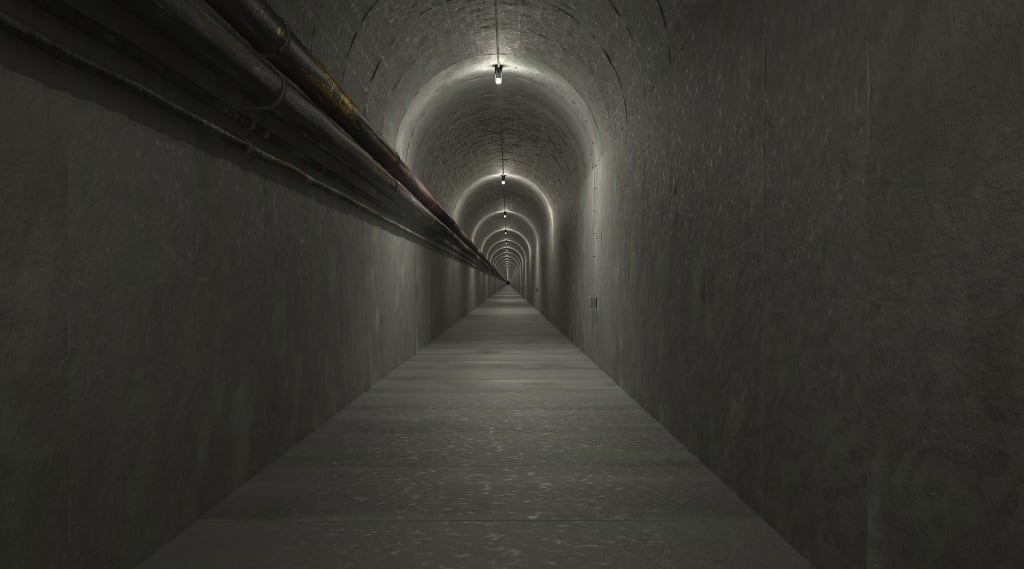
Everything was going according to plan.
The metallic and smooth black vehicle cruised along the vacant streets like a ship along icy canals. It maneuvered around the shattered cement and gaping potholes, turning on a dime around corners. And then Leonard Mead saw it: the Psychiatric Center for “Research” on Regressive Tendencies, rising like a mountain in the midst of a flat jungle land.
The first one had been established in 2032, but soon they had filled almost every city. The people had welcomed the silence that ensued. Enough of the riot and protest of dissenters. Enough of the trouble-makers and the poets. Sort them out according to the new science.
“Science,” the Minister of Progressivist Governance had said, “cutting edge in application. The new science of the mind. Science is the tool by which we will end the war against human flourishing. Science based purely on the experts.”
“Science,” muttered Leonard Mead to himself in the back seat of the police car, “that turned us into ghosts.” 1
Light flashed through the car’s windows, even though they were tinted almost as black as the police car, causing Leonard to look down at the floor. He was familiar with the light. UV brighters, strong enough to create third degree burns in less than a minute. As if the turret guarded fences weren’t enough, these brighters created an impenetrable barrier. No one could go in or out without the Research Center’s permission. “Research, ha!” Leonard thought to himself. Everyone knew there was no research going on in these facilities. Well, if by research they had in mind crippling a butterfly under a magnifier to see what happened, then sure, they did research.
The police car passed into the underground of the gargantuan structure and deposited Leonard Mead in a long extended room, reminiscent of a parking garage. But cleaner. The lone man took in his surroundings. It was like standing in the afterglow of a blizzard. No surroundings, just white. White and sterile.
A voice, less warm than the one from the police car if that were even possible, echoed down the corridor. “Name and purpose.”
The man cleared his throat. “Leonard Mead.”
“Purpose?”
He paused for a moment. He knew the answer it wanted.
“Do you even know what purpose means?”
The voice came again, but this time like the sound of a thunder clap, “Purpose!”
“To serve the collective.”
“Readings indicate that you do not agree with the statement.”
“But that is what you wanted to hear.”
“Want is irrelevant.”
“No, want is most relevant.” Silence. There was no sound of mechanical whirling as the car had possessed. There was no sound at all. No sound of the wind blowing, dogs barking, leaves falling, leaves crunching. It wasn’t quiet. It was soundless. Lifeless.
A door opened to Leonard Mead’s right. “Go.” There was no other path to take, so he walked. He walked through the doors into brightly lit halls. He kept walking, even past muffled screams and cries that could be heard behind the round outlines of sealed doors. One door would be his own, he imagined. He walked until he came to what looked like a dead end. A door slid open with a hiss.
Leonard Mead reached into his pocket. “No one wanted me,” he repeated what he had said to the cold black car. “Because I didn’t want anyone after you took her.” He pulled out a small white device, and clicked it on. The bright halls vanished into blackness. The clean sterile world disappeared with a jolt and grinding of machines. Quietness. And then voices, not metallic, but warm, fiery, real. Human voices echoed down the black corridors, calling out for help. Then, the sound of scrapping metal as the sealed doors were forced open. Leonard Mead wished he could see it. But the noise of people escaping their prison cells would have to do. He would see the results of his efforts soon enough in broad daylight.
Ten years of planning. Ten years of walking and wiring signal towers. Ten years of hoping against hope that he could stand here in this spot with this white device and give his city a second chance. He imagined the gray tombs opening by now, with people looking at the stars for the first time in a decade. Waking up from a dream. Oh, there would be those who didn’t like it. Who had wanted the centers to begin with. But one free city. That had to count for something, right?
Perhaps the moon and stars would touch the ghosts. Perhaps the sun would burn out the long night that had plagued their conditioned minds. The dam broken, the blizzard thawed, the dusty river bed streets filled with moving waters. He could dream. He was a writer after all.
He knew the winter would rage against the eventual coming of spring. It was still early. But the coldness that had settled over the human spirit would lose, as winter always does against spring.
If you haven’t read it already, I recommend you check out Ray Bradbury’s “The Pedestrian” here.
About the Creator
Keep reading
More stories from Daniel Bussey and writers in Fiction and other communities.
The Gray (Chapter One)
“Nobody can hear a scream in the vacuum of space, or so they say.” The whisper echoed down the corridor of the academy. “What makes you say that?” The response caught the cadet off guard. He turned and met the gray eyes of a man dressed in a grey uniform. “I um, well.” The youth grew silent. “It’s okay, you’re not in trouble.” The man’s mouth smiled, but not his eyes. They only stared and studied.
By Daniel Bussey3 years ago in Fiction

Comments
There are no comments for this story
Be the first to respond and start the conversation.