

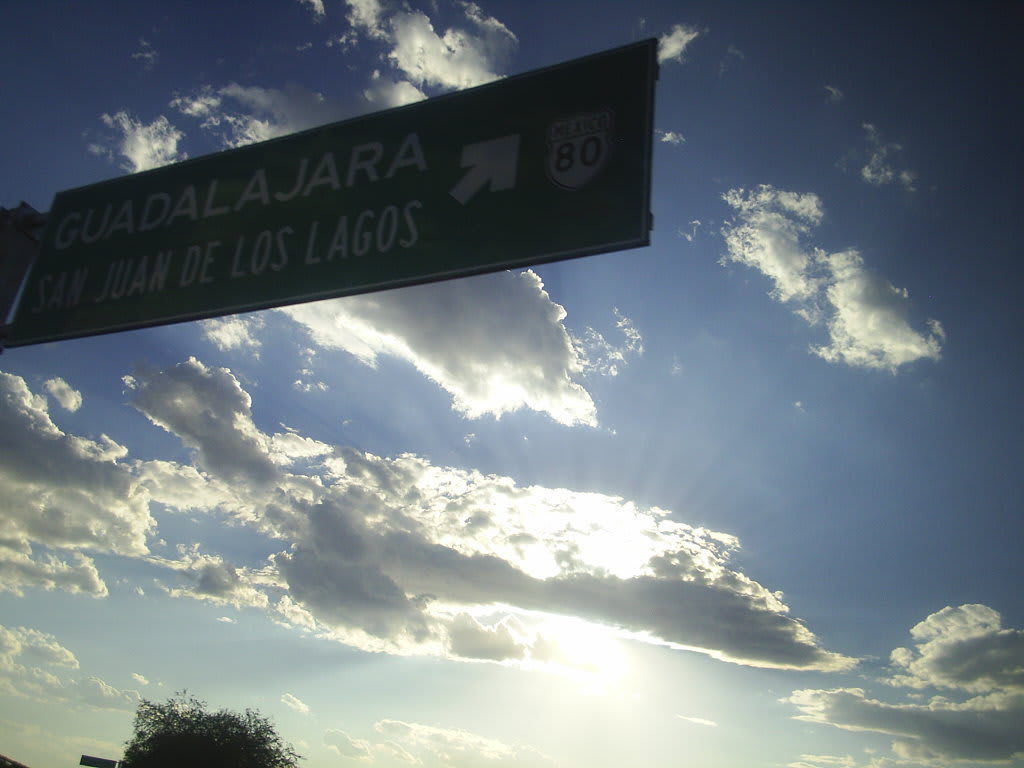
The carriages was sliding down the side of the avenue and my seat companion gazed out the windows with enthusiasm. The white horse pulling us was synthetic, an AmisTM, a likeness of the extinct species. Private vehicles moved freely, but carriages followed their own rails. After our arrival from the Parsons colony in Mars, Walt and I had had typical Mexican dishes for breakfast at the Tacobell Classic, not far from the Chapala spaceport, before boarding this carriage in order to visit the most remarkable sights in the city of Guadalajara. We passed the Cathedral, with its sole standing tower since the earthquake of 2035. Walt absorbed it all, stunned, with childish enthusiasm. It made me sad to see how little remained of this country, how badly it remembered himself.
The carriage halted at a corner and we got out; there, two men took our seats. They took off their coats to reveal faces and clothing identical to ours: they were two AmisTM, illegally fashioned so that they were untraceable, programmed to replace us for as long as possible. We walked on a couple of blocks after discarding our vests and putting on hats. The back door of a cosmetician opened, and a fat little man with a big smile greeted us with caution and enthusiasm.
“Ah! Ah!” Julio Meza said in a hissing little voice. “Ray, Walt, you're finally here.” He shook Walt's hand and then mine with both of his, with effusive reverence. “Come, please.”
We followed him into the bowels of a cellar in the basement. The walls were lined with drawers, in which innumerable quartz memory cartridges were stashed.
“I have them all here,” Meza said, spreading his arms like an announcer. “Surely you have seen the retro versions with which some believe they are renovating the so-called ‘obsolete’ cinema, the defunct seventh art. Garbage! Silly stuff! Their ‘Tetra-D enhancements’ to adjust old films to current cinema not only erase their beauty, but only a few select films are released, previously purged and censored by the Senate, and that only out of those that survived the Moral Purges of 2052, when two thirds of cinematography and literature were erased and banned. Tom and Huck were anathema, due to the misadventures of their Black friends! Robinson Crusoe was shipwrecked in the name of vindicating Friday! Snow White was burned at the stake because of the depiction of dwarves!
“But since then, listen well! Since then, places like this have survived. the are more of us than the Senate would like; Here,” he pointed to the shelves, “I have Bergman and Buñuel, Hitchcock's shower and Spielberg's shark; Even Méliès's own moon still winks here! Taboada’s wind blows here and James Whale sets the mill on fire. The love for cinema does not die. There are 24 copies of this collection, and us curators do not know the location of any of the others.
“Come in, have a seat. You have my sympathy and my gratitude. It must have seemed a wonder when great individuals from other times began to be cloned; but to bring you, to enable you to see what became of your own works…
“Anyway! Some of us still love and preserve them for the day when retrieval of the past ceases to be a fad and becomes a mission. Gentlemen,” he said, leading us into a room where a screen spanned the entire wall, flanked by red curtains, and pointed at the drawers at a side of the entrance. “Here you will find most of your works, your heritage preserved. All the dreams that the Purges intended to extinguish. And there has been no greater honor in my life than to welcome you as my guests. So, while I bring you drinks and popcorn, where do you wish to start?”
And Walt and I, like kids in a toy store, each started choosing our favorite films from the other’s works. We began, after tossing a coin, with one of mine: and we watched my reptile rise from 60 thousand fathoms, responding with its bellow to the cry of a solitary lighthouse. Then we laughed with the dance of the hippos and the marching brooms. We watched Sinbad fight an army of skeletons —how I laughed as I remembered the hours spent animating them!— and Walt wept as he listened to the voice of his singing Snow White, looking down at his daughter’s photo in a heart-shaped locket. Caliban and the Kraken threatened Perseus, a pirate ship sailed towards the island of Neverland. We watched the tremendous battle between the Cyclops and the Dragon, the unending choreography of the Three Caballeros. Gwangi the stop-motion tyrannosaurus that I had chased by cowboys in Mexican land. And we lived once again those beautiful days, which had seemed so remote ever since we were reborn, synthetically restored, upon a continuously-terraforming Mars, before coming to an Earth where we felt equally alien.
Then I requested one more, one of my favorites, and Meza paled.
“I have it,” he said, lowering his voice, “but you must know that even several other covert film libraries refuse to hold it. It was banned long before the Purge.” He pursed his lips in embarrassment at Walt’s reaction, and I put an arm around my friend’s shoulders. “Personally, I love it; and it is very sad that he fell victim to the Purges, guilty only of representing a historical period with regrettable characteristics. Much like the Twain and Lovecraft and Beecher Stowe books, they all were struck down by the efforts to erase an irremediable past, instead of coming to terms with it and appreciating its treasures. This book no longer exists, and very few copies of the film version do. And it will be an honor to watch it next to you. But you must be aware that it falls under a Red Edict.”
Red Edict. Ever since human life became a reproducible laboratory product, its value had been further reduced. For Meza it meant prison. As to 20th century graftings like us, if found guilty of transgressing the Red Edict, we would be declared unadaptable and… recycled.
Walt looked at his locket again, then asked me:
“What do you say, Ray?”
Looking into each other’s eyes, we nodded in unison.
Meza gathered his courage and enthusiasm, and set the little memory cartridge in the projector.
“It's the truth? it's actchul? Everything is satisfactchul!” the charming old Black man sang to a lively bird, as he walked across the field. “Zip-a-dee-doo-dah, zip-a-dee-ay! Wonderful feeling, wonderful day!” Walt and I sang along with Uncle Remus -a beautiful and dignified character who had been executed by censors for the mere fact of having existed in times of slavery-, in that wonderful sequence of Song of the South.
While singing along with Uncle Remus, we heard police sirens; a distant knocking at the front door of the shop, followed by slamming attempts to knock it down. Meza looked at us and sang with us more earnestly. It was a challenge to the inexorable voices and noises: they would not extinguish our joy.
I asked him to repeat the scene, and we continued to enjoy our zip-a-dee-doo-dah day.
About the Creator
Luis G. Abbadie
Mexican writer & researcher of horror fiction & neo-paganism, former comic book writer & artist, author of generally odd stuff.
Keep reading
More stories from writers in Fiction and other communities.



Comments
There are no comments for this story
Be the first to respond and start the conversation.