
A Tragedy at Sea
The Untold Stories of Courage, Loss, and Survival

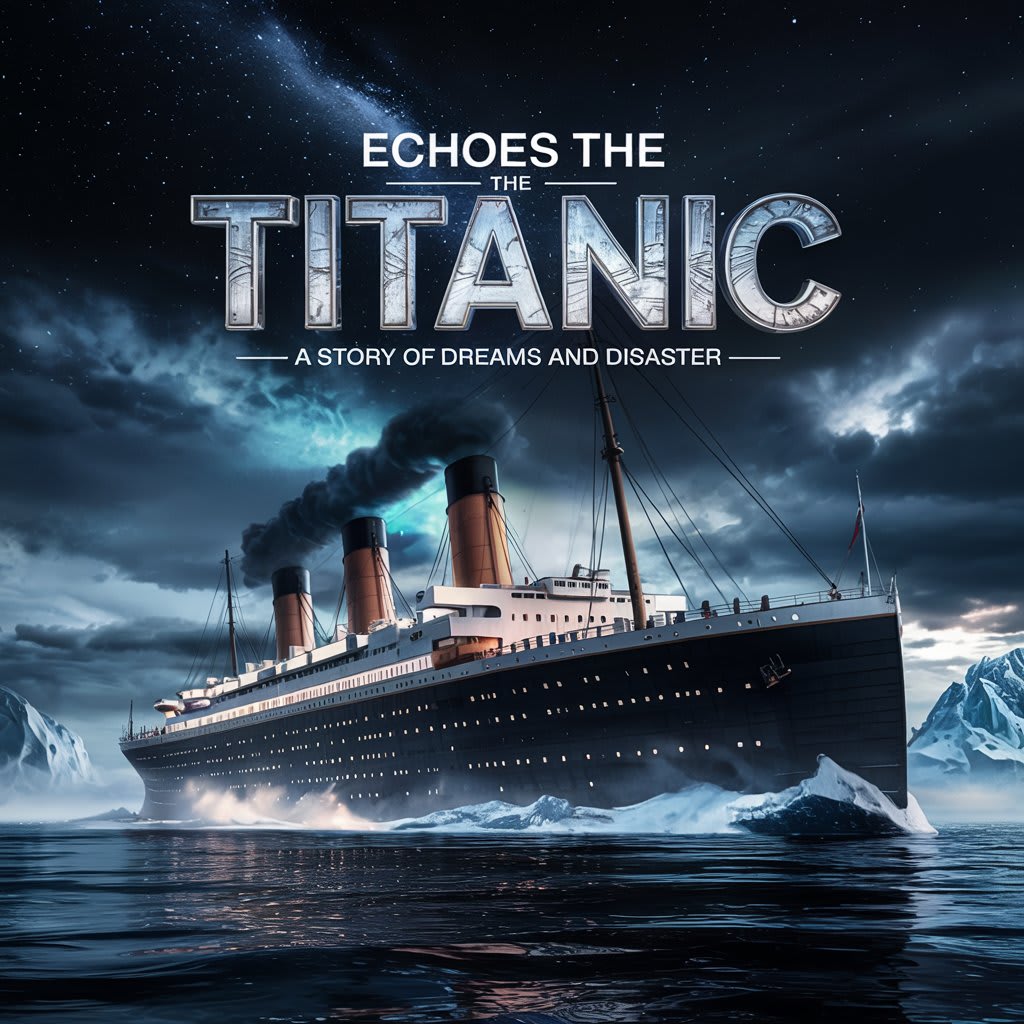
April 10, 1912. The RMS Titanic stood gleaming at Southampton's dock, a steel leviathan poised to make her maiden voyage across the Atlantic. Among the 2,200 passengers, dreams were packed tighter than the luggage in the ship's hull—dreams of new lives, grand adventures, or simply a peaceful return home. But fate, like the iceberg that waited silently in the North Atlantic, had other plans.
For young Evelyn Hart, the Titanic was more than a ship. It was a second chance. A 22-year-old music teacher from London, Evelyn had endured a year of heartbreak and loss. Her fiancé had died of illness the winter before, and with no family left, she decided to join a cousin in New York and start anew. She stood at the rail, a journal in her hand, her hair whipped by the sea breeze as the Titanic pulled away from shore.
“Perhaps the sea can carry sorrow away,” she wrote.
In third class, below decks, twelve-year-old Tomas Novak clung to his mother’s hand. They were immigrants from Hungary, weary from years of poverty. His father had gone to America two years before to find work in Pennsylvania’s coal mines. Now, with savings finally scraped together, his mother brought Tomas and his little sister, Ilona, to reunite the family.
They slept in cramped quarters, but Tomas didn’t mind. He was on a ship larger than anything he had ever seen, with warm food and bunk beds and stories traded in dozens of languages. He felt, for the first time, the stirrings of hope.
Four days into the voyage, the sea lay eerily still. A cold breath whispered across the decks on the night of April 14th. Evelyn attended a small gathering in the first-class lounge where a pianist played soft, elegant tunes. Laughter rang out, champagne flutes clinked, and no one could suspect the danger ahead.
Then—11:40 p.m.
A shudder ran through the Titanic’s hull. It was brief but undeniable.
Evelyn looked up from her book in her cabin as the light fixture above swayed. She heard hurried footsteps in the corridor, faint voices outside.
Below, in third class, Tomas was jolted awake. His mother’s eyes were wide as she scooped Ilona into her arms and opened the door. Crew members barked orders. There was talk of damage—an iceberg.
As the minutes passed, panic trickled in like icy water through a cracked hull. Evelyn, confused but calm, slipped on her coat and climbed to the deck. Lifeboats were being uncovered. The crew moved swiftly, but not everyone obeyed. Titanic was “unsinkable,” they said. Why worry?
Tomas and his family were trapped behind locked gates, meant to keep third-class passengers from wandering into upper decks. His mother shouted. Others screamed. Finally, a steward with a conscience opened the gate. They surged forward, desperate for space on the lifeboats.
On the starboard side, Evelyn saw a mother being denied entry because there was no room left for all her children. Without hesitation, Evelyn stepped back, handing her place to the woman. “Take mine,” she whispered.
Nearby, a lifeboat was being lowered with barely a handful aboard. Crew called for more women and children. Tomas’s mother pushed him forward, but he turned to cling to her.
“No, Mama—come too!”
A sailor hoisted Tomas into the lifeboat, ignoring his protests. The boy looked up in tears as the distance widened between him and the ship. His mother and sister waved, shivering in the cold, the deck slowly tilting beneath their feet.
The Titanic’s lights flickered, then went dark.
At 2:20 a.m., she slipped beneath the waves. Screams pierced the night as over 1,500 souls met the sea.
Tomas was pulled aboard the Carpathia hours later, silent and numb. He gripped a damp handkerchief in his pocket—his mother had pressed it into his hand in their final embrace.
Evelyn’s body was never found. But weeks later, a steward sorting through items recovered from a lifeboat discovered a leather-bound journal, water-stained but mostly intact. Inside, in elegant cursive, were words written just before the sinking:
"Even in darkness, I believe there is light. If my story ends tonight, let it be known I chose to give someone else a chance to write theirs."
The journal made its way to New York, passed from hand to hand until it reached a museum. Years later, Tomas Novak, now a father and coal miner in Pennsylvania, read a story about a “mystery woman” who had given her seat to save another.
He recognized the handwriting.
He remembered her kind eyes from the deck that night, as she’d smiled at him in passing. A silent goodbye, perhaps.
The Titanic sank more than a century ago, but her echoes live on—not just in tragedy, but in courage, in love, and in the choices made when everything else is stripped away.
About the Creator
Farhan
Storyteller blending history and motivation. Sharing powerful tales of the past that inspire the present. Join me on Vocal Media for stories that spark change.
Miss Persephone's Manual to a Seemingly Ordinary Life
Miss Persephone was found at the dining table, her blue eyes swollen, her tears arriving and retreating like the tides of the ocean. Earlier that day, her family had visited her in the retirement home where she had lived for eight years. It was her eightieth birthday.
By Imola Tótha day ago in Fiction
Me, Myself, and I
“Alright. Get in, get out.” “What do you mean, get in, get out? You have to buy stuff for a party!” “Yeah, but I know exactly what I need to get. None of that anxious debating between two items for who knows how long. And it’s just stuff for French bread pizza. The others are bringing the rest of the stuff. And I already got the cheese at the other store. Man, I was lucky there was a sale!”
By Rebecca Patton8 days ago in Fiction




Comments (1)
🌙💖 Good night, love... This silence of the night, and the moonlight— Everything reminds me of you. I only want one thing before going to sleep… Your words, “Good night, Rami, I love you…” 💌 You are here, that’s why the nights are so peaceful. You are not in my mind—even dreams speak. 🫶 Even on the night of love, my love for you remains awake. Good night, you are the moon of my heart. 🌝