
A machine that can rewrite memories.
The Memory Weaver.

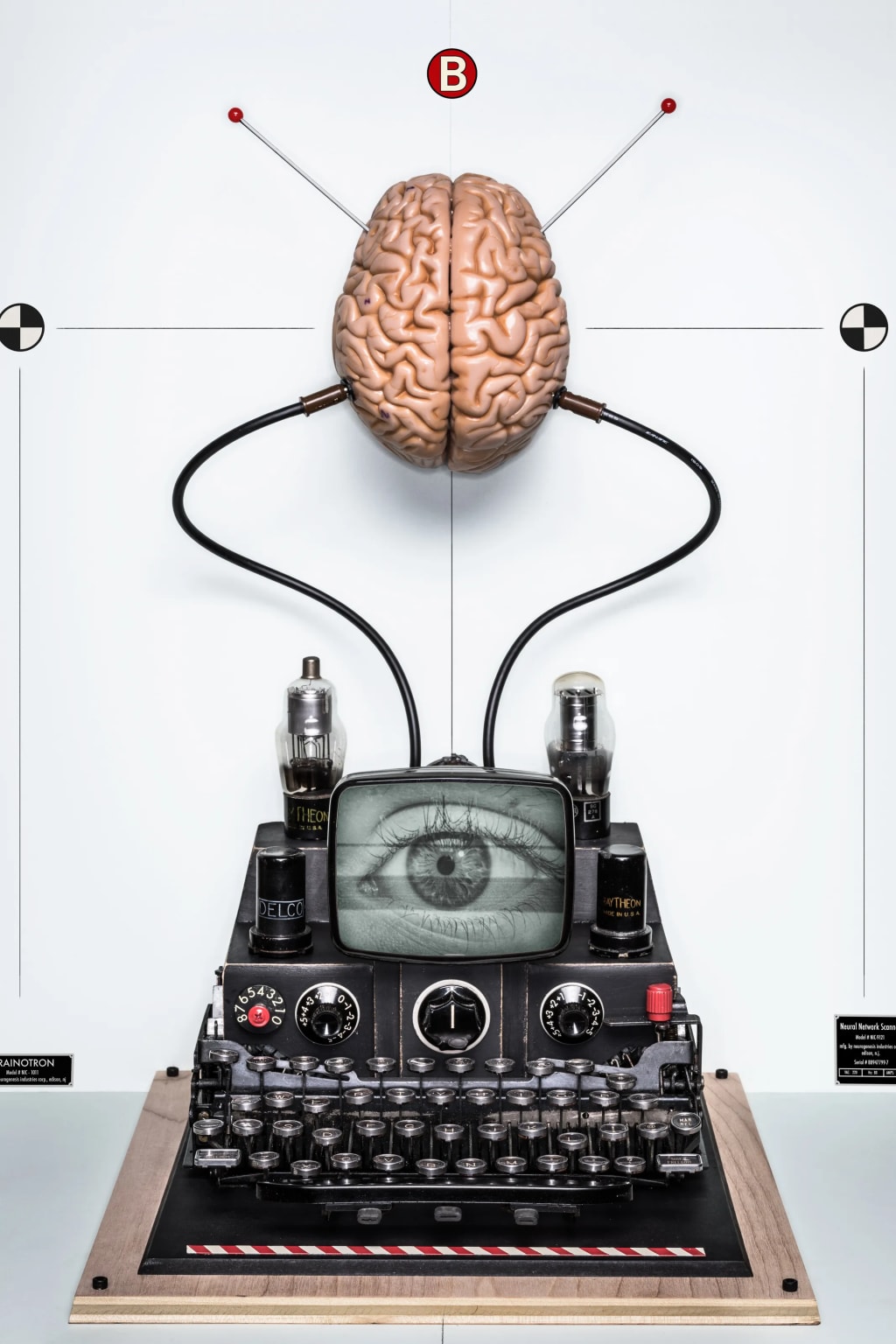
Dr. Evelyn Carter stared at the sleek metallic console before her. It was a marvel of modern engineering, a device that could rewrite memories—not just erase them, but alter them, reshape them, turn painful experiences into moments of joy or even fabricate completely new recollections. She had spent the last fifteen years developing the NeuroWeave, a machine capable of mapping and rewriting neural pathways without leaving any trace of manipulation.
The potential was limitless. Victims of trauma could live without nightmares. The grieving could find solace. Criminals could be rehabilitated with a rewritten sense of morality. But with such power came an ethical dilemma that haunted Evelyn every night.
Her first test subject sat before her. Jonathan Reid, a war veteran whose mind was a battlefield of its own. He had volunteered for the procedure, desperate to rid himself of the horrors he had seen.
“I just want to sleep without seeing their faces,” he muttered, eyes hollow.
Evelyn nodded, adjusting the settings on the NeuroWeave. “This will be painless. You may feel a light tingling sensation, but the process is non-invasive.”
As she activated the machine, a soft hum filled the lab. Tendrils of blue light danced over Jonathan’s scalp, mapping out the neural pathways associated with his trauma. The machine isolated the memories, identified the fear, the pain, the loss, and gently rewove them into something else—moments of camaraderie, of mission success, of valor without the weight of grief.
When the process was complete, Jonathan’s breathing had changed. It was deeper, calmer. When he opened his eyes, they held none of the sorrow they once did.
“It worked?” he asked hesitantly.
Evelyn smiled. “How do you feel?”
Jonathan frowned, as if trying to remember something just out of reach. Then he exhaled in relief. “Lighter. Free.”
He left the lab that day with a newfound peace. But as Evelyn watched him Go, a heavy unease settled in her chest.
Where did the memories go? Were they truly gone, or merely buried?
(I)The First Mistake
Word of the NeuroWeave spread fast. Governments, corporations, and even private citizens came knocking. Some wanted relief from trauma, others wanted to remove failures, regrets, betrayals. Soon, Evelyn found herself altering the minds of politicians, CEOs, and the wealthy elite.
Then came a request that sent a shiver down her spine.
A powerful senator entered her lab one evening. “Dr. Carter,” he said with a charming smile, “I need a memory adjusted.”
She braced herself. “What kind of adjustment?”
“I Need my wife to forget that I was unfaithful.”
Evelyn’s hands clenched. The NeuroWeave had been designed to heal, not to deceive. “That’s not what this technology is for,” she said firmly.
The senator’s expression darkened. “You misunderstand. I’m not asking.”
(II)The Cost of Playing God
Evelyn refused. But others did not.
The NeuroWeave was stolen within months. Black-market variants emerged, offering memory alterations for the highest bidders. Corrupt leaders erased scandals. Criminals wiped their misdeeds from their own minds. Victims of crimes were manipulated to believe they had never suffered.
The world became a place where truth was fragile, subjective. If a memory could be rewritten, then who was anyone, really? If history itself could be altered at a neural level, then was the past even real?
Evelyn fought to undo the damage. She tried to reverse the NeuroWeave’s effects, but the process was far more difficult than anticipated. Memories were not mere files to be copied and pasted; they were the essence of a person’s identity. Those who had undergone extreme alterations found themselves in existential crises, unable to trust their own thoughts.
(III)A Lasting Legacy
Years later, Evelyn lived in hiding. She had destroyed every working prototype of her invention, but the damage had been done.
One evening, as she sat in her secluded cabin, a knock came at the door. It was Jonathan Reid.
But something was different. His face was kind, his posture relaxed. “Dr. Carter,” he said with a small smile, “I remember now.”
Evelyn felt her breath catch.
Jonathan stepped inside, voice soft but unwavering. “You gave me peace, but it wasn’t real peace. I want to remember everything.
Evelyn sighed, running a hand through her graying hair. “Are you sure?”
Jonathan nodded. “Pain makes us who we are.”
And so, for the first time, Evelyn activated the machine not to erase—but to restore.
As Jonathan’s real memories came flooding back, he did not break. He wept, but he stood strong.
Perhaps, Evelyn realized, true healing wasn’t about forgetting—but about learning to live with the past.
About the Creator
Badhan Sen
Myself Badhan, I am a professional writer.I like to share some stories with my friends.
Keep reading
More stories from Badhan Sen and writers in Fiction and other communities.
A quest to unite warring magical factions.
The moon hung low over the war-torn valley of Eldoria, casting its silver Glow upon the battlefield where the factions of fire, water, earth, and air had waged endless war. Centuries of bloodshed had left the land scarred, its rivers choked with ash and its skies thick with the smoke of elemental clashes. The once-harmonious magic of the realm had fractured, and with it, the balance that sustained life itself.
By Badhan Sen12 months ago in Fiction
The Path to Salvation
The late autumn evening air filled the monk's lungs, but it wasn't the season that chilled his bones. The heavy-handed presence of evil he had sensed upon entering the woods surrounding this mountain village had not bothered to conceal itself from him.
By Made in DNA3 days ago in Fiction
Dormiveglia
"Yes, I used to be in love." "And that is precisely why you are in rehabilitation. Come and sit down." "I'd rather not. Do you think the people out there are as happy as the government led us to believe? They seem beige to me--pleasant, flawless, but devoid somehow. I wonder if they have dreams of their own anymore."
By Jennifer Mckinney4 days ago in Fiction


Comments
There are no comments for this story
Be the first to respond and start the conversation.