

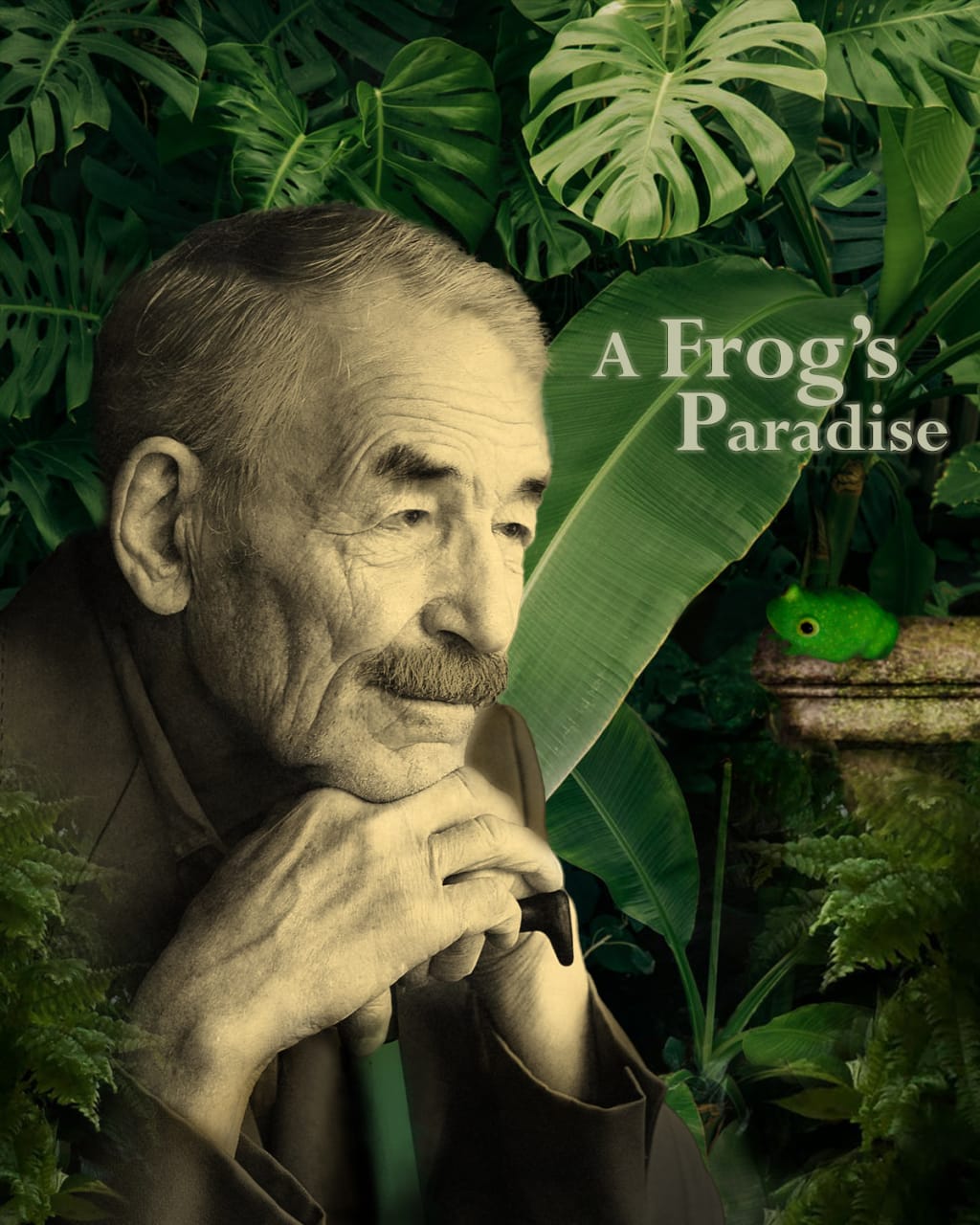
Melvin wasn’t like the others, that’s true. The staff often called him “ordinary” and “common”. He looked different, and that was the source of his ostracization, but he never lost hope someone might see past his appearance. Most of Melvin’s neighbors pitied him. Overly prideful with their own appearance, they neglected to see the value he had to offer.
Let’s begin with some context.
Five years ago Melvin was brought to the newly built Hurkoff Garden Center. Located right off the interstate, it became a tourist hotspot shortly after its inception. The botanical staff was world-renowned because only the “best of the best'' could work with the species brought to Hurkoff.
Upon first devising plans for the garden, Dr. Morty Hurkoff’s primary wish was to have the center serve as a sanctuary. From the tour guides, to the cleaning crew, to the elderly parking booth woman, Dr. Hurkoff wanted everyone to feel essential to the garden’s success.
Although it hadn’t been Dr. Hurkoff’s intention, this model of belonging served well for the garden’s operation. Membership sales showed the center was profiting, and online reviews were notorious for never dipping below four out of five stars.
However none of this success would be possible without the garden’s most valuable player: a frog named Melvin. As noted before, Melvin didn’t exactly fit in. When arriving at Hurkoff, he had been placed in the renowned frog exhibit in conservatory 1C. This exhibit featured the most brightly colored frogs. Unfortunately for Melvin, he was no flashier than a dull green. He blended in with his surroundings and was often lost among the plants.
Melvin’s neighbors were a gregarious bunch. More akin to Hollywood starlets, the other frogs always caught the eyes of visitors. Living among the yellow, red, and blue hues, the other frogs frolicked in the pond where they lived life as celebrities. Although Melvin had spent years trying to convince others of the contribution he brought to the pond province, members of the Lily Council never considered him “Pad Partner” material.
The disapproval from the Council destined Melvin to life as an outcast. Seasons passed and many shamed him for not earning his right to be there. The pond had multiple streams of revenue, but showmanship generated the most coin. In conservatory 1C, guests pushed and shoved for a chance to glimpse the sprinkling of colors among the lily pads. And even though the pond was a gated province, humans strained to get their cameras across the iron bars.
While many of the frogs found the human hoards to be smelly and chaotic, Melvin liked the change of pace they brought to the pond. Never getting to show off his colors in a performance, Melvin’s days were rather bland. That’s why daily at 1:30 pm the rare frog feature helped provide Melvin with some entertainment.
About five minutes before the feature began, an enthusiastic tour guide would come waltzing over to the pond. Leaning into the microphone closer than needed, the staff member would press her mouth to the mic and shout: “Alll-righty Hurkoff guests! Step right up to the A-maaazing tropical frog pond!”
Normally this announcement would garner the eyes of about 20 visitors who would shuffle over to the exhibit, crinkling garden maps and gift shop paraphernalia in the process. The performance would commence with the leading Council members and follow with the most appreciated pad partners. The largest lily pads were reserved for the highest earning actors with the most beautiful calls and leaps. The show would build into a cacophony of madness as the staff rattled off gibberish, and the visitors grew wide-eyed with their cameras.
Eventually the croaking of Melvin’s neighbors would get drowned out by the cheering of guests. The frogs would keep singing and chirping until their grande finale came. This was typically signaled by a child tugging on their parent’s shirt. The kid would hold out his hands where several coins found a new home.
As the council sang on, Melvin would brace himself before a wave of shimmering discs started plummeting towards the pond. Below the water’s surface, a ghostly dance would swirl on among the coins. They flickered back the conservatory lights until they settled into a new algae home.
After the show concluded, the frogs would hold their positions before exiting. The province would watch while kids were repeatedly told, “No I don’t have any more change, you will have to wait until we visit the frogs again.” Some squished faces, pouts, and stomping kids later, the conservatory’s guests would clear out. The trickling of fountains would be the only traces of sound left in the air.
“Alright, alright nice work today everyone!” Miranda would yell. Being lead vocalist, she typically led Lily Council meetings.
Bernard, the reigning head of pad partners, followed Miranda’s call by shouting, “Melvin, state your location!”
This inquiry of Melvin’s whereabouts happened routinely. Even though Melvin knew they weren’t interested in his wellbeing, there was always a glimmer of hope in his voice as he responded.
“Present!” Melvin would exclaim in bated breath.
“You know the drill, stay out of the way when collectors come around. You can feed after everyone’s gotten their share.”
The collectors the frogs spoke of were a couple of biology interns from the local college. Before closing time at the garden, interns would put on waders, climb into the pond, and spend time picking up all the money the guests had tossed into the water that day.
If coins were left abandoned, the bottom of the pond would be blocked from feeding spots. Insects thrived off the soil and plants, so if they became covered with coins, the frogs would never be able to hunt for food. Therefore, the Council knew the best chances of the pond’s survival rested on showmanship. The more elaborate the display, the better chance for tossed coins, and the higher probability collectors would come by.
In the words of Miranda: “It’s just that simple Melvin.” She went on to elaborate, “Remember, we know you exist, but you don’t contribute to the pond.”
Although Melvin never dared to upset Miranda, he couldn’t help but let his eyes roll over. “Yes,” he responded, “But did you ever consider I knew that already? You know Miranda, it seems like for the amount of time you and the members shut me out, I could have found at least five other ponds to accept me.”
Miranda’s jaw dropped farther than Melvin thought possible.
Miranda slowly regained her composure: “Well, well Melvin . . . bravo. You bought yourself a ticket to leaving conservatory 1C. You go tomorrow, but don’t worry, I think I saw a vacancy sign posted near the janitor’s closet.” Miranda hopped away.
Melvin grew worried. He couldn’t care less about the Council, this wasn’t a family, but he had fallen in love with conservatory 1C. He was young when he was brought to the garden, but he could still remember his prior terrarium home. Peering through the 6”x 6” plastic walls, Melvin had witnessed the garden crew laying the foundation and planting the first species. He’d been brought in every day since building began, and the thought of leaving now was inconceivable.
The following day proceeded the same way it always did for a Wednesday at Hurkoff. Buss-loads of school children made rounds throughout the garden on tours. Teachers blissfully strolled behind, welcoming the small escape of freedom they seldom experienced with 1st and 2nd graders.
Melvin knew he was pushing his luck, but he felt one last performance was needed before parting ways. He found a spot to spectate from as 1:30pm drew near. Knowing there was no chance of goodbyes, he chose a spot right next to the gate of the pond on a stone ledge.
As the clock struck its half-hour mark, fountains in the conservatory’s pond turned on. Eager faces began to cluster around the Pond Province as a guide herded in school groups. Melvin proudly bathed in the sun soaking the ledge he sat on. Across the path that hugged the pond’s walls, an elderly man sat calmly by himself on a bench. Melvin had seen this visitor many times, but paid him little attention. He came in every week, and would sit for hours with his cane.
Melvin’s attention was redirected as the tour guide shouted: “Alright boys and girls, it is time for the famous Hurkoff frogs!”
The show began as normal but from the corner of his eye Melvin noticed two kids fussing near the front of the group. As their bickering escalated, Melvin could see the adults becoming agitated. Eventually reaching a patience limit, the tour guide cut the music.
All those in conservatory 1C fell silent except the two kids fighting. Some of the Council members gasped as Miranda crashed into another dancer and tumbled off her pad. The show had never gone wrong before.
One of the kids shouted, “No, the green one is too plain! Who would ever want him as a pet?”
Melvin could feel his chest grow tight as he realized the number of eyes staring at him. The kids had been fighting over which frogs were the best, and evidently Melvin had been spotted. As he scanned his surroundings, Melvin felt ashamed as he filtered out the school children’s laughter. The kids had begun pointing fingers and whispering to each other as their teacher struggled to regain a sense of control.
Feeling helpless and confused, Melvin looked to the conservatory doors. It seemed now was a good time to leave. However, before he could make his first leap down the wall, a new person spoke that commanded the room.
“That is enough!” The old man who had been sitting quietly to the side had slammed his cane down and stood up. Both kids and frogs froze in fear. The man continued talking as he walked over to Melvin, “I don’t want to hear anyone talk ill about this little creature.”
One inquisitive girl piped up, “What makes him so special to you? He is nothing like the rest of the frogs.”
The elderly man gripped the ledge Melvin sat on for support, as he bent over to meet the kids at eye level.
“Boys and girls this frog,” the man gestured to Melvin, “Is probably the most special of all frogs at Hurkoff because he was the first frog.”
The tour guide smiled and added, “Yes, Dr. Morty brought his frog in every day during the garden’s construction.”
The girl who had spoken up grew wide-eyed and pushed her way past the kids to get her face close to Melvin’s. “You mean this is your frog?” She looked up at the man.
Dr. Morty smiled wearily. “He sure is! My legs make getting around a tad harder but I still come to visit him at least once a week. The common name for his species is the “masked leaf” frog; his kind is indigenous to our area because of the foliage that grows here. His color allows him camouflage in most habitats, which can aid in protection against predators.”
There was a synchronous “Whoa, that’s so cool!” Amongst the school group. The kids began chattering as each one renamed their favorite frog, with most of the class settling on Melvin.
Dr. Morty added one final sentiment: “Remember kids, everyone belongs at Hurkoff and we all play a role in our environment.”
The kids and adults smiled as they ushered their way out of conservatory 1C. Melvin’s throat swelled with pride as the humans left and members of the Lily Council approached him, stumbling over countless apologies.
Life at the garden was now the home Melvin had always wanted. In the months that followed, the Pad Partners undertook several new show displays that included Melvin. He made friends as frogs finally accepted him, and all this continued while his biggest fan Dr. Morty watched, right next to the lily pads.
About the Creator
Keep reading
More stories from Monica Proulx and writers in Fiction and other communities.
Hanging Secrets
The fields were finally alive with color. Like an artist’s palette, strokes of green and yellow wove themselves across the hillsides. Susan’s mother was driving their 1952 Station Wagon over the country roads with a forlorn look on her face. Sitting in the passenger’s side, 8 year old Susan held her hand out the window.
By Monica Proulx4 years ago in Fiction
Affection and Healing for Yourself
During the night of the last quarter moon, I gathered my ritual supplies. I carefully handled the chunk of black tourmaline that would protect me from your overall negative and narcissistic energy. I carefully walked the house with my stick of selenite in hand, asking the universe to cleanse our working space.
By Alisha Wilkins ✒️🦋🖋️6 days ago in Fiction
The Skull of Dracula
Lara Croft studied the map of the old cemetery under the light of the full moon. What she was looking for lay somewhere under her feet, somewhere under the 1000 graves was the key to opening the great tomb that lay halfway across the world on the southern tip of Australia. Despite the treasures she knew she could find; she never explored the cemeteries and tombs in this particular place for fear of what she might find; the living dead.
By Timothy E Jonesa day ago in Fiction




Comments
There are no comments for this story
Be the first to respond and start the conversation.