
A Fiction Writer’s Guide to History: Part II
The Middle Ages

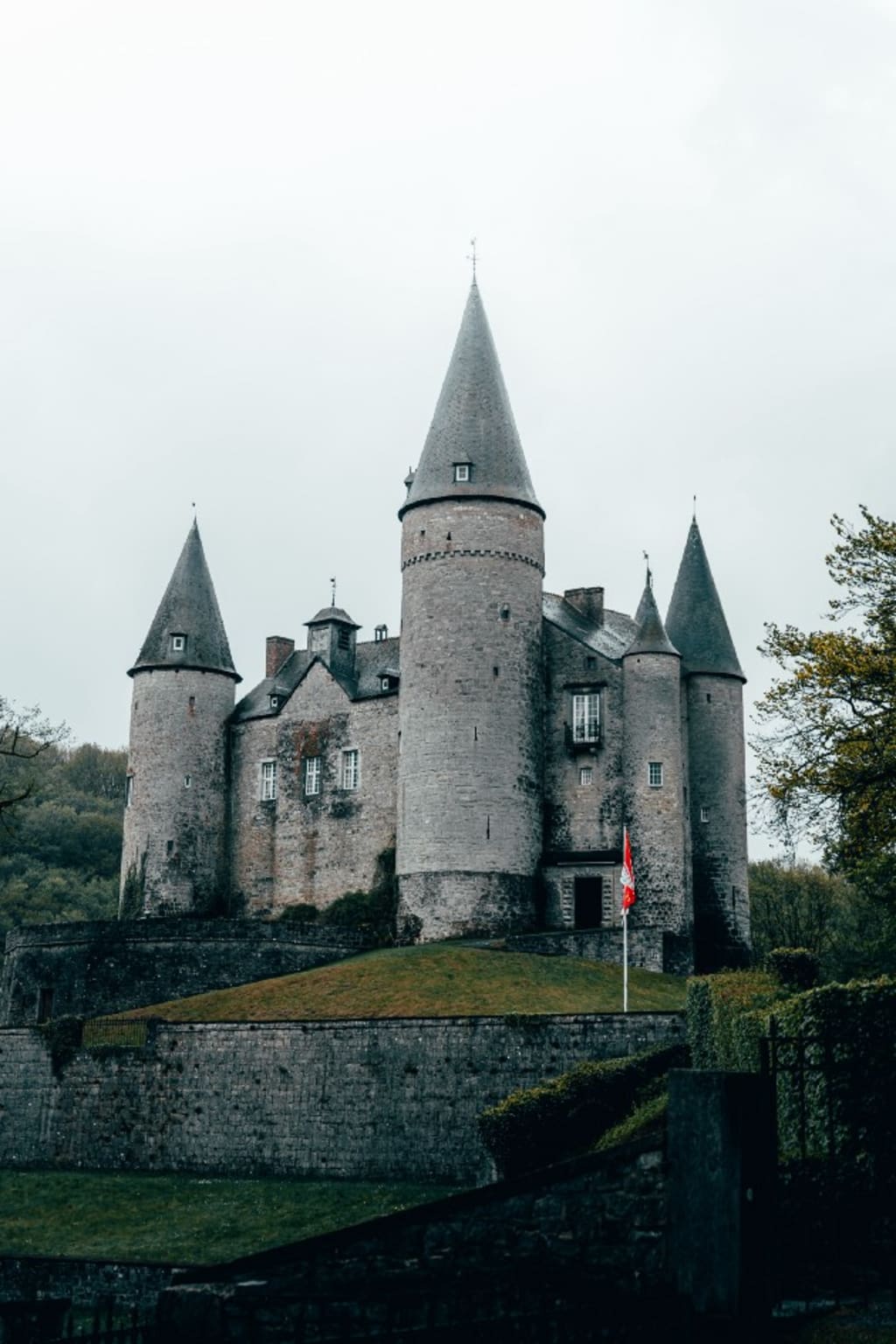
Every story needs a setting. Whether your novel is set in the present day or in some made-up world, you need to choose a time and place for it to take place. If you’re writing historical fiction, you’ll need to be even more specific. You’ll need to know not just what year it is, but what year it is relative to our own timeline. Every period has its own unique set of events, politics, cultural attitudes, and technological advances that will affect your story.
The Middle Ages (c. 300 — c. 1500 AD)
Also known as the Medieval Period or Dark Ages, this is when Europe experienced a cultural decline due to invasions from Asia and Africa that brought about new social orders such as feudalism in order to maintain stability within society at large. During the Middle Ages, the European population grew, towns and cities expanded, and trade increased. New technologies were invented, such as the stirrup and the heavy plow. The most important events during this period include:
The fall of Rome and the rise of Constantinople (modern-day Istanbul) as the capital city for Byzantine Empire which lasted until 1453 CE when it became part of Ottoman Turkey after being invaded by Muslim armies led by Sultan Mehmet II “the Conqueror” who took control over all Christian territories including those within present-day Greece, Bulgaria, Romania, and Hungary.
The rise of Christianity had an important and enduring impact on European society, with the spread of Christianity during the Middle Ages being a key factor in its growth. This was due to the actions of Constantine, who made Christianity the official religion of Rome and led to it becoming a rapid force throughout Europe.
European history was shaped by the Roman Catholic Church in the Middle Ages and into modernity. The Roman Catholic Church dominated social and cultural institutions, having a major role in education, law, politics, and economics. The Vatican kept control of many religious orders through its “Roman curia”, influenced societies with its power to grant charters of indulgences.
In 800 AD Charlemagne became Holy Roman Emperor and united much of Western Europe under his rule. Charlemagne was born in 742 AD and died in 814 AD. He was the son of Pepin the Short, King of the Franks, and his wife Bertrada. In 800 AD Charlemagne became Holy Roman Emperor and united much of Western Europe under his rule.
The Norman Conquest of England in which William the Conqueror (Duke of Normandy) invaded England and defeated King Harold II at the Battle of Hastings in October of 1070 CE. This effectively ended Anglo-Saxon rule in England and replaced it with a new French aristocracy that would oversee the English society for centuries to come.
The Crusades were a series of religious wars fought by European Christians from c. 1146- c. 1272 AD who were seeking to recapture Jerusalem from Muslim control. The Crusades ultimately failed and resulted in the displacement and genocide of millions of people but also led to increased trade throughout Europe as well as technological advancements such as gunpowder weapons which gave Europeans a military advantage over other civilizations around the world during this period.
The Black Death was an epidemic of bubonic plague that killed about 75 million people across Eurasia between 1346- c. 1400 AD and spread rapidly due to poor sanitation practices at the time such as open sewers running alongside streets where rats could easily find food scraps left by residents living nearby or travelers passing through town en route from one destination to another (if they weren’t already infected themselves). It’s estimated that up to 60% of Europe’s population may have died during this outbreak causing many cities throughout France, Italy, Germany etcetera to go into decline while others like Venice flourished because they had better sanitation systems in place which helped protect them against infection rates elsewhere on the continent was much higher than in the city-state.
Here are some of the most famous historical novels set in the Middle Ages:
- The Pillars of the Earth by Ken Follett
- The Name of the Rose by Umberto Eco
- The Lord of the Rings Trilogy by J.R.R. Tolkien
- Wolf Hall by Hilary Mantel
If you want to read all the history series in one place, you can find all nine episodes available now on Kindle Vella!
About the Creator
Talia Meadows
MA in Theological Studies, MA in Depth Psychology, and an MS in CIS. Living on our Highland cattle ranch in Colorado, I am inspired by the land and animals.
Keep reading
More stories from Talia Meadows and writers in Fiction and other communities.
Selenwhisper
The night draped over Elara’s shoulders like a velvet shawl as she stepped onto the dewy grass. The world around her slept, save for the whispers of nocturnal creatures and rustling leaves. The moon hung low, a silver medallion pinned against the obsidian sky. Its light cast a serene glow over the slumbering earth.
By Talia Meadows2 years ago in Fiction
Broken Safe Haven - Chapter 3
Previous Chapters Chapter 1 Chapter 2 Jordan rushed into the training room, an old basketball gym now a labyrinth of training mats, punching bags, and blunted weapons. The musk of sweaty bodies and athletic clothes their owners neglected to wash hung in the warm air. Jordan’s boots thumped against the wooden flooring as he stomped across the room.
By Eric Boring7 days ago in Fiction




Comments
There are no comments for this story
Be the first to respond and start the conversation.