


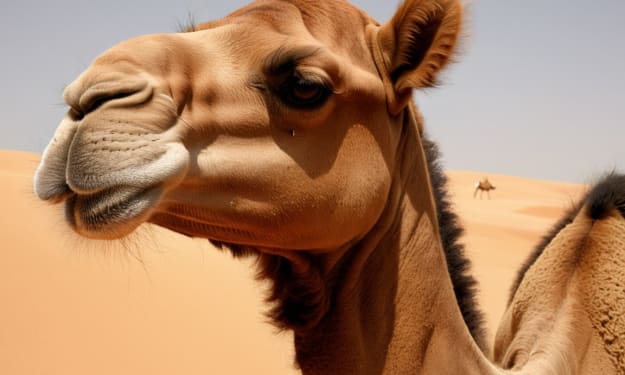
In the vast deserts of the Middle East and North Africa, a group of travelers set out on an expedition through the Sahara. Leading the caravan was a camel named Barakah, known for her calm demeanor and resilience against the harsh desert climate. As the group began their journey, they marveled at the strength and stamina of their camels, each perfectly adapted to the unforgiving desert environment. Their guide, Ahmed, shared fascinating stories and facts about these “ships of the desert.”
“Camels are incredibly adapted to desert life,” Ahmed began, patting Barakah’s sturdy back. “Do you know they can survive without water for several days?” The travelers listened intently as he explained that camels can survive up to two weeks without a drink, storing water not in their humps but in their bloodstream. The hump, he said, was actually a reserve of fat, which camels can break down into energy and water when food is scarce. The group marveled at this fact, realizing that Barakah’s humps were like a personal energy store for long journeys.
The caravan trekked on, and Ahmed continued to share stories. “Camels have a way of keeping cool in the hot desert, too. Their coats reflect sunlight, and they don’t sweat as much as we do. Plus, they can withstand temperatures up to 120°F without breaking a sweat.” The travelers looked at Barakah with newfound respect, noting how she seemed unfazed by the sweltering heat. Ahmed explained that a camel’s unique nasal passages help it retain moisture, and its long eyelashes and closable nostrils protect it from the blowing sand.
One of the travelers, Sarah, asked, “How do they manage to walk on this shifting sand?” Ahmed smiled and pointed to Barakah’s wide, padded feet. “Their feet are like snowshoes for the sand. They spread out to prevent sinking and make walking on loose sand much easier.” He explained how this adaptation allowed camels to cover long distances across dunes without tiring easily, even while carrying heavy loads.
The night began to fall, and the group made camp. As they gathered around the fire, Ahmed told them about the crucial role camels play in the lives of desert communities. “For centuries, camels have been used for transport, milk, meat, and even as a source of wool. They’re not just animals to us; they’re a way of life.” He described how camel milk, packed with nutrients, is often a primary food source for desert people and how camel wool is crafted into clothes and blankets that provide warmth during cold desert nights.
The journey continued over several days, and the travelers grew more attached to their camels. Each day brought new appreciation for these resilient animals that seemed built for the desert’s extremes. On the final day of their journey, Ahmed told the travelers about camels’ remarkable memory and social bonds. “Camels remember people and other camels they’ve been with for years. They’re loyal animals and often form strong attachments with their human companions.”
As they arrived at the end of their trek, the travelers couldn’t help but feel grateful for their camels, particularly Barakah, who had led them safely through the desert. They left with a deeper understanding of the camel’s role in desert life and the many adaptations that make these creatures so remarkable. They realized that camels are not just animals—they’re symbols of endurance and survival, deeply connected to the history and culture of desert landscapes around the world.
About the Creator
MSK Writes
Munir Shahzad Khan | Social Worker & Content Creator, Passionate about storytelling and sharing inspiring quotes. Join me on my journey to make a difference.
Keep reading
More stories from MSK Writes and writers in Fiction and other communities.
camel facts
In the vast deserts of the Middle East and North Africa, a group of travelers set out on an expedition through the Sahara. Leading the caravan was a camel named Barakah, known for her calm demeanor and resilience against the harsh desert climate. As the group began their journey, they marveled at the strength and stamina of their camels, each perfectly adapted to the unforgiving desert environment. Their guide, Ahmed, shared fascinating stories and facts about these “ships of the desert.”
By MSK Writesabout a year ago in Fiction
Mr Pig
There once was a pig who lived on a farm, in a truly magnificent pen. His home was surrounded by delightful sights and other farmyard animals. But Mr Pig decided early on (when he was just a new pink piglet) that he would not be concerned with matters of material value.
By Angie Allanby5 days ago in Fiction
A Historic Declaration
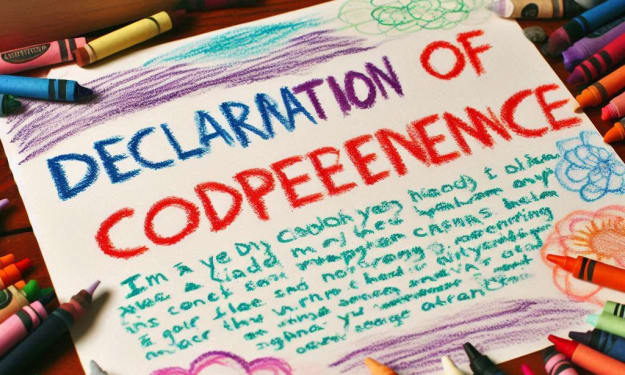
We the People of the Husbands of the United States of America, in Order to form a more perfect Union, and I mean you...with me...establish Justice, insure domestic Tranquility, provide for the common defence, promote the general Welfare, and secure the Blessings of Liberty to ourselves, after Puberty, do ordain and establish this Declaration of Co-Dependence.
By Gerard DiLeo5 days ago in Humans

Comments
There are no comments for this story
Be the first to respond and start the conversation.