
278 Terraforming Mars — Part 2
For SciFriday, October 4, Day 278 of the 2024 Story-a-Day Challenge

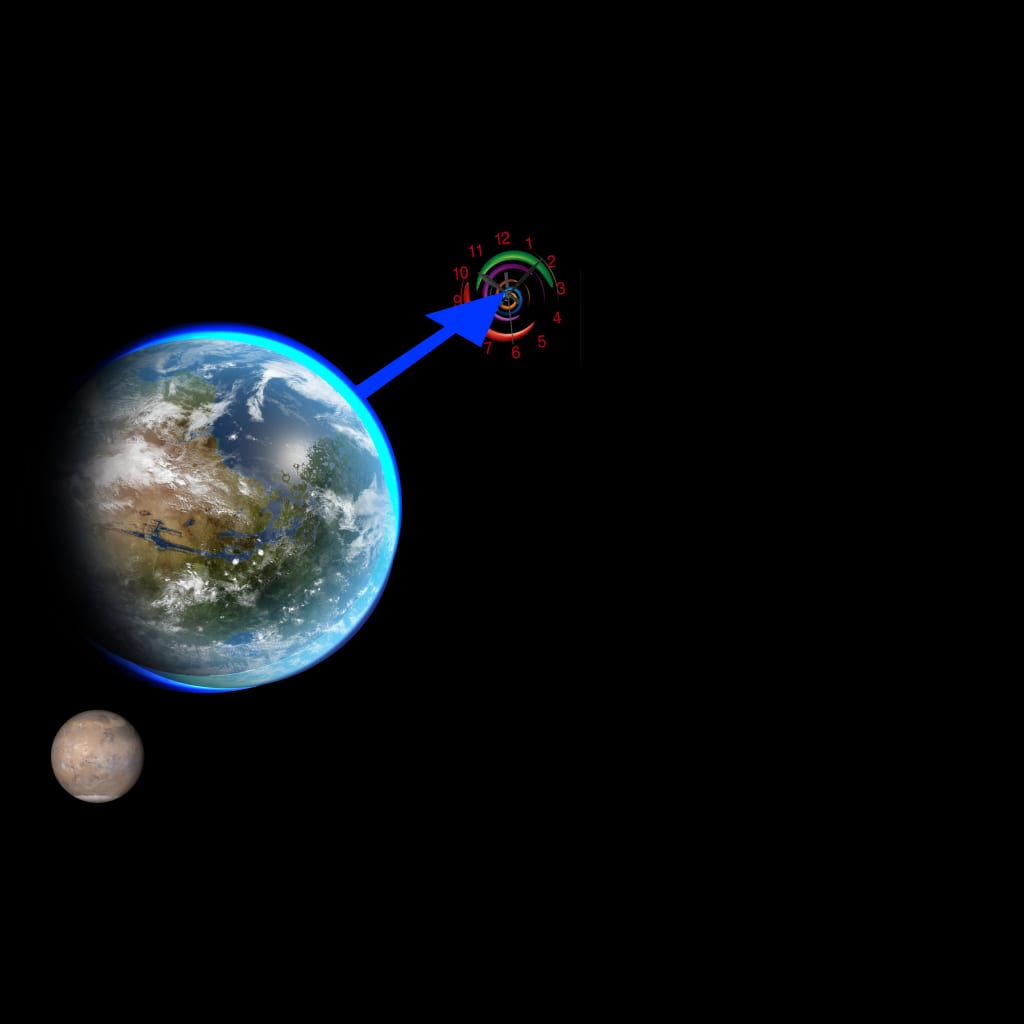
DIARY ENTRY SOL 4,155
Seismology from the moons’ impacts established what extremes that could be withstood should something bigger wander into Mars’ orbit. This was prudent, considering what goes whizzing by in the next outer orbit around the Sun.
Speaking as an exogeologist, sacrificing of Phobos and Deimos was crucial. The pulverized dust partnered with the injected radiodegradable nanoreflectors suspended high around the planet. But in spite of diminished sunshine, the two native moons’ deaths created a firestorm that was debated as the “nuclear option” when devising the plan to warm the planet up. The debris created a thermoreflective canopy, raising temperatures for the nanoreflectors to recycle downward. What rubble that escaped the upper atmosphere became an equatorial ring around the planet.
It is stunning. Almost makes the ringing in my ears worth it. Almost.
DIARY ENTRY SOL 19,320
You get to celebrate your birthday twice a Mars year. By my 110th birthday, Phobos and Deimos had ultimately been replaced by the large near-Mars asteroid, Ancile. For a Martian year-and-a-half we watched a point of light grow into a globe as it was reeled in; then the fireworks began.
Ancile quickly cleaned up the halo reminder of moons past, sweeping up the billions of orbiting particles from perigee to apogee, rather dynamically. There were almost twenty flashes a second initially, which made the new moon flare so bright that staring risked retinal arc burns. Over another 1,000 sols the flashes slowed to about three an hour, and by 2,000 sols, it was a wrap, the ring around Mars was gone. After that, the pyrotechnics were rare enough to provoke superstitious wishes.
The new moon begot polar magnetic fields that stabilized our atmosphere. Once Ancile was tidally locked with Mars, water could accrue, dust could settle, oxygen and carbon dioxide could assume their rightful positions in and out of my lungs, and I could finally stow away my OxyVent and ARESuit. By the sixty-years after the first spontaneous thunderstorm, the colony population had grown to 2700 persons, including me, and the first compound was ready to bud off into a second. All had gone well until this point.
Then the ferropods came alive.
About the Creator
Gerard DiLeo
Retired, not tired. Hippocampus, behave!
Make me rich! https://www.amazon.com/Gerard-DiLeo/e/B00JE6LL2W/
My substrack at https://substack.com/@drdileo
Keep reading
More stories from Gerard DiLeo and writers in Fiction and other communities.


Comments (3)
Wow! Brilliant genesis of a renewed planet, Gerard! Looking forward to the narrative development and thunderous revelations in the early years of evolution on what is essentially a new planet!
Colour me intrigued! And no note! Oh no! I always enjoy the note 😁
So glad I'm not Martian....I'm at the point where I don't even like celebrating my birthday once a year less alone twice. This is an interesting story, to be sure. Hope you're feeling much better today.