
Why Slow Cooking Is the Ultimate Kitchen Rebellion (And Your Wallet Will Thank You)
The Art of Slow Cooking: Why Taking Your Time in the Kitchen Pays Off

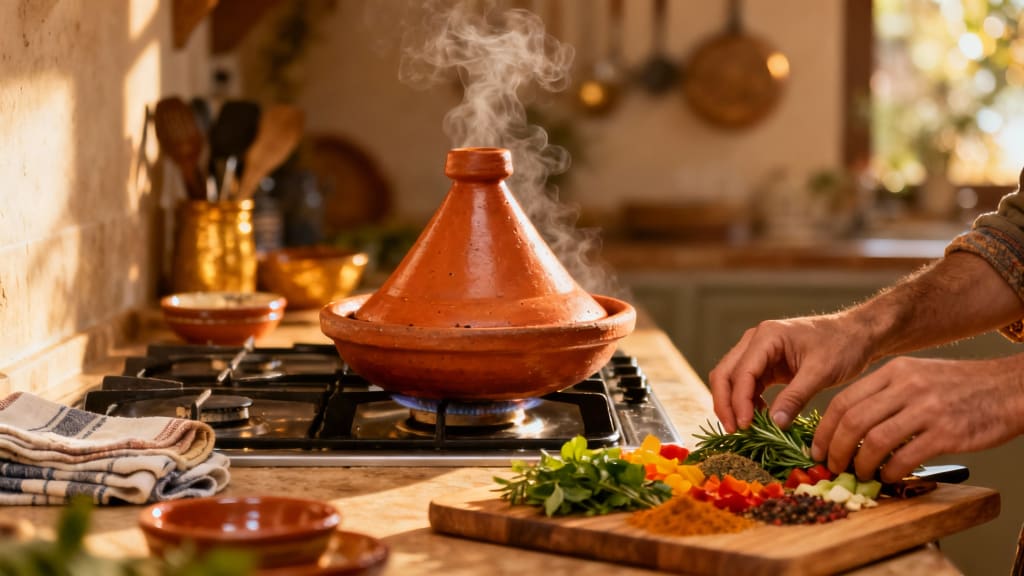
In a world obsessed with speed, slow cooking is the delicious middle finger to instant gratification. This isn't just about throwing ingredients in a pot—it's about transforming cheap cuts of meat into restaurant-quality meals, preserving nutrients that high-heat cooking destroys, and coming home to a house that smells like heaven.
The Science That Makes It Magic
When you cook between 170°F and 280°F, something incredible happens. Tough, collagen-rich meat breaks down into gelatin, creating that melt-in-your-mouth texture. The gentle heat preserves moisture through continuous self-basting, while proteins and sugars interact over hours to develop complex, layered flavors impossible to achieve with quick cooking.
Your Body (and Budget) Will Love You
Slow cooking preserves heat-sensitive vitamins like C and B that aggressive cooking destroys. It requires minimal added fats, making rich meals without excess calories. The extended cooking breaks down complex proteins and fibers, improving nutrient absorption—especially beneficial for legumes and grains.
But here's the real win: those tough, cheap cuts of meat—chuck roast, pork shoulder, lamb shanks—cost half the price of premium steaks but deliver equally satisfying results. You're also less likely to waste food since wilted vegetables and herb stems become valuable flavor contributors.
Set It, Forget It, Come Home to Dinner
Unlike stovetop cooking requiring constant attention, slow cooking is remarkably hands-off. Set up your meal in the morning, return to a fully prepared dinner. Modern slow cookers use about 75-150 watts—the same as a light bulb—compared to 2,000-5,000 watts for electric ovens.
The Moroccan Secret: Traditional Vessels That Change Everything
While modern slow cookers work great, traditional Moroccan vessels take it to another level. The tagine's cone-shaped design creates a self-basting cycle where steam rises, condenses, and drips back onto food. The porous clay adds earthy notes while distributing heat evenly.
Even more fascinating is the Marrakesh tanjia—a cylindrical clay pot historically filled with meat, preserved lemons, and spices, then buried in hammam furnace ashes for an entire workday. The result? Impossibly tender meat with deep, complex flavors requiring virtually no attention.
The Mental Health Bonus
There's something deeply satisfying about slow cooking that transcends practicality. The anticipation, the aromas gradually filling your home, the patience rewarded—it's aromatherapy no candle can replicate. In our instant-results world, slow cooking teaches patience and creates comfort.
Flavor Development That Can't Be Rushed
The extended cooking time allows flavors to meld and develop in ways that quick cooking simply cannot replicate. Aromatics like onions, garlic, and ginger release their essential oils gradually, infusing every component of the dish. Spices bloom and their flavors deepen, becoming more rounded and less harsh. The gentle bubbling action continuously redistributes these flavors, ensuring every bite is perfectly seasoned.
Slow cooking also creates layers of flavor through reduction and concentration. As liquids slowly evaporate, flavors intensify, creating rich, complex sauces and broths that taste like they've been labored over by a professional chef. This is why slow-cooked stews and braises often taste even better the next day—the flavors have had even more time to marry and develop.
The Environmental Impact You Haven't Considered
In an era of climate consciousness, slow cooking offers surprising environmental benefits beyond just energy efficiency. By making cheaper cuts of meat delicious, slow cooking encourages nose-to-tail eating, reducing the demand for only premium cuts and supporting more sustainable meat consumption. When you can make a tough, underutilized cut taste incredible, you're participating in a more efficient food system that wastes less of the animal.
Slow cooking also reduces packaging waste. When you prepare meals from scratch using whole ingredients, you eliminate the need for pre-packaged convenience foods with their excessive plastic and cardboard packaging. A single slow-cooked meal can replace multiple packaged products, significantly reducing your household's waste footprint.
Versatility Across Every Cuisine
Slow cooking isn't limited to one type of cuisine or dish. From American pot roasts and Southern barbecue to French coq au vin, Italian osso buco, Indian curries, Vietnamese pho, and Asian braised dishes, virtually every culinary tradition has embraced slow cooking techniques. This versatility means you'll never get bored—there's always a new slow-cooked dish to explore from a different culture.
Soups, stews, braises, roasts, beans, grains, and even desserts benefit from the slow cooking approach. You can make everything from pulled pork and beef bourguignon to steel-cut oatmeal, bread pudding, and even cheesecakes using these gentle, time-honored methods. The technique adapts beautifully to dietary preferences too—vegetarian and vegan slow-cooked dishes featuring lentils, chickpeas, and root vegetables are equally transformative.
Better Meal Planning and Food Security
Slow cooking naturally lends itself to batch cooking and meal prep. Most slow-cooked dishes taste even better the next day as flavors continue to develop, making them perfect for preparing in advance. You can easily double or triple recipes, freeze portions in individual containers, and have homemade meals ready for busy weeknights or unexpected situations.
This approach reduces decision fatigue and the temptation to order expensive takeout when you're tired. Knowing you have a delicious, nutritious meal waiting in the freezer provides both convenience and peace of mind. It's also a form of food security—having a freezer stocked with homemade meals means you're prepared for busy weeks, illness, or unexpected financial constraints.
The Social and Cultural Connection
Slow cooking has always been inherently communal. Large pots of stew, braised meats, and hearty soups are meant to be shared. The method naturally produces generous quantities, encouraging you to invite friends and family to gather around the table. In many cultures, slow-cooked dishes are reserved for special occasions, celebrations, and family gatherings precisely because they represent time, care, and abundance.
There's also something deeply connecting about eating food that took hours to prepare. It communicates value and respect to your guests in a way that quick meals simply cannot. When you serve a slow-cooked meal, you're offering not just food but your time, attention, and the gift of patience—qualities increasingly rare in modern life.
Mastering Tough Cuts: A Guide
Understanding which cuts benefit most from slow cooking transforms your shopping strategy. Beef chuck, brisket, short ribs, and shanks are ideal candidates—they're marbled with fat and rich in connective tissue that melts into succulent tenderness. Pork shoulder, ribs, and hocks similarly transform from tough to sublime.
Lamb shanks and shoulder become fork-tender and deeply flavorful. Even chicken benefits—thighs and drumsticks stay moist and absorb surrounding flavors beautifully, while a whole chicken slow-roasted becomes impossibly juicy. These cuts are often 40-60% cheaper than their premium counterparts, yet when slow-cooked properly, they're arguably more delicious due to their higher fat content and richer flavor.
The Liquid Gold: Broths and Stocks
One of slow cooking's most underrated benefits is its ability to create restaurant-quality broths and stocks. Simmering bones, vegetables, and aromatics for 8-24 hours extracts every molecule of flavor, gelatin, and nutrients. The resulting liquid is rich, nourishing, and forms the foundation for countless dishes.
Bone broth, in particular, has gained recognition for its health benefits—supporting joint health, improving skin elasticity, and promoting gut health through its high collagen and amino acid content. Making your own through slow cooking is not only more economical than buying premium broths but also allows you to control ingredients and avoid additives.
Adapting Recipes for Slow Cooking Success
Not every recipe translates directly to slow cooking, but most can be adapted with a few key principles. Reduce liquid by about one-third since there's minimal evaporation. Brown meats and sauté aromatics first for deeper flavor development. Add delicate vegetables and fresh herbs toward the end to prevent mushiness.
Dairy products should be stirred in during the final 30 minutes to prevent curdling. Thickeners like cornstarch or flour work best when added near the end as well. Understanding these adaptations means you can transform virtually any favorite recipe into a slow-cooked version, expanding your repertoire infinitely.
The Sensory Experience
Beyond taste, slow cooking engages all your senses in ways that create lasting food memories. The visual transformation as raw ingredients gradually break down and meld together. The sound of gentle bubbling that becomes the soundtrack to your day. The way the aroma builds gradually, starting subtle and becoming increasingly intoxicating as hours pass.
The tactile experience of tender meat that falls apart at the gentlest touch of a fork. These sensory experiences create deeper satisfaction and appreciation for your food, making meals more memorable and meaningful. In a world of distracted eating and grab-and-go meals, slow cooking demands and rewards your attention.
Teaching Patience in an Impatient World
Perhaps slow cooking's greatest gift is the lesson it teaches about patience and delayed gratification. In a culture of instant everything—instant messages, instant entertainment, instant food—slow cooking is a gentle rebellion. It reminds us that some things cannot and should not be rushed, that quality takes time, and that anticipation enhances enjoyment.
This lesson extends beyond the kitchen. The discipline of planning ahead, the satisfaction of seeing a long process through to completion, the understanding that good things come to those who wait—these are valuable life skills that slow cooking cultivates naturally. It's a form of edible meditation that grounds us in the present while building toward future satisfaction.
Traditional Wisdom Meets Modern Convenience
The beauty of slow cooking today is that you can choose your level of involvement. Modern electric slow cookers offer convenience and safety—you can leave them unattended all day without worry. Programmable models switch to "warm" automatically, ensuring your meal is ready whenever you arrive home.
But for those seeking a more hands-on, traditional experience, methods like Dutch oven braising, stovetop simmering, or using authentic vessels like Moroccan tagine pots and the Marrakesh tanjia offer deeper engagement with the cooking process. These traditional methods connect you to centuries of culinary wisdom, where the vessel itself contributes to the final flavor through its material, shape, and heat distribution properties.
The tagine's ingenious cone design isn't just beautiful—it's functional engineering perfected over generations. The tanjia's cylindrical shape and narrow opening minimize evaporation while concentrating flavors. These vessels prove that sometimes ancient technology, refined through centuries of use, outperforms modern alternatives in creating specific results.
Your Invitation to Slow Down
Ultimately, slow cooking is an invitation—to slow down, to plan ahead, to value quality over speed, to honor ingredients and the hands that produced them. It's a practice that nourishes not just your body but your sense of home, your connection to tradition, and your capacity for patience. In embracing slow cooking, you're joining a global community that understands the profound truth: the best things in life are absolutely worth waiting for.
The bottom line:
Slow cooking transforms humble ingredients into extraordinary meals while saving money, preserving nutrients, reducing energy consumption, and creating a sense of mindfulness. Whether you use a modern slow cooker or embrace traditional vessels like the Moroccan tagine, you're participating in an ancient culinary rebellion that proves the best things in life are worth waiting for.
Sources: Marrakeche Crafts - University of Nebraska–Lincoln – ResearchGate – National Institutes of Health (NIH)
About the Creator
Mohamed B
Always fascinated by the skill and creativity of the hands that make the Moroccan product, I devote myself to the work of art. I try to convey on all continents my knowledge, my full knowledge of the Berbers.
Wise~Guys
— Look Behind what's in Front of You ~ Make Good Choices — Hey, So how you Doin'..! Made~Men — Mobster Movies romanticise a distinctive, elegant appearance, impeccable attire style, along with the 'Families' expressive lingo. Making their 'Bones' gave them Panache — with vintage fedoras, tailored pin-striped suits, mirror-polished wing-tip shoes adorned with tassels; with their 'Gun Moll' gorgeous dates on their arms.
By Jay Kantor19 days ago in Families
The Clever Old Woman
As far as the eye could see, a pea crop was spread across the land. In the surrounding fields, the harvest had already been completed, and in fact, a second crop had begun to grow. However, this particular field had not yet been harvested. Irfan was passing through this area for the first time. When he saw the fully grown crop, he decided to negotiate a deal with its owner.
By Sudais Zakwana day ago in Families




Comments
There are no comments for this story
Be the first to respond and start the conversation.