
Why Most of Our Friends Look Like Us
And Why That Should Change


Take a look at your closest friends. Think about who you call when something amazing happens—or when everything goes wrong. Now ask yourself: how different are they from you?
If your answer is “not very,” you’re not alone. Most of us tend to form friendships with people who look like us, think like us, and live lives pretty similar to ours. It’s not necessarily intentional. It’s human nature. But it’s also something we can—and arguably should—begin to challenge.
Homophily: The Comfort of Sameness
There’s a sociological term for this phenomenon: homophily. It refers to our natural inclination to connect with people who share our characteristics—whether it’s ethnicity, age, socioeconomic background, or interests. In many ways, it makes sense. We’re drawn to the familiar. We meet people like us in school, at work, in our neighborhoods. Our social environments are often structured in ways that make sameness easier.
Homophily creates a sense of belonging. It’s efficient. Comfortable. And it’s also limiting.
The Problem With Comfort Zones
While there’s nothing inherently wrong with bonding over shared experiences, studies show that friendships formed across social lines—whether racial, cultural, political, or economic—offer unique and transformative benefits. Diverse friendships stretch us. They expose us to new ideas, values, and life stories. They make us more empathetic, less judgmental, and better equipped to thrive in a complex, globalized world.
As research from Earth.com and Thrive Global points out, diversity in our personal circles can improve mental health, increase social cohesion, and even help reduce prejudice on a broader societal level.
So why don’t we seek it out more often?
What Gets in the Way
Forming diverse friendships isn’t always easy. Here are some of the biggest barriers:
• Fear and discomfort. Many people worry about saying the wrong thing or don’t feel confident navigating cultural differences. It’s easier to avoid potential awkwardness than risk offending someone.
• Prejudice and stereotypes. Whether conscious or unconscious, bias plays a real role in who we approach and trust.
• Conflict and insecurity. When someone sees the world differently, it can create tension—or force us to examine our own beliefs. That can be unsettling.
• Limited opportunities. Structural barriers like residential segregation or workplace homogeneity mean that people from different backgrounds often just don’t cross paths.
• Relational quality. Cross-group friendships, especially among young people, may be less stable or involve less time spent outside of institutional settings like school or work.
As explained in Common Good and PubMed Central, these challenges are real—but not insurmountable.
Building Diverse Friendships, Intentionally
It takes more than good intentions to build a friend circle that reflects the world’s richness. It takes openness. Curiosity. A willingness to be uncomfortable, to ask questions, to listen more than we speak. And it takes shared purpose—a classroom project, a team goal, a community initiative—where bonds form through doing, not just talking.
Ultimately, the question isn’t whether diverse friendships are “nice to have.” The question is whether we can afford not to have them.
In a time of growing polarization and deepening divides, maybe the bravest thing we can do is step outside our social comfort zones—and make a new friend who doesn’t look or live like us.
About the Creator
Svein Ove Hareide
Digital writer & artist at hareideart.com – sharing glimpses of life, brain tricks & insights. Focused on staying sharp, creative & healthy.
Keep reading
More stories from Svein Ove Hareide and writers in Families and other communities.
Wise~Guys
— Look Behind what's in Front of You ~ Make Good Choices — Hey, So how you Doin'..! Made~Men — Mobster Movies romanticise a distinctive, elegant appearance, impeccable attire style, along with the 'Families' expressive lingo. Making their 'Bones' gave them Panache — with vintage fedoras, tailored pin-striped suits, mirror-polished wing-tip shoes adorned with tassels; with their 'Gun Moll' gorgeous dates on their arms.
By Jay Kantor17 days ago in Families
Men who eat nuts tend to have better quality sperm
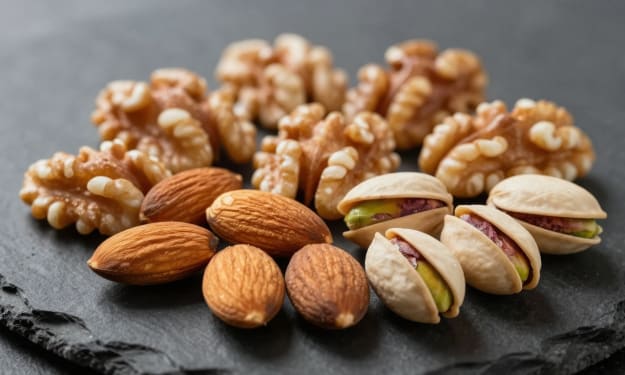
Peak Potency: How a Daily Nut Habit Elevates Male Sperm Quality Male fertility rates have dropped in recent years. Many couples struggle to conceive, and men often overlook their role in this challenge. Your diet can make a big difference here. Nuts stand out as a simple fix. They pack antioxidants and healthy fats that support better sperm quality. Think of them as fuel for your reproductive system. Studies show men who eat nuts regularly see real gains in sperm health. If you're planning a family or just want peak vitality, adding nuts could be your smart move.
By Story silver book about 21 hours ago in Families


Comments (1)
Nice work! 🌟 I really enjoyed reading your Vocal post. 😊📖 Keep it up! 💪✍️