
Whispers of an Unfinished Love
Bound by Tradition, Torn by Destiny
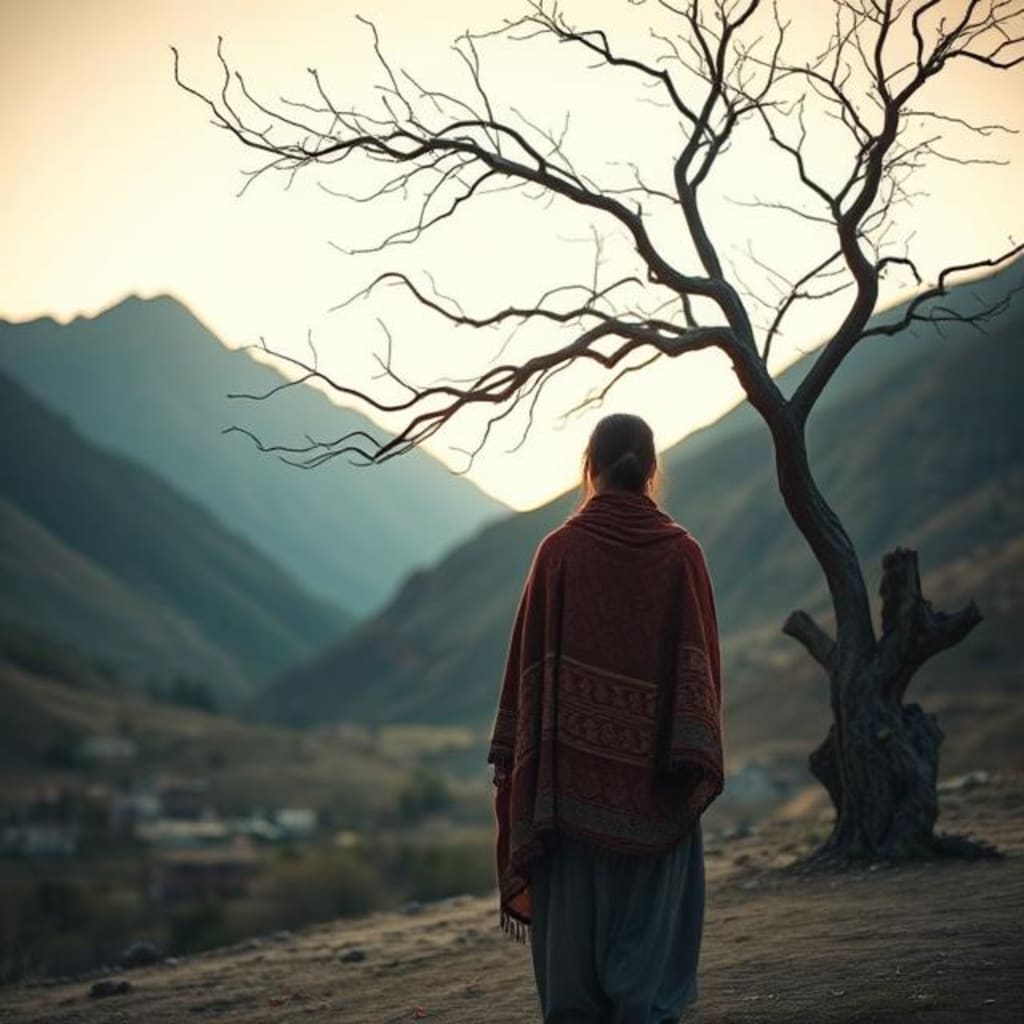
Whispers of an Unfinished Love
By ZIA ULLAH KHAN
Bound by Tradition, Torn by Destiny
In the shadow of the Spin Ghar mountains, where the valleys bloom with wild poppies and the wind carries songs older than time, love does not bloom freely. It is whispered, hidden, and often, unfinished.
Zarsanga’s laughter once echoed through the winding stone lanes of her village like a spring breeze. She was known not just for her beauty, but for the light in her eyes—sharp as a falcon, soft as rain. Her father, Malik Gul Rahman, was a respected elder—a man of strict honor and deeper silence. Zarsanga, his only daughter, was his pride, his burden, and in the eyes of the village, his promise to keep.
Aimal was not a man of land or power. He was a poet’s son, his hands more familiar with ink than with plow. He came from a family that had once been noble, but whose name had faded into the background like an old song. What he lacked in wealth, he carried in grace. He walked through life like someone who belonged to another time, or perhaps, to a dream.
They met beneath the old apricot tree behind the village madrassa. It wasn’t intentional. Zarsanga had dropped her shawl, and Aimal had picked it up. Their hands brushed—briefly, foolishly—and for the first time, Zarsanga looked into eyes that did not see her as someone to be married off, but someone to be known.
After that, the tree became a sanctuary. They never spoke of love, for even the word was dangerous. But the pauses between their sentences, the stolen glances, the way Aimal would hand her poems folded in pages of Quranic script—all these were confessions.
One afternoon, Aimal gave her a poem written in Dari and Pashto:
"My heart is a house with no door,
Yet you enter like sunlight,
Uninvited,
Unstoppable."
She pressed the poem to her chest, then burned it that night beneath the moon, so her mother wouldn’t find it. But the words remained, etched somewhere deeper than paper.
In the Pashtun valleys, honor is not just tradition—it is law. Love, when unarranged, is a transgression.
Rumors began like mist—harmless, then thick enough to suffocate.
“They say the poet’s boy walks near Malik Gul’s daughter.”
“They say he watches her like a hawk in the sky.”
“They say they meet.”
Malik Gul Rahman didn’t speak. He simply closed the gate to the courtyard at night and told Zarsanga to stop going to the madrassa. He said it was improper for girls to be too educated anyway.
But hearts are wild things.
They don’t sit quietly behind locked gates.
Zarsanga wrote a message on a scrap of cloth and gave it to a shepherd boy. “Meet me one last time.”
The apricot tree stood silent in the moonlight, its fruit fallen, softening on the earth. Aimal stood there, hands shaking, his prayer beads clenched between his fingers.
“I want to run,” she whispered when she arrived. Her veil slipped just enough for him to see the tear in her eye.
“We could go to Jalalabad. Or even farther,” he said. “We could start over. I’ll teach. You’ll be free.”
She nodded—but only for a moment.
Then the wind shifted. A sound. A shadow. And the silence broke like fragile glass.
From behind the trees, her brothers appeared, faces tight with fury, armed not just with rifles but with centuries of unbending code.
Aimal stood tall.
He did not run.
He placed his hands behind his head and looked at Zarsanga one last time.
She mouthed a word—forgive.
They didn’t kill him. Not there.
They left that to exile, to shame, to erasure.
He was gone by morning.
And so was the apricot tree, cut down by her father the next day.
Years passed like seasons no one wanted to remember. Zarsanga was married to a cousin in Swat. A merchant with kind eyes and no understanding of poetry. She bore him two sons. She prayed. She cooked. She aged.
But sometimes, when her boys slept, she would take out a piece of her wedding shawl—one she’d secretly embroidered with a single line in blue thread:
“My heart is a house with no door.”
And she would whisper stories into the silence. Not prayers. Not dreams. Just the memories of a voice under an apricot tree.
Years later, on a visit back to her village after her father’s death, Zarsanga walked alone to the place where the tree had stood. Now, only a jagged stump remained, overgrown with moss and wildflowers. She knelt down, touched the bark, and closed her eyes.
“Do you still write?” she whispered into the wind.
No answer came.
But she imagined, somewhere, far from this valley, a man in his forties with silver in his hair, teaching children the beauty of words. Maybe he still carried a prayer bead strand. Maybe he had a daughter named Zarsanga.
Or maybe not.
Maybe love does not need to last a lifetime to be true.
Maybe the whispers of unfinished love echo longer than any vow ever spoken aloud.
About the Creator
ZIA ULLAH KHAN
A lifelong storyteller with a love for science fiction and mythology. Sci-fi and fantasy enthusiast crafting otherworldly tales and quirky characters. Powered by caffeine and curiosity.
Keep reading
More stories from ZIA ULLAH KHAN and writers in Families and other communities.
My Brother's Imaginary Friend Never Went Away
My Brother’s Imaginary Friend Never Went Away By ZIA ULLAH KHAN We used to laugh about it. Back when we were little and life was still tinted in soft yellows and safe routines, my brother Charlie had an imaginary friend named Benji. Not Benny, not Ben. Benji. A name too cartoonish to take seriously.
By ZIA ULLAH KHAN9 months ago in Horror
Why the Maldives is the Ideal Destination for a Family Holiday
The Maldives is often linked with couples and luxury travel, but its island resort system also makes it very suitable for families. Most resorts are based on private islands, which create safe, organised, and easy-to-manage environments. This structure helps families travel together with less stress and more time to relax.
By ameliarosanna5 days ago in Families
Hottest in the Office
Dear Rafi, You’re very distracting to work around. For the first second I saw you the other day, I thought you were some type of executive. It took a moment to realize no, you were just the new guy, dressed up for the job he wants. Be still, my heart.
By Gabriel Shames5 days ago in Pride




Comments (2)
good bro
Nice