
When the Wild Things Were
Delving into a Bedtime Favorite of Mine
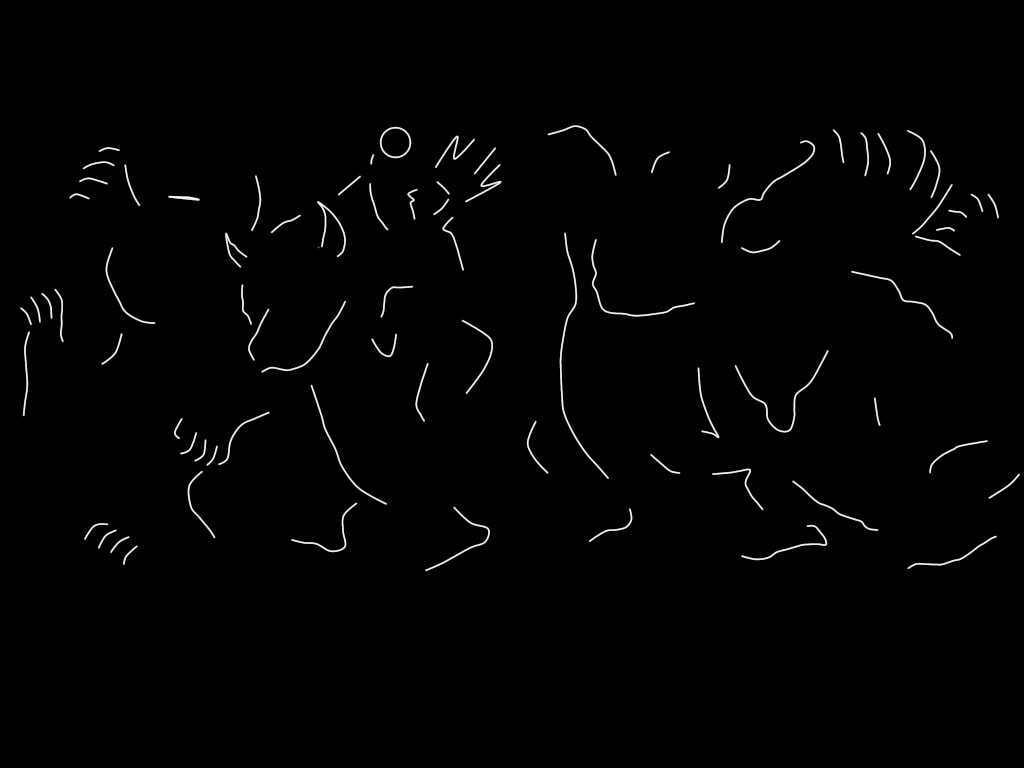
The title of this article may strike a chord with many readers. “Where the Wild Things Are” by Maurice Sendak is a children’s tale that goes beyond being meaningful to just the youth.
This story was introduced to many of us at a time before memory. Others first encountered this story in the elementary classroom or library. Still others may have just discovered this story when reading it to the youth. As for me, this story has always been a part of my life. While it represented memories of my youth, as I’ve aged the book has taken on a new meaning.
“Where the Wild Things Are” is, on its surface, a story of a boy named Max. Max appears to be quite the terror of a child as the author makes quite clear. While the text explains that Max would make “mischief of one kind… or another”, leaving the ideas of trouble up to the reader, the artist behind the book reveals that Max would nail his forts up in the house with a rather large hammer and chase the dog with a fork. Keep in mind that the artist and author are the same person, and Sendak has clearly made Max out to be a very mischievous child, even depicting a strung up teddy bear dangling off of a hanger connected to his fort.
The mother’s response to Max’s antics and threat “I’LL EAT YOU UP!” is to send Max to bed, skipping what we are to assume is supper. This is made apparent by the moon in the background out the window, looming just above a rather peeved looking Max.
That’s when Max’s adventure begins, and a forest springs up in his bedroom. A giggling Max is depicted as the forest overtakes his room until his room completely vanishes. Rather abruptly, an ocean and a boat appear, allowing Max to make his escape and sail across the sea “through night and day”. As with the title of this story, Max arrives on an Island of “where the wild things are.”
What proceeds is the description of some wild beasts that seem ready to terrify any child, but not Max. Max, with his hand on his hip, looks unimpressed and orders the monsters to “BE STILL” with a brassness that only a child could elicit. Sendak explains, in short, that Max “tamed the monsters” with what amounts to a staring contest. And thus, Max was named “the most wild thing of all” and he was made their king.
Max declares that a “wild rumpus” will start as his first decree. This basically appears to be just random shenanigans as illistrated by the author across several pages. However, eventually, even Max runs out of energy and tells the beasts to stop and go “to bed without their supper”. It’s at this point where Max wanted “to be where someone loved him best of all”.
Max gave up being the king and left to go home towards the food he smelled. However, the beasts seemed to become distraught by Max’s decision and began saying some contrary statements like “Oh please don’t go - we’ll eat you up - we love you so!”, but Max seemed uninterested in heeding their calls and left. Looking rather snub, Max sails back to his bedroom and finds his supper waiting for him, still hot. It all seemed to be part of his imagination, something to occupy his mind while being grounded. However, the moon on the last page reveals that maybe it wasn’t completely his imagination. Or maybe it was just the artistic style of the book to have a full moon at the end of the story, versus the sliver of the moon at the beginning. Sendak leaves it up to the readers.
And that’s it. That’s the tale of Max and, on it’s surface, it’s a fun story of imagination and a rather rambunctious child. Maybe many of us knew a child like Max, or were that child, or found Max’s behavior and imagination entertaining as a child. As a child, I probably would have stated the island of wild things sounded like a fun place to visit, or maybe being king of such horrid monsters would be exciting. Those ideas have faded with age, and I think that is the main focus of this story. Let’s come back around to that in a bit.
For now, allow me to take you back to elementary school. Elementary school libraries, especially in the United States, hold a distinct place in each child’s memories. Maybe it was the smell of that aptly cliched term “musty books”. Or, maybe it was the overwhelming smell of crayons. For those of my generation and older, I always thought the metal, hand-cranked pencil sharpener had a particular smell about it that tended to fill each room.
Either way, the library was where many of us first encountered this tale. Nowadays, it’s not so much the story, but the nostalgia connected to it. This book, along with what I considered to be the author’s of my childhood, Shel Silverstein and Eric Carle, were always in high demand in my library or classroom. The books always seemed to be simple to read, but also took us on a safe, understandable adventure.
When I hold this particular story, I always seem to think of the book fairs we had and how that was one of the greatest things about school in our younger years. Just the prospect of having this celebrated literature event enter our school seemed to excite us all and make us wish we had a few extra dollars just so we could get our favorite book or cute/cool pencil erasor.
I also tend to think of my third grade teacher, Mr. Washburn, who at one point had read this story to the class. Mr. Washburn had a tendency to intertwine learning with music. He would often read us a story and then pair the stories with a song he appropriated. He would change the words of the song to fit the theme of the story.
While I do not remember the song he paired with “Where the Wild Things Are”, I do remember a few of the songs from his class. For instance, at one time he sang a rendition of “Hit the Road Jack” by Percy Mayfield to a story about pollution and a businessman who just wanted to harvest the planet for resources. Mr. Washburn was one of the greatest teachers I had and made learning fun.
All these memories come up when I pick up this book so, of course, I’m very partial to promoting this book as one of the greatest for the youth. Even with all that, the book seems to have made a comeback in my life recently as more than just a prop of nostalgia.
Over my life, I have attained a degree in psychology, worked with children with special and behavioral needs for over a decade, married, and now have a child of my own. All this culminated in the return of the “wild things”. Of course, with a child, it was one of the books I had to purchase once more to enjoy with my son, and while he may still be too young to understand the concepts of the book, I have, in my time, gained a new appreciation for this book. Mayhaps I simply regained that understanding I had as a child on a more complex level.
This story basically acts as a gateway into the mind of a child, particularly one with behavioral needs. Max is not portrayed as a well-behaved kid. In fact, some would consider him plain rotten by the antics he displayed. Most kids don’t act out the way Max did without an actual reason. Those reasons can involve simple explanations such as moving to a new home, divorce, death of a family member, or some sort of change in the household; to “complex” explanations such as physical and domestic abuse, mental abuse, neglect, and any other kind of trauma. None of this justifies a person's behavior but a child has to react to emotions they were not prepared to process.
Instead of communicating their emotions appropriately, children tend to act out and torment others as a way of bringing people to their level of need. As adults, this tends to irritate and frustrate us as we do not comprehend emotion on the child’s level anymore. We may often resort to the same action’s that Max’s mother took and ground our child to their room. This often gives the child time to process and gives the parents a break to process as well, in an ideal setting anyways.
Something happens to Max that happens to many of us, especially lacking the distracting electronic devices of the modern age. He retreated into himself and created a fantasy world to go on an adventure. I remember doing the same thing with Legos and K’Nex as a child, though it was more of a choice of isolation over punishment. Hopefully, many of us, even as adults, can understand making an imaginary world. Maybe, as adults, some of us have become more creative and practical in world building, but children tend to rely on desire and entertainment over logic and the laws of physics.
For Max, his forest leads immediately to an ocean, which he crosses to “where the wild things are”. This is an odd choice because why wouldn’t Max start in the land of wild things? Why even bother with the boat and ocean? Well, I would conclude that Max is doing what any child does and is making it up as he goes.
As for the sudden change in scenery, this too plays into a child’s understanding of their imaginary world. Often, when playing imaginary games as children, we could have landscapes that would blend together in unnatural ways because we didn’t care about making sense. All that mattered was that we were having fun. And what child didn’t want to cross an ocean on a boat, magical or not.
Now the interesting part for me is the beasts that Max creates. Think back to your childhood and you may be able to remember having an imaginary friend. Was your friend a normal human, or something exotic and weird? Was your friend always kind, or was there a bit of mischievous nature about it? Was your friend someone you shared or hid away?
Obviously, all these questions are rhetorical because our imaginary friends are simply manifestations of our mind and our own personality and desires. Maybe you lived and did things you wouldn’t normally do through your imaginary friend. All the while, your imaginary friend was giving you something you couldn’t find elsewhere. You may say friendship, but it’s actually deeper than that especially since your imaginary friend is you. That’s where the answer lies.
Imaginary friends allow us to process emotions, feelings, and concepts that we wouldn’t normally be able to process in our own mind. Children process these concepts in a way that is less logical and more metaphysical as they pretend to bounce off ideas and concepts through play with their friends. Most children probably don’t understand that this is what they are processing, I know I just felt it was play. But, this is what Max was doing in the story. He was processing the feedback he had received from his family over his behavior and being called a “wild thing”.
He created an island filled with what he conceived prior, as shown by the drawing on the wall in his house, and bounced his behaviors off of many versions of himself. Of course, he made himself the leader and claimed to be the “best” or “worst” among them, because this is his imaginary story. The beasts, as with any imaginary friends, seem to go along with him on his activities.
None of this is explained to the reader, only shown and children get it! They did adventurous and exciting things a well-adjusted child would not be allowed to do, such as howling at the moon at night, dangling off of high trees, or just creating a large ruckus in general. When Max was tired, all the beasts on the island were tired as well. Then, like his mother, he sent them to sleep without food. He was also shown as having gotten his energy out and missing something tangible over occupying his mind.
Now the scary part. The beasts start claiming they want to eat him up and they love him so much. This sounds like an oxymoron and it is, but anyone with kids understands that this is definitely something a child would say out of play or otherwise. One moment a child smacks you, testing to see if it’s funny, the next they hug you. Others would say “I love you” and then immediately throw a tantrum about not getting their way. These are all emotions that Max has to process and does so through these imaginary creatures.
Another even deeper thought about that scene is the thought of saying goodbye for children and even some adults. It’s much easier to leave someone that is unhappy with you than someone who will miss you. So, instead of a heartwarming, drawn out, uncomfortable goodbye, Max decides to make his creatures rather bothered by his departure.
All this, I didn’t realize until I re-read the story to my son. Seeing his imagination and behaviors, it’s now so easy to see how Max would exist and how a child would act this way. He can be a terror at times, screaching and occasionally tantruming, but at the end of the day, I know he’s just trying his best to understand his world. He’s testing the limits of his actions and the extent he can get into mischief. Unfortunately, he then has to deal with consequences and process those either on his own or with my wife or I. But, I wouldn’t doubt that there may even be a “wild thing” or some other imaginary friend that he may one day bounce these ideas off of.
When we see the levels of understanding of the child psyche this book shows, it’s easy to see how this book appeals to children who understand the concepts of the book on a level that many adults have forgotten. Books have always been a gateway and “Where the Wild Things Are” is a great gateway for adults to remember what it was like to be a child struggling to take in a world of emotions we had yet to understand.
Sendak, Maurice. Where the Wild Things Are. New York :HarperCollins Publishers
About the Creator
Keep reading
More stories from L.S. Niceli and writers in Families and other communities.
The Dark and Gold!
On the 3,253 minute of the year, I was venturing away from the all too bright house owned by my auntie. Necklaces and jewelry were all she adored. That and pinching my cheeks. I figured if I avoided the house, I would avoid her grasp. My poor cheeks couldn’t handle the abuse anymore. I lunged forward and back as I walked and rubbed my cheeks, nervous of running into my auntie again.
By L.S. Niceli5 years ago in Families
Christmas Abroad: Celebrating the Holidays Without Family
I moved to South Korea in 2017. I was twenty-two years old and excited to start my career as an English Second Language Teacher. With a Bachelor's degree and six hundred dollars in my bank account, I set off for Busan.
By Kera Hollowabout a month ago in Families


Comments
There are no comments for this story
Be the first to respond and start the conversation.