
What My Mother's Old Ring Taught Me About Trusting Strangers With Your Stuff
gold, jewelry, personal story, money, tips
My mother gave me a ring when I left for college. Nothing fancy—a thin band with a small stone. She said it had been her grandmother's and that I should keep it safe. I wore it for a year, then it sat in a box. I forgot about it until years later, when she passed. Going through her things, I found the ring again. The stone was gone, lost somewhere along the way. The band had a stamp: 14K. I had no idea what that meant in dollars, but I thought maybe I could sell it and put the money toward something useful.
I took it to a pawn shop on a Saturday morning. The man behind the counter picked it up, weighed it on a small scale, squinted at the stamp, and offered thirty dollars. Thirty. I remember standing there, not sure what to say. It felt low. But how would I know? I'd never sold gold before. I said I'd think about it and left. Something felt off. How could he know it was worth so little? Or was I wrong to expect more? I had no way to check.
A friend who'd sold scrap gold before told me to always check the melt value first. I didn't even know what that was. She sat down with me and explained: gold is priced by weight and purity. The stamp—14K, 18K, 22K—tells you how much actual gold is in the piece. 14K is about fifty-eight percent gold. 18K is seventy-five percent. 22K is around ninety-two. The rest is alloy. You multiply the weight by the current gold price per gram for that purity. That number is the melt value: what the raw metal is worth on the market. Buyers pay less than that because they need to refine the gold and resell it. But if someone offers a fraction of melt, she said, you're getting a bad deal. She'd seen people walk out of pawn shops with half of what their pieces were worth because they didn't know the numbers. It happens all the time.
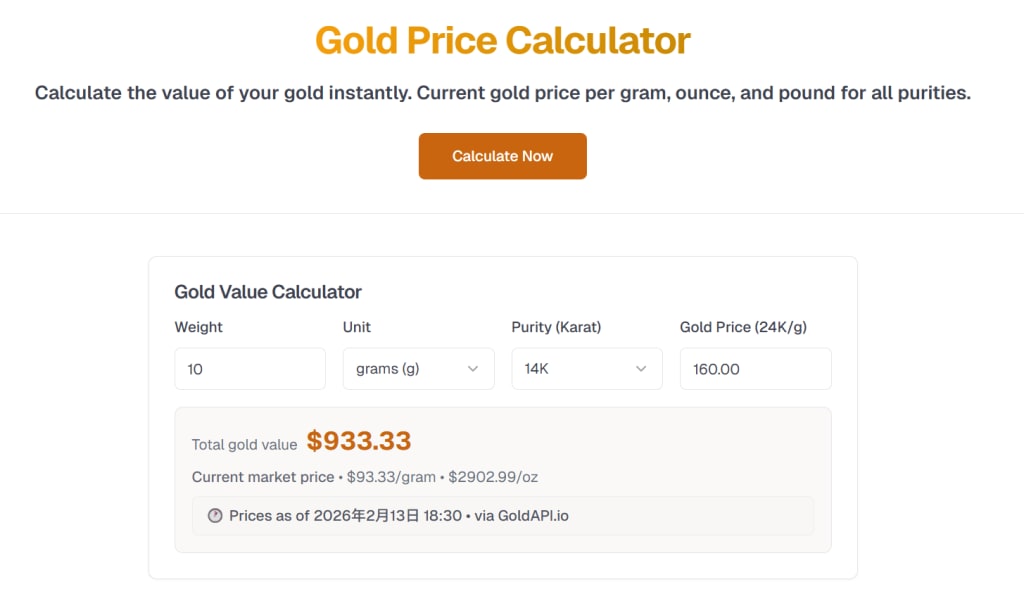
I borrowed a kitchen scale and weighed the ring. A little over three grams. Then I looked up the current gold rate and found an online calculator. I typed in the weight and purity. The melt value came to around a hundred and twenty dollars. Thirty was insulting. I felt angry at the pawn shop and at myself for almost accepting it without checking. I'd have walked away with a quarter of what the metal was worth.
I took the ring to a jeweler instead. He weighed it, nodded at the stamp, and offered ninety-five dollars. Not full melt, but fair. He explained that he'd send it to a refiner and that his margin covered his time. I sold it. The lesson stuck: when you don't know the numbers, you're at the mercy of whoever gives you a price first. Information is power. A few minutes of research saved me sixty-five dollars—and more importantly, it saved me from feeling cheated.
If you have old gold sitting in a drawer—inherited, forgotten, broken—don't hand it over blind. Weigh it on a kitchen scale. Check the stamp. Run the numbers. The gold calculator I used is simple: enter weight and purity, it shows melt value. No sign-up. Takes two minutes. It supports grams, ounces, and common purities like 10K, 14K, 18K. You deserve to know what you're holding before you let it go. Not every piece is valuable, but you deserve to find out.
About the Creator
How to Make Any Photo Square Online Without Losing Important Content
From Instagram posts and profile pictures to thumbnails and avatars, many platforms now require images to be in a 1:1 square ratio. While cropping is often the default solution, it’s rarely the best one—especially when image content matters.
By sam lee29 days ago in Photography
The Two Seeds: Why Love Heals and Hate Only Destroys
In 2026, the world moves faster than ever. We scroll through opinions, arguments, headlines, and outrage before we even finish our morning coffee. Everyone has something to say. Everyone has something to defend.
By Adil Ali Khanabout an hour ago in Families



Comments
There are no comments for this story
Be the first to respond and start the conversation.